Call/WhatsApp: +91-9811618013, +91-9810306077
Email: keohenna@gmail.com, kirpaloverseas@gmail.com
Email: keohenna@gmail.com, kirpaloverseas@gmail.com





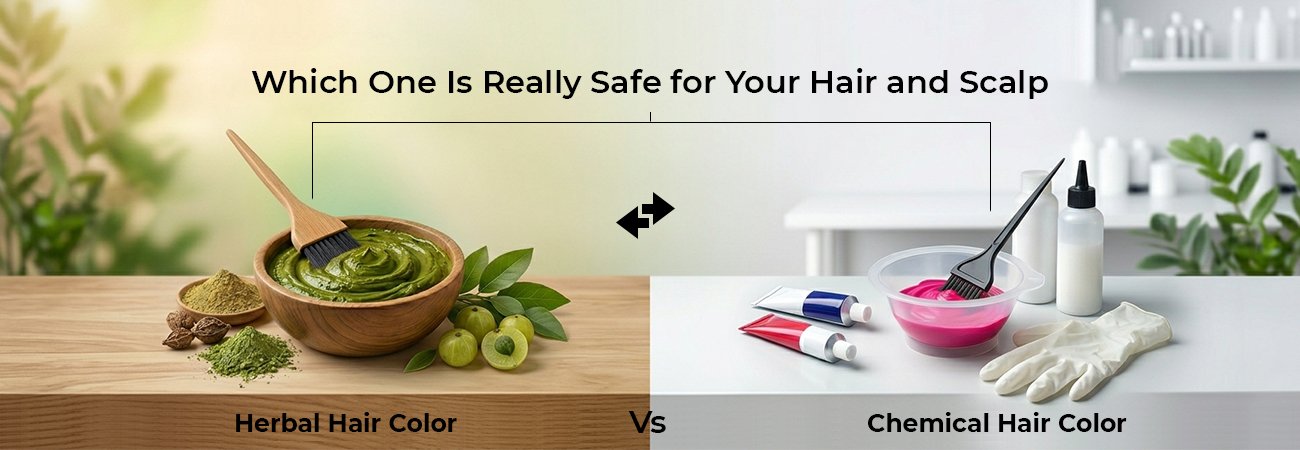
.
How many times have you colored your hair and, within a few weeks, noticed it getting drier, rougher, or just… lifeless? You probably blamed the weather, your diet, or maybe just “bad luck.” But here’s what most people don’t realize—the problem often starts right at the bottle you picked off the shelf.
This blog is not here to scare you. It’s here to give you real, honest information so you can make a better choice for your hair and scalp. Because you deserve to know what’s going on.
Chemical hair dyes are the ones you find in almost every salon and supermarket. They work fast, they give bold colors, and yes—they look great in the beginning. But here’s how they work behind the scenes.
Most chemical dyes contain ingredients like ammonia, hydrogen peroxide, PPD (para-phenylenediamine), and resorcinol. Ammonia opens up your hair cuticle so the color can get deep inside the shaft. Hydrogen peroxide bleaches your natural pigment and then deposits the artificial color. Sounds technical, right? It is. And your hair pays the price for it every single time.
Over time, these chemicals strip your hair of its natural oils, break down the protein structure (keratin), and irritate your scalp. Some people experience redness, itching, and burning — even on the very first use. For people with sensitive skin, it can be even worse.
Now here’s the part that doesn’t get talked about enough — repeated use of chemical dyes has been linked to long-term scalp damage, hair thinning, and in some studies, to more serious health concerns as well. We’re not being dramatic here. This is documented.
Herbal hair color is exactly what the name says — color that comes from plants, roots, leaves, and natural extracts. No ammonia. No peroxide. No synthetic chemicals that you can’t even pronounce.
The most common and most trusted ingredient in herbal hair color is henna, also known as Lawsonia inermis. It’s been used in India for literally thousands of years, not just for hair, but for skin, nails, and medicinal purposes too. When you use a good quality herbal hair color, you’re putting something on your head that your ancestors trusted for generations.
Other powerful ingredients often found in herbal formulas include amla (Indian gooseberry), bhringraj, shikakai, indigo, brahmi, and various other Ayurvedic herbs. Each of these brings something valuable — whether it’s natural darkening, scalp nourishment, hair growth support, or conditioning.
The color result may be a bit different from chemical dyes — you won’t get neon pink or platinum blonde from henna — but for natural shades like brown, dark brown, auburn, and black, herbal hair color works beautifully. And the best part? Your hair actually feels better after using it, not worse.
Effect on Hair Texture
Chemical dyes open the hair cuticle forcefully and then leave it partially damaged. After repeated use, hair becomes porous, brittle, and frizzy. Herbal color, on the other hand, coats the hair shaft naturally and often leaves hair feeling thicker, smoother, and more manageable.
Scalp Health
Chemical dyes are one of the leading causes of contact dermatitis (scalp inflammation). The PPD in dark chemical dyes is a known allergen — many people don’t even know they’re allergic until they have a reaction. Herbal hair colors are generally much safer for the scalp. In fact, ingredients like neem and brahmi in herbal blends actually soothe and heal the scalp while coloring.
Long-Term Hair Health
With chemical dyes, the damage is cumulative. Each application weakens the hair a little more. With herbal color, there’s no stripping, no bleaching, no protein breakdown. Many users actually report improved hair growth and reduced hair fall after switching.
Gray Coverage
This is where people sometimes hesitate with herbal color. Chemical dyes do cover grays very efficiently. But so does a good herbal formula — it just takes the right combination and sometimes a two-step process (like henna followed by indigo). The coverage is real and long-lasting.
Smell and Application Experience
Chemical dyes often have a strong, harsh smell during application that many people find overwhelming. Herbal hair colors have an earthy, natural smell — some people actually enjoy it. The application process is a bit more like a hair mask than a quick dye job, which also means your hair gets a deep conditioning treatment at the same time.
India has always had a deep relationship with Ayurveda and natural beauty. But somewhere in the last few decades, the market got flooded with chemical products that promised quick results, and we all followed along.
Now, people are coming back. And it’s not just a trend.
Consumers today are reading labels. They’re questioning what they put on their bodies. They’re dealing with the long-term consequences of chemical overuse — hair fall, scalp issues, and allergies—and they’re actively looking for safer alternatives.
This is exactly why the demand for wholesale henna powder and herbal hair color has grown so significantly in India over the last few years. Salons are stocking it. Retail stores are expanding their natural hair color sections. And individual customers are ordering in bulk because once they switch, they don’t go back.
Kirpal Export is one of India’s trusted manufacturers of premium natural herbal hair color. Based in India and serving both the domestic market and export clients, Kirpal Export has built its reputation on one simple promise — pure, effective, and safe hair color that contains absolutely no harmful chemicals.
Their product line is crafted specifically keeping Indian hair types in mind. Indian hair tends to be thick, naturally dark, and prone to specific concerns like premature graying and seasonal hair fall. Kirpal Export’s herbal formulations are designed to address exactly these needs.
If you’re a retailer, salon owner, or distributor looking for wholesale henna powder or bulk herbal hair color, Kirpal Export is a name worth knowing. Their products meet quality standards that make them suitable not just for the Indian market but for export as well.
For Indian customers, their range offers something that chemical brands simply can’t — hair color that works with your hair, not against it.
A lot of people try herbal color once, don’t get the results they expected, and go back to chemicals. Usually the reason is not the product — it’s the process. Here’s how to do it properly.
First, make sure your hair is clean but not freshly conditioned. Wash your hair a day before and skip the conditioner so the color can absorb properly.
Mix your herbal color or wholesale henna powder with slightly warm water until you get a smooth, yogurt-like consistency. Some people add a bit of lemon juice or tea decoction to enhance the color depth.
Apply section by section, making sure every strand is covered. This is not a 10-minute job — take your time. Cover with a shower cap and leave it on for at least 2 to 4 hours for the best results.
Rinse with plain water first, then wash gently with a mild sulfate-free shampoo. Avoid using conditioner right away — let the color set for 24 hours.
Results improve with each application. First-timers often see a noticeable difference after two or three uses.
If you fall into any of these categories, switching to herbal hair color is not just a good idea — it’s probably the smartest thing you can do for your hair right now.
You experience scalp irritation, itching, or burning after coloring. Your hair has become noticeably thinner or weaker since you started coloring. You’re pregnant or breastfeeding and want a safer option. You have a history of skin allergies or sensitive skin. You’re noticing more hair fall than usual. You care about what goes into your body and on your body.
Q1: Why should I choose herbal hair color over chemical hair dye?
A: Chemical hair colors are, of course, up to standard with the latest trends and help upgrade your personality. But on the other hand, our bloodstream is ingesting chemicals from the color through the pores of our scalp, which in the long run will damage the hair shaft permanently and weaken the roots of hair, hence hindering hair growth. The hair comes off weaker with time. On the other hand, plant-based colors nourish both the scalp and hair shaft as they penetrate deep. There is no damage to the scalp, nor to the hair shaft. Nourishment from plants and herbs is an added advantage.
Q2. How often should herbal hair color be applied?
A: Depending on the client, the application time depends on your hair growth and your hair regimen. Generally, for initial uses the color is suggested for reuse after 7 days if the true depth of color is needed or repeat after 15–20 days. When there is new hair growth from the scalp, as we do in chemical colors, root touch-up is sufficient (leaves space for answer)
Q3: Does herbal hair color improve hair texture and shine?
A. Plant-based herbal hair colors do not damage it, hence sometimes making the hair dry. Hence, deep conditioning is suggested. Likewise, post-chemical color treatment.
Q4: Is herbal hair color Suitable for all hair types?
A: The previously chemically treated hair cannot or rarely absorb the natural pigments. The chemical colors make the coating on the hair shaft. At the same time, the natural hair color penetrates deep into the hair shaft. Due to the chemical coating on hair, natural hair color cannot penetrate it. After a few days of time line, the regime can be switched to natural hair colors.
At the end of the day, the choice between herbal and chemical hair color comes down to one simple question: What do you value more? Quick convenience or long-term health?
Chemical dyes will always promise faster, bolder, more instant results. But the cost to your hair, your scalp, and potentially your overall health adds up over time in ways that are hard to reverse.
Herbal hair color — especially when made from genuine, high-quality ingredients like the ones Kirpal Export works with — gives you something that no chemical formula can: the confidence that what you’re putting on your head is not hurting you.
Your hair is part of you. Treat it like it matters.
And if you’re ready to make the switch—or if you’re a business looking to stock genuine wholesale henna powder for your customers—Kirpal Export is here to help you do that the right way.
Introduction Let me ask you something. When was the last time you walked into a…
“بلا مواد كيميائية. بلا تنازلات. فقط رفاهية نباتية خالصة.” لماذا يطرح الشرق الأوسط سؤالاً مختلفاً…
ラジャスタンの畑から世界へ:なぜ真剣なバイヤーは Kirpal Export Overseas を信頼するのか インディゴには、静かでありながらも特別な魅力があります。合成染料が工場で大量生産されるようになる何千年も前から、この深い青色の天然顔料は、古代エジプトのファラオの衣服や古代インドの織物を彩り、文明を結ぶ交易路でも重要な役割を果たしてきました。 現在、この植物由来の伝統は再び世界的な注目を集めています。その中心にあるのが Kirpal Export Overseas です。同社はインドでも高く評価されているインディゴパウダーのメーカ の一つであり、また としても信頼されている企業です。 しかし、ここで語りたいのは単なる伝統だけではありません。天然染料製品を大規模に調達する際に本当に重要なのは、品質、安定した供給、信頼性、そしてビジネスを理解してくれるサプライヤーです。 天然インディゴが世界で再び注目されている理由…
Kirpal Export Overseas | Global Henna & Hair Color Experts When you’re sourcing wholesale henna…