Call/WhatsApp: +91-9811618013, +91-9810306077
Email: keohenna@gmail.com, kirpaloverseas@gmail.com
Email: keohenna@gmail.com, kirpaloverseas@gmail.com





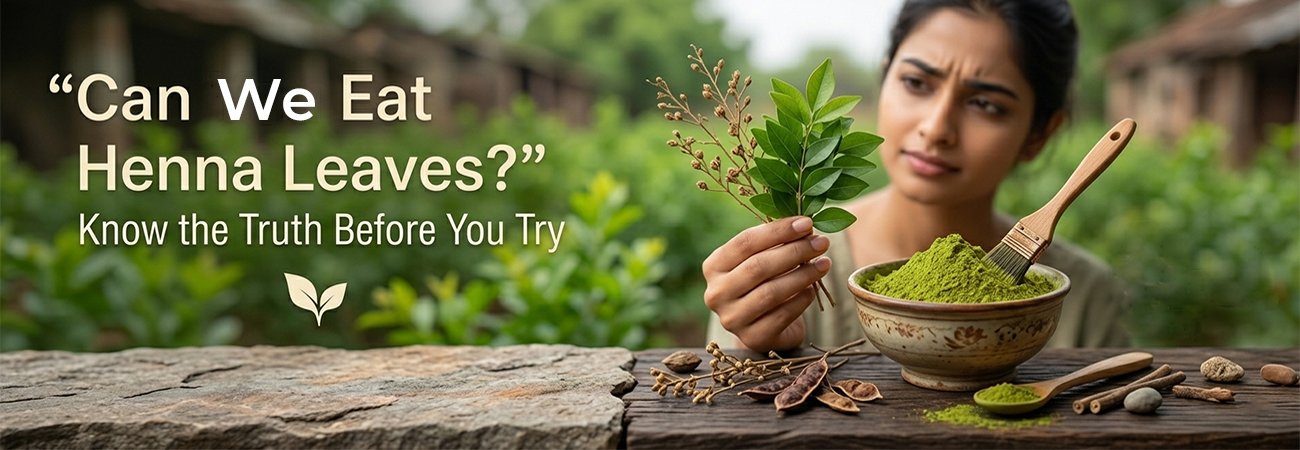
You know what’s funny? I’ve been around henna my whole career — processing it, exporting it, talking to clients about it day in and day out — and yet one of the most common questions I still get asked has nothing to do with hair color or body art. People ask, “Wait, can you actually eat henna leaves?”
And honestly? It’s a fair question. A really fair one.
Most people only ever see henna as that reddish paste on someone’s hands at a wedding, or as a box of powder sitting on a shelf in a beauty store. But this plant — Lawsonia inermis, if you want to get technical — has a history so long and so layered that it almost feels unfair to reduce it to just one thing.
So let’s actually talk about it. No fluff, no unnecessary disclaimers every other sentence. Just the real story of henna, what its leaves can and can’t do, and why this humble plant keeps surprising people even after thousands of years.
Most people know henna as a plant used for coloring — hair, skin, nails. That’s the popular version of the story. But henna has been growing across hot, dry landscapes in India, Pakistan, Egypt, Morocco, and the Middle East for longer than recorded history can fully capture. Ancient Egyptians used it. Traders carried it across continents. Royals used it. Farmers used it. It’s one of those rare plants that somehow found a place in nearly every layer of society it touched.
The plant itself is a shrub — not particularly dramatic-looking. Small oval leaves, clusters of tiny white flowers, and an earthy smell that’s oddly comforting once you get used to it. What makes it special is a compound inside those leaves called lawsone. That’s the thing responsible for the color, the staining, the whole magic of henna. When the leaves are dried and ground into powder, the lawsone is what you’re working with.
At Kirpal Export Overseas, we’ve spent years understanding this plant at a very granular level — not just as a product, but as something with a personality of its own. The time of harvest, the drying conditions, the milling process — all of it affects the final powder. And we’ve learned that henna, when treated with respect, gives you results that no synthetic alternative can quite replicate.
Let me be straight with you — yes and no. And the “yes” part comes with a lot of context.
Henna leaves have never been a food crop. Nobody’s cooking them into curries or throwing them into a smoothie. But in traditional medicine? That’s a different conversation entirely.
In Ayurveda — the ancient Indian system of medicine that’s been around for over three thousand years — henna leaves were recognized as having real therapeutic value. Cooling properties. Astringent qualities. Some anti-inflammatory benefits. Practitioners would use very carefully prepared extracts or pastes made from henna leaves to address things like persistent fevers, liver issues, and headaches. Always in small, controlled amounts. Always with knowledge behind the decision.
The Unani tradition, rooted in classical Perso-Arabic medicine, also made space for henna in its pharmacopoeia. Joint discomfort, burning sensations, certain skin conditions — henna leaf preparations came up as part of the treatment toolkit. Not casually, not randomly, but as part of a system of understanding that took the plant seriously.
In rural parts of Rajasthan and Madhya Pradesh — regions where henna grows almost everywhere — older generations will still tell you about using henna leaves in specific home remedies. This isn’t superstition. These are communities that have lived alongside this plant for generations and developed a real, working knowledge of what it can do.
So there is a documented, legitimate history of henna being used in ways that go beyond skin and hair. But — and this is a significant but — that use was always measured, purposeful, and guided by actual knowledge of the plant.
Henna leaves contain lawsone, and in excessive amounts, lawsone creates a problem in the body called oxidative stress. For most people, external use of henna — on hair, on skin — is completely safe and has been for thousands of years. But consuming it is a very different story.
There’s a condition called G6PD deficiency. It’s a genetic enzyme deficiency that’s more common than most people realize, particularly in parts of South Asia, Africa, and the Mediterranean. People with this condition are especially vulnerable to the effects of lawsone when it enters the bloodstream in significant quantities. It can trigger something called hemolytic anemia — where red blood cells start breaking down faster than the body can replace them. That’s not a minor inconvenience. That’s a serious medical situation.
This is exactly why traditional practitioners never said “eat some henna leaves and you’ll feel better.” The wisdom was always about appropriate form, appropriate dosage, and appropriate context. Traditional medicine isn’t reckless. It’s actually incredibly specific when you look at it closely.
The bottom line here — henna leaves have been used internally in traditional contexts, but not casually and not in large amounts. If you’re curious about exploring henna for any medicinal purpose, that’s genuinely a conversation to have with someone who understands herbal medicine. It’s not something to experiment with on a whim.
Here’s what really gets me about henna. It has survived five thousand years of human history. Trends come and go, empires rise and fall, entire industries are born and die within a generation. And henna is still here. Still being used in the same rituals, still passed down through families, still growing in the same dry soil it always has.
That kind of staying power tells you something.
In Indian culture, the mehndi ceremony isn’t just a pre-wedding tradition — it’s a whole event in itself. Families gather, there’s music, there’s laughter, and women (and increasingly men too) sit for hours getting intricate patterns drawn across their hands and feet. There’s even a belief in many communities that the deeper the henna color develops, the stronger the love between the couple. Whether or not you take that literally, the fact that people still attach that kind of meaning to a plant is remarkable.
In North Africa and the Middle East, henna is tied to celebration and protection. It appears at births, at religious festivals, at moments of major transition. In some traditions, it’s applied to livestock during festivals as a blessing. This isn’t decoration for the sake of decoration. It’s an entire symbolic language that henna has become.
And through all of this — all this cultural weight, all this tradition — the henna leaves themselves have remained the quiet starting point. Everything begins with those small green leaves.
When someone buys wholesale henna powder from us at Kirpal Export Overseas, they’re getting the end result of a process that starts months earlier in the field.
The timing of the harvest matters enormously. Henna leaves harvested just before the plant begins flowering have the highest lawsone content — which means more vibrant, deeper color results. After harvest, the leaves are dried carefully. Too much heat and you damage the lawsone. Too little drying and moisture becomes a problem during storage and shipping. It’s a balance that takes real experience to get right consistently.
Once dried, the leaves are milled into a fine powder. Particle size matters here — a coarser grind behaves differently than a finely milled powder, both in how it mixes and how it releases color. And throughout the entire process, quality control isn’t just a formality. It’s the thing that separates a powder that performs beautifully from one that disappoints.
We supply wholesale henna powder to businesses across different industries — hair care brands, cosmetic companies, body art suppliers, wellness product manufacturers. Each of these businesses has customers who have expectations. Our job is to make sure our powder never lets those customers down.
The shift toward natural ingredients in beauty has been growing for years, but it really started picking up serious momentum when people began asking harder questions about what’s actually in their products. Ammonia. Resorcinol. Paraphenylenediamine. Most people couldn’t tell you exactly what these chemicals are, but they started to feel uncomfortable with the idea of applying them to their scalp every six weeks for decades.
Henna offered a different proposition. No harsh chemicals. No stripping of the hair’s natural structure. Instead, lawsone — the very same compound we’ve been talking about this whole time — actually bonds with the keratin in your hair. It doesn’t just coat the surface. It integrates. This is why henna-colored hair tends to have a different quality to it — a shine, a body, a strength that synthetic dyes don’t typically provide.
And henna doesn’t just color. Regular henna users will tell you that their scalp feels healthier, their hair feels stronger, and issues like dandruff or itchiness often reduce over time. There’s a conditioning effect that comes almost as a bonus.
As a hair color manufacturer, we’ve watched this conversation grow in real time. More brands are seeking natural hair color options. More retailers are creating dedicated natural hair care sections. More consumers are switching — not because they’ve been told to, but because they’ve tried it and felt the difference themselves.
Can you eat henna leaves? Technically, yes — traditional medicine systems have used henna leaf preparations internally for specific purposes over thousands of years. But this was never casual, never unguided, and never in large quantities. The plant has a chemistry that demands respect.
What henna is genuinely exceptional at — where it has earned its place across five millennia of human history — is its external use. On skin, on hair, in art, in ritual. In these contexts, it is safe, it is powerful, and it carries a cultural depth that very few natural ingredients can match.
If you’re a business looking to work with a wholesale henna powder supplier that actually understands this plant from the ground up, we’d love to talk. And if you’re just someone who got curious enough to search “can we eat henna leaves” at some odd hour of the night — well, now you know the real story.
Every henna powder supplier claims to sell the “purest” product on the market. Walk through…
Walk into any natural hair care store, or scroll through a beauty forum for five…
Launching a private label hair color line sounds simple on paper — pick a formula,…
If you’re a UK-based salon chain, hair color brand, or distributor trying to source henna…