Call/WhatsApp: +91-9811618013, +91-9810306077
Email: keohenna@gmail.com, kirpaloverseas@gmail.com
Email: keohenna@gmail.com, kirpaloverseas@gmail.com





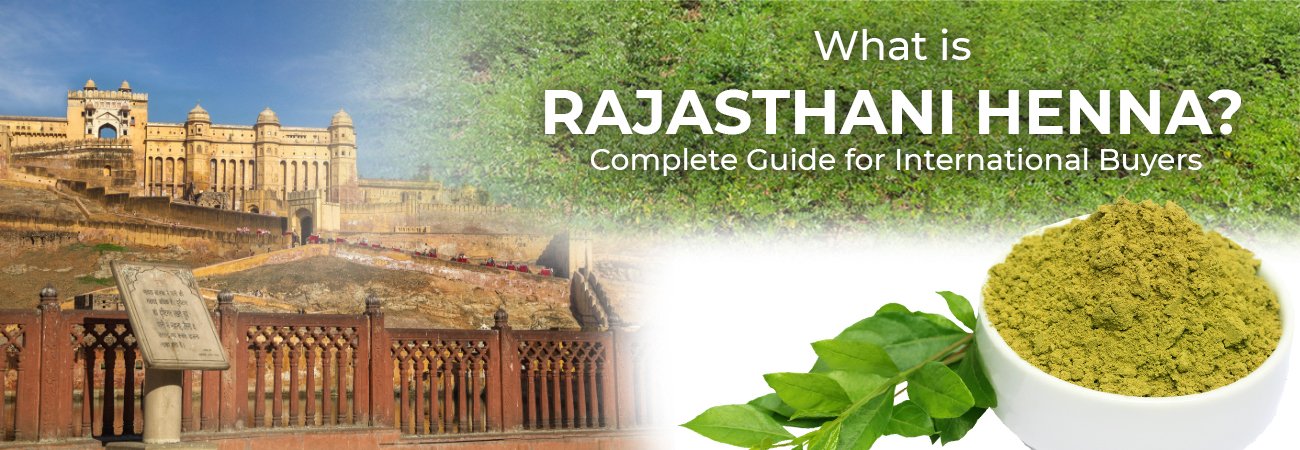
The ancient art of henna has traveled across continents, but nothing quite compares to what comes out of Rajasthan. If you’re an international buyer looking to source authentic henna, this guide will tell you everything you need to know — from the fields where it grows to the factories where it’s processed.
Long before henna became a global beauty trend, the women of Rajasthan were painting their hands with intricate patterns on wedding nights, festivals, and religious ceremonies. The art, known locally as Mehndi, is not just decoration — it is a language of love, prosperity, and tradition woven into the skin.
Rajasthan, India’s largest state by area, sits in the northwest of the country, bordered by the Thar Desert. The hot, dry climate of this region is exactly what the Lawsonia inermis plant — commonly known as the henna plant — loves most. This is why Rajasthan has organically evolved into the henna capital of the world, producing the finest quality henna available anywhere on Earth.
Today, the Rajasthani henna manufacturer industry is a multi-crore export business, supplying premium henna powder, cones, oils, and paste to buyers in the Middle East, Europe, North America, Africa, and Southeast Asia.
Not all henna is created equal. If you’ve ever purchased cheap henna from an unnamed supplier and wondered why the color was pale, or the stain faded within a day, the answer almost always comes down to origin and processing quality.
Here’s what makes Rajasthani henna genuinely different:
Soil and Climate Advantage The Rajasthan soil — particularly in districts like Sojat, Pali, and Nagaur — contains the exact mineral composition that gives henna its high lawsone content. Lawsone is the natural dye molecule responsible for that rich, dark reddish-brown stain. Higher lawsone percentage equals deeper, longer-lasting color. Rajasthan’s henna regularly tests at 2.5% to 3.5% lawsone content, which is among the highest in the world.
Centuries of Farming Knowledg:e Farmers in Rajasthan have been cultivating henna for generations. They know exactly when to harvest — typically just before the plant flowers, when the lawsone concentration in the leaves peaks. This traditional harvesting wisdom is something you simply cannot replicate in a lab or shortcut with modern farming alone.
Sophisticated Processing Infrastructure Over the decades, Rajasthan has built an entire ecosystem around henna — seed suppliers, farmers, processing mills, quality testing labs, packaging units, and export houses — all clustered together. This means a henna manufacturer in Rajasthan has access to raw material, processing technology, and logistics under one roof, which keeps quality consistent and costs competitive.
If you’re serious about sourcing henna, you need to know about Sojat. Located in the Pali district of Rajasthan, Sojat is not just a city — it’s a brand. The town produces nearly 80% of India’s total henna export volume and is home to hundreds of manufacturers, processors, and traders.
Walking through Sojat’s markets during harvest season (typically October to December) is a sensory experience — the air carries the faint, earthy-green scent of dried henna leaves, and every warehouse is stacked floor to ceiling with freshly milled henna powder.
Buyers from Saudi Arabia, UAE, Egypt, Morocco, the United Kingdom, and the United States regularly visit Sojat to build direct supplier relationships. If you are an international buyer and you have not yet explored Sojat as a sourcing destination, you are likely leaving both quality and margin on the table.
When you connect with a serious Rajasthani henna manufacturer, you will find they produce a much wider range of products than most people expect. Here is a breakdown of the main product categories:
1. Natural Henna Powder This is the core product — finely sifted, triple-filtered henna powder made from dried and milled henna leaves. It’s used in hair care, body art, and cosmetic formulations. Quality grades are typically classified by mesh size (finer mesh = smoother paste for body art) and lawsone content (higher percentage = better color payoff).
2. Henna Cones (Pre-Mixed Paste) Ready-to-apply henna cones are a massively popular export product, especially for markets in the Middle East, the UK, and the USA. A good manufacturer will offer natural cones (no PPD or chemical additives) as well as fragrance-infused variants. Shelf life, consistency of paste texture, and stain quality are the key benchmarks buyers should test.
3. Herbal Hair Henna This is a blended product where henna powder is combined with other herbs — amla, shikakai, brahmi, bhringraj, indigo — to create a complete hair treatment that colors, conditions, and strengthens simultaneously. The global demand for herbal hair henna has surged significantly as consumers move away from chemical hair dyes toward natural alternatives.
4. Black Henna / Indigo-Based Products True “black henna” from reputable manufacturers is actually a combination of henna and indigo (Indigofera tinctoria), applied in a two-step process. Beware of suppliers offering “black henna” in a single step — this almost always involves PPD (para-phenylenediamine), a chemical that can cause severe allergic reactions. Any trustworthy henna manufacturer in Rajasthan will be transparent about their formulations.
5. Henna Oil Henna seed oil and henna leaf-infused oils are increasingly popular in the global cosmetics and haircare space. These are niche, high-value products that sophisticated buyers are starting to incorporate into premium beauty lines.
6. Private Label and White Label Henna Most established Rajasthani manufacturers offer custom packaging, private label services, and OEM formulations. This means you can launch your own henna brand — with your logo, your packaging design, your specific formulation requirements — sourced and manufactured right from Rajasthan.
The international henna market is experiencing a remarkable growth wave driven by several converging trends that every buyer should be aware of:
The Clean Beauty Revolution Consumers globally are scrutinizing ingredient labels like never before. Henna — a single-ingredient, plant-derived product with no synthetic chemicals — fits perfectly into the clean beauty narrative. Brands that position their products around “100% natural,” “chemical-free,” and “plant-based” are seeing strong growth, and Rajasthani henna is at the center of this shift.
The Natural Hair Dye Movement With studies linking chemical hair dyes to skin sensitization and other health concerns, a significant portion of the global hair color market is migrating toward natural alternatives. Henna, used for centuries as a hair colorant, is experiencing a genuine renaissance. Search trends for “natural henna hair dye,” “chemical-free hair color,” and “plant-based hair treatment” have grown sharply across Google and social media platforms over the last two years.
Festival and Bridal Markets Internationally, henna application has expanded far beyond South Asian and Middle Eastern communities. Bridal henna is now mainstream in Europe and North America, with a thriving community of professional Mehndi artists. This has created consistent B2B demand for high-quality, artist-grade henna paste and powder.
Wellness and Ayurveda Boom Global interest in Ayurvedic wellness has elevated herbal henna products from a beauty item to a wellness product. When henna is positioned alongside ingredients like amla, neem, and brahmi, it commands premium shelf space and pricing in wellness retail.
Finding a supplier is easy. Finding the right supplier is the real work. Here’s a practical framework for international buyers:
Step 1: Verify Lawsone Content Request a Certificate of Analysis (COA) from any potential Rajasthani henna manufacturer. The COA should specify lawsone percentage, moisture content, mesh size, and microbial count. Don’t accept verbal claims — ask for documented lab reports from accredited testing facilities.
Step 2: Check for Chemical Additives A non-negotiable for export markets, especially Europe and North America: confirm that the product contains no PPD, metallic salts, synthetic dyes, or preservatives that violate your target market’s cosmetic regulations (EU Cosmetics Regulation, FDA guidelines, etc.).
Step 3: Assess Export Experience A henna manufacturer in Rajasthan with genuine international experience will know the documentation requirements cold — MSDS sheets, COA, phytosanitary certificates, country-of-origin certificates, and product safety data. If a manufacturer stumbles on export paperwork, that’s a red flag.
Step 4: Request Samples Before Committing Always, always test samples. Test henna powder for color payoff, mixing consistency, and scent. Test cones for paste texture, flow, and stain depth. Test at room temperature and in conditions that simulate your climate. Color performance in humid conditions can differ significantly from dry conditions.
Step 5: Visit the Facility (Or Use a Third-Party Inspection) If your order volume justifies it, visit Sojat personally. If not, hire a third-party quality inspection agency operating in Rajasthan to conduct a factory audit and pre-shipment inspection on your behalf.
Step 6: Understand MOQs and Lead Times Minimum order quantities and production lead times vary significantly between manufacturers. Smaller boutique manufacturers may offer lower MOQs with longer lead times; larger factories offer scale but expect substantial committed volumes. Negotiate clearly upfront.
Importing henna into international markets involves navigating several regulatory requirements. Here’s what you need to be prepared for:
European Union: Henna products fall under the EU Cosmetics Regulation (EC) No 1223/2009. Products must have a Cosmetic Product Safety Report (CPSR), be notified on the CPNP portal, and comply with restricted substance lists. PPD is banned in EU cosmetic products applied to the skin.
United States: The FDA regulates henna as a cosmetic. “Black henna” products containing PPD for skin use are illegal in the US. Import documentation and proper labeling are essential to clear customs without issues.
Middle East (GCC Countries): Major markets like Saudi Arabia and UAE have their own conformity requirements. Gulf Standard Organization (GSO) standards apply, and product registration may be required in certain markets.
Work with a Rajasthani henna manufacturer who already has experience exporting to your specific target market — they will understand the documentation landscape and can help you avoid costly compliance errors.
Henna pricing fluctuates with harvest quality, global demand, and raw material availability. As a general reference framework (prices vary by grade, volume, and market conditions):
Natural henna powder (standard grade) typically trades in a range suitable for mass-market hair care products. Artist-grade, high-lawsone-content powder commands a significant premium. Herbal blended henna and private label formulations are priced higher still, reflecting the additional ingredients and processing complexity.
The most important pricing principle: do not anchor on the cheapest quote. Henna quality varies enormously, and the cost of selling an inferior product to your customers — in returns, reputation damage, and safety liability — will always exceed the margin you saved at the sourcing stage.
International buyers who get the most value from Rajasthan’s henna industry are not those who chase the lowest spot price. They are the ones who invest in genuine partnerships with a trusted Rajasthani henna manufacturer.
What a strong partnership looks like in practice: You commit to consistent order volumes, even if modest. Your manufacturer gives you priority production slots, early visibility into seasonal price changes, and is open to custom formulation requests over time. You communicate quality expectations clearly, and they proactively flag any supply-side challenges before they affect your inventory.
This kind of relationship — built on transparency and mutual commitment — is how the world’s most successful henna importers operate.
Rajasthani henna is not just a commodity. It is the product of centuries of agricultural tradition, an ecosystem of skilled farmers and processors, and a deeply embedded cultural heritage. When you source from a genuine henna manufacturer in Rajasthan, you are accessing the best that the global henna industry has to offer.
Do your due diligence. Test before you commit. Build relationships, not just transactions. And when you find a manufacturer in Sojat or the broader Rajasthan region who meets your quality standards and shares your values around natural, ethical production — hold onto them. That partnership will serve your business for years to come.
The world is increasingly hungry for natural, plant-based beauty solutions. Rajasthani henna is beautifully positioned to meet that demand. The only question is whether you’re ready to source it right.
Every henna powder supplier claims to sell the “purest” product on the market. Walk through…
Walk into any natural hair care store, or scroll through a beauty forum for five…
Launching a private label hair color line sounds simple on paper — pick a formula,…
If you’re a UK-based salon chain, hair color brand, or distributor trying to source henna…