Call/WhatsApp: +91-9811618013, +91-9810306077
Email: keohenna@gmail.com, kirpaloverseas@gmail.com
Email: keohenna@gmail.com, kirpaloverseas@gmail.com





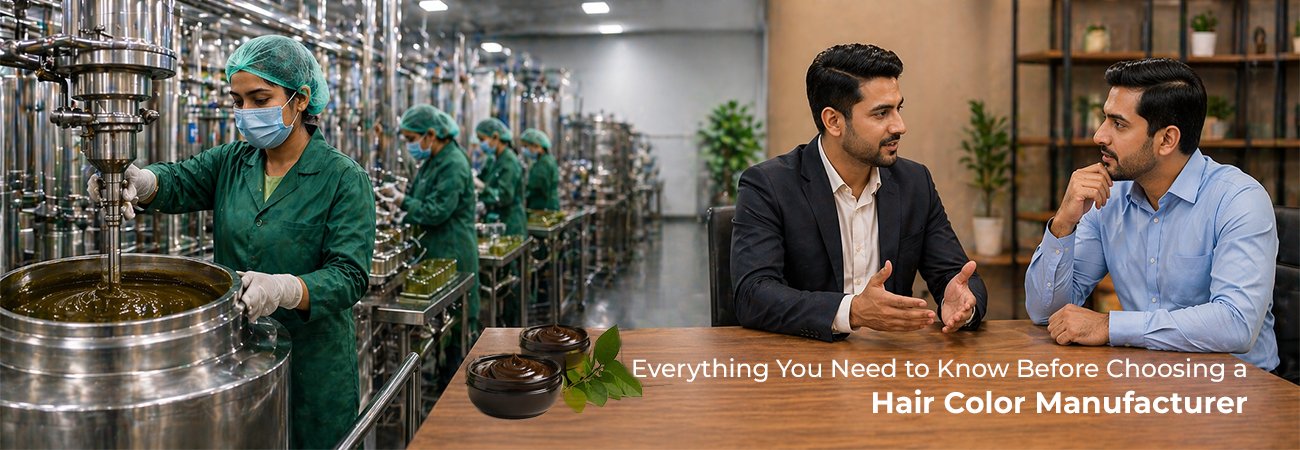
When you pick up a box of hair color from a store shelf, do you ever wonder who actually made it? Not the brand name printed on the front — but the actual people, the actual place, the actual process behind it?
Most of us don’t. And honestly, I get it. You’re standing in the aisle, you’re in a hurry, the packaging looks nice, and the model on the box has gorgeous hair. You just want something that works.
But here’s the thing — the manufacturer behind your hair color is probably the most important factor you’ve never considered. And once you understand why, you’ll never look at a hair color product the same way again.
Here’s something the beauty industry quietly hopes you never find out.
Most hair color brands — even the popular, well-packaged ones — don’t actually make anything. They design the box, they run the ads, they hire the influencers. But the actual product? It’s made somewhere else, by someone else, often with ingredients that are never fully disclosed.
This isn’t a conspiracy. It’s just how a lot of consumer product industries work. But it matters enormously when we’re talking about something you’re putting directly on your scalp.
Your scalp isn’t just skin. It absorbs. Whatever you apply on it finds its way into your body over time. So the ingredients list on that shiny box? It deserves a lot more attention than most of us give it.
Let me be straight with you here.
Chemical hair colors work. Nobody’s denying that. They cover grey hair fast, the colors are consistent, and they last. But the ingredients that make them work so well are also the ingredients that quietly cause harm over time.
Ammonia. PPD. Hydrogen peroxide. Resorcinol.
These aren’t gentle things. If you’ve ever felt your scalp burn during a coloring session, or noticed your hair getting thinner and more brittle year after year, or experienced an allergic reaction out of nowhere — there’s a very good chance these ingredients had something to do with it.
The damage is often slow and invisible at first. And by the time most people notice it, years of use have already taken their toll.
This is why so many people — and I’m seeing this more and more — are actively looking for something different. Something that actually works but doesn’t come with a hidden cost.
Here’s what I find genuinely fascinating.
While modern cosmetic science was busy developing chemical formulas in laboratories, Indian women had already perfected a system of hair care that was entirely plant-based, deeply effective, and passed down through generations without a single clinical trial — because the results spoke for themselves.
Shikakai. Henna. Indigo. Amla. Bhringraj. Reetha.
These aren’t trendy wellness ingredients that Instagram discovered last year. These are plants that Indian households have been using for hair care for thousands of years. Not because they were fashionable — but because they genuinely worked.
And now the global beauty industry, after decades of pushing chemicals, is slowly coming back to what India never stopped doing.
If I had to pick just one herb to talk about, it would be Shikakai. Every time.
The name itself tells you everything — Shikakai literally means “fruit for hair” in Hindi. It comes from the Acacia concinna plant, and it has been used across India for as long as anyone can remember as a natural cleanser, conditioner, and hair strengthener.
But what makes Shikakai genuinely special isn’t just tradition. It’s the science behind it.
Shikakai has a naturally low pH — which means it cleans the scalp without stripping away the natural oils your hair actually needs. It’s rich in vitamins A, C, D, E, and K. It reduces hair fall. It fights dandruff without drying out the scalp. And unlike most cleansing agents, it leaves hair softer, not rougher.
When you add Shikakai to a hair color formulation, something interesting happens. Instead of a product that damages while it dyes, you get one that nourishes while it works. The color process becomes something your hair actually benefits from rather than recovers from.
That shift — from damaging to nourishing — is the whole point.
Good herb-based hair color is never about one ingredient. It’s always a conversation between plants.
Henna has been the foundation of natural hair coloring in India forever. Real henna — the kind sourced from Sojat in Rajasthan, which produces the finest quality in the world — coats the hair shaft beautifully, adds body and shine, and gives a rich, warm tone that deepens with every application. It doesn’t just color. It strengthens.
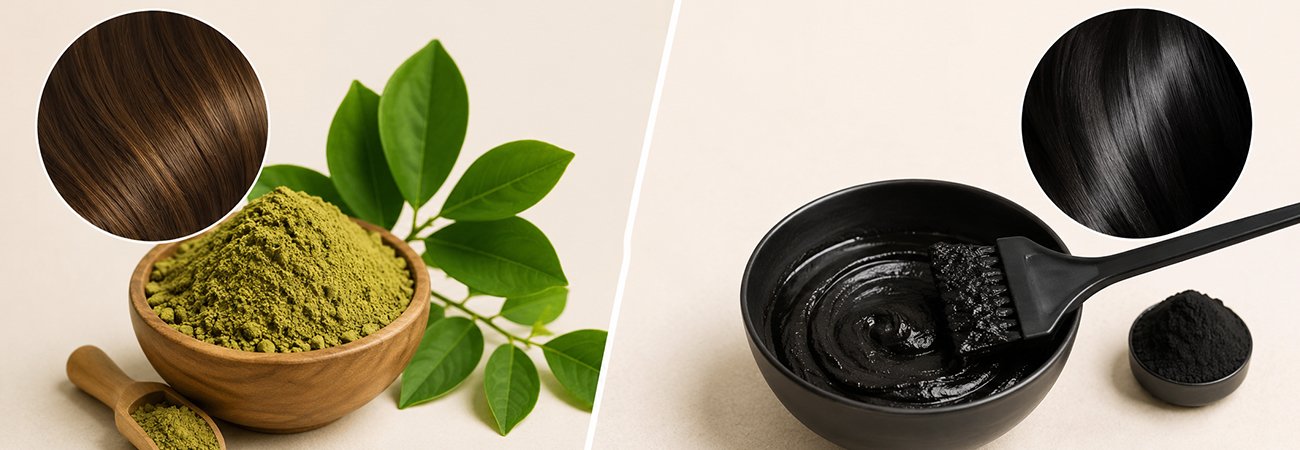
Indigo is what takes you from warm brown all the way to deep, natural-looking black. Used alongside henna, it can produce a full range of shades without a single synthetic dye in sight.
Amla — Indian gooseberry — is the one ingredient that Ayurvedic practitioners have recommended for hair health above almost everything else. It’s loaded with Vitamin C, it promotes growth, it delays premature greying, and it gives hair a luster that you genuinely notice.
Bhringraj is called the “king of herbs” for hair in Ayurveda, and it earns that title. It stimulates follicles, reduces hair loss, and helps the hair hold onto its natural pigment longer.
Reetha works quietly in the background as a natural cleanser — gentle, effective, and completely free of the sulfates and synthetic foaming agents that cause so much scalp irritation in conventional products.
Each of these herbs has a role. Each one supports the others. And when a manufacturer truly understands this — when they know not just what these plants are, but how they interact and how to work with them — the result is something that genuinely stands apart.
This is the part I really want you to sit with.
Because the word “natural” has been stretched so far in the beauty industry that it has almost lost its meaning. You’ll find “natural” written on products that are mostly synthetic. You’ll find “herbal” on labels where the herbs are present in quantities so small they do essentially nothing.
So how do you tell the difference?
A manufacturer worth trusting will always be transparent about where their raw materials come from. Not vague about it — specific. Which region. Which farms. What standards. Because the quality of a herb is directly tied to where and how it was grown, and a manufacturer who doesn’t know their supply chain doesn’t really know their product.
They will have real experience with herbal formulations — not just a product line they launched because herbs became fashionable. Working with natural ingredients is genuinely complex. Seasonal variations affect potency. Processing methods affect quality. Blending requires deep knowledge. This is not something you learn in a year.
They will be able to tell you about their manufacturing process in plain language. Not marketing language — actual process. How the herbs are sourced, how they’re processed, how the final product is tested. If a manufacturer gets vague or evasive when you ask these questions, pay attention to that.
And ideally — ideally — they will be a direct manufacturer. Someone who controls the process from raw material to finished product. Because every middleman in the chain is another point where quality can be compromised, and costs can be inflated.
I’ll be honest — I’m not going to pretend we’re an unbiased voice here. We are Kirpal Export Overseas, and we are a manufacturer.
But everything I’ve written above is exactly why we exist and exactly how we operate.
We’re based in India, in the region where many of these herbs have been cultivated for generations. Our Shikakai, our Henna, our Indigo, our Amla — we source these directly. We know where they come from because we’re involved in that process, not just purchasing from a supplier who purchases from another supplier.
Our herb-based hair colors are formulated around these ingredients because we genuinely believe in what they do. Shikakai is at the core of our formulations not because it’s a trend but because, after years of working with natural ingredients, we know what actually works and what doesn’t.
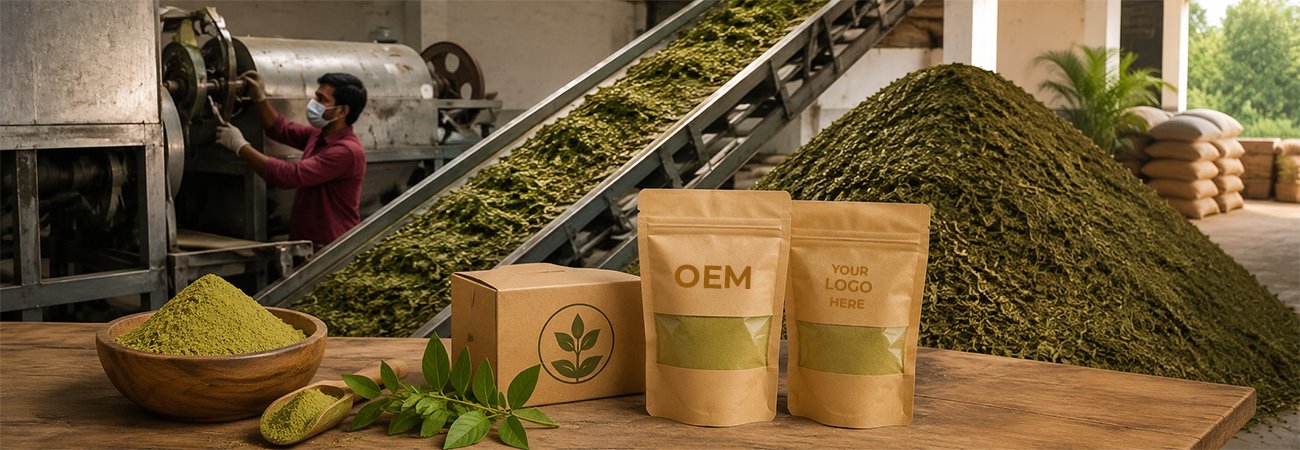
We work with businesses of all sizes — salons, retailers, cosmetic brands looking for private label manufacturing, and exporters supplying markets in Europe, the Middle East, and beyond. The order size changes. The standard doesn’t.
We’re not the loudest name in the room. We don’t have celebrity ambassadors or viral campaigns. What we have is a product we’re genuinely proud of, a process we can fully explain, and years of relationships with people who came back because what we made actually worked.
The hair color market is genuinely overwhelming. There are hundreds of options, most of them making similar claims, and very few ways for an ordinary person to verify what’s true and what isn’t.
But here’s a simple filter that I think actually works.
Ask who made it. Ask where the ingredients come from. Ask what the process looks like. If the answers are clear, specific, and honest — that’s a good sign. If the answers are vague, full of marketing language, and hard to pin down — walk away.
Choosing an herb-based hair color from a manufacturer who genuinely understands natural ingredients isn’t just a better choice for your hair. It’s a better choice for your health, for your peace of mind, and — in a small but real way — for a beauty industry that desperately needs more honesty in it.
If that sounds like the kind of manufacturer you want to work with, we’d love to hear from you.
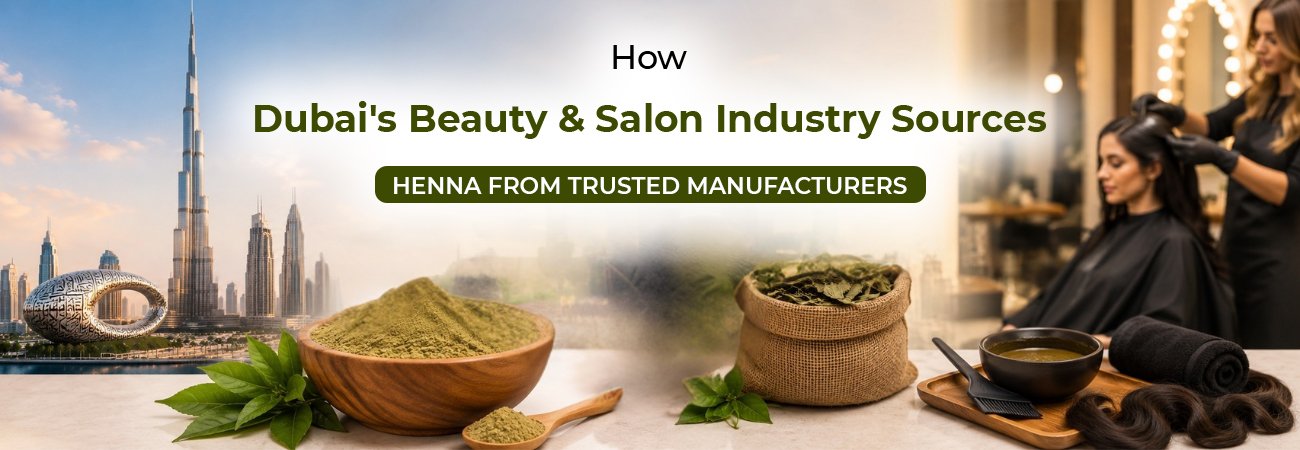
Walk into a salon in Dubai Marina, a beauty souk stall in Deira, or a…
Every buyer says they want “sustainable” henna these days. Type the phrase into any B2B…
If you’ve ever stood in front of a henna supplier’s catalogue and wondered why one…
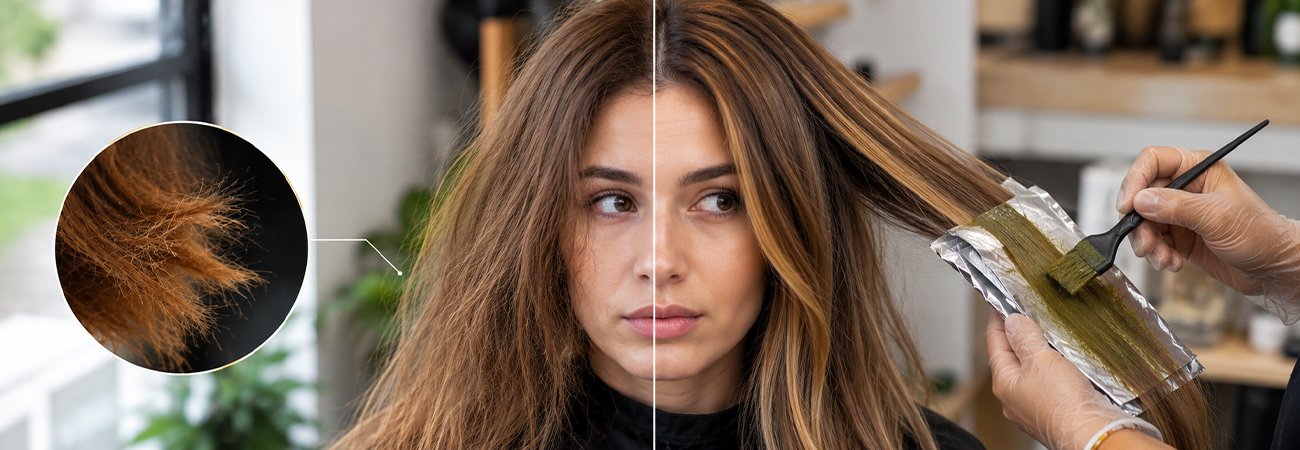
If your hair already feels dry, brittle, or over-processed, the idea of adding blonde highlights…