Call/WhatsApp: +91-9811618013, +91-9810306077
Email: keohenna@gmail.com, kirpaloverseas@gmail.com
Email: keohenna@gmail.com, kirpaloverseas@gmail.com





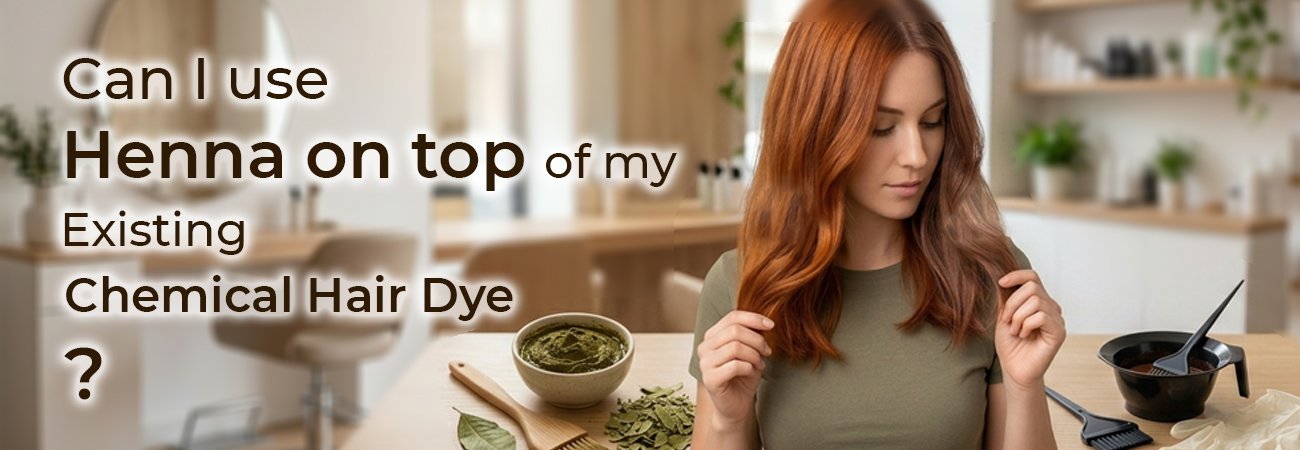
If you’ve ever stood in front of the mirror, staring at your chemically colored hair and wondering, “Can I just switch to something more natural?”—you’re not alone. Millions of people around the world are asking the same question every single day. And honestly, it makes sense. After years of ammonia, peroxide, and synthetic dyes, your hair deserves a break.
So let’s talk about it—honestly, practically, and without the complicated chemistry lecture.
Henna is not just a hair dye. It’s a plant. Specifically, it comes from the Lawsonia inermis plant, whose leaves are dried and ground into a fine powder. That powder, when mixed with water or other natural liquids, releases a natural dye molecule called “lawsone.” This molecule bonds directly with the keratin protein in your hair — it doesn’t open the cuticle like chemical dyes do. It coats and strengthens it.
This is exactly why companies like Kirpal Export Overseas, one of India’s trusted herbal hair color manufacturers, have been supplying pure, natural henna powder to markets across the globe. Because when henna is 100% pure — no additives, no metallic salts, no synthetic chemicals — it is one of the safest things you can put on your hair.
But here’s where it gets interesting.
Short answer: Yes, but with conditions.
The longer answer is it depends on what kind of chemical dye you’ve used, how your hair is currently feeling, and most importantly, what type of henna you’re planning to use.
Let’s break this down properly.
If your hair has been colored with a standard box dye or salon color and it’s still in reasonably good condition—not overly dry, not breaking—then applying pure henna powder on top is generally safe.
What will happen? The henna will deposit its natural reddish-orange tone on top of your existing color. The result can vary. On dark hair, you might see a subtle reddish tint in sunlight. On lighter or blonde-dyed hair, you could see a more vivid copper or auburn result. On grey or white sections that were previously dyed, the henna will show up the brightest.
Think of it like layering a watercolor wash over a painted canvas. The base color shows through and blends with the new tone.
This is where you need to slow down and think carefully.
Bleached hair has an open, porous cuticle structure. It absorbs everything much more aggressively. When you apply henna on bleached hair, the color uptake is intense, and the result can be very vivid—sometimes an almost neon orange.
This is not harmful necessarily, but it can be a shock if you weren’t expecting it. More importantly, once henna is on bleached hair, reversing or lifting it with chemicals later becomes extremely complicated.
So if you’re planning to go back to chemical coloring at any point in the future, think carefully before applying henna over bleached sections.
This is the most important warning in this entire blog, and please read it carefully.
Not all henna is real henna.
So-called “black henna” or many cheap henna products sold in the market contain para-phenylenediamine (PPD)—a chemical compound that is also found in synthetic hair dyes. Some products labeled as henna also contain metallic salts like lead acetate or silver nitrate.
If you’ve been using these products, or if you’re planning to use a “henna” that promises jet black color without any reddish tint, that is NOT pure henna. And applying chemical dye over such products, or applying such products over chemical dye, can cause unpredictable reactions, including hair breakage, scalp irritation, and, in some cases, allergic reactions.
This is why sourcing matters. This is why manufacturers matter.
At Kirpal Export Overseas, every batch of henna powder is processed with quality control in mind. As experienced herbal hair color manufacturers, they supply wholesale henna powder to international buyers—from cosmetic brands to private-label businesses—with full transparency about what is in the product. Pure henna. Nothing else.
Here’s a simplified version of the science:
Chemical hair dyes work by penetrating the hair shaft and depositing color molecules inside the cortex. They use ammonia to open the cuticle and hydrogen peroxide to oxidize the color.
Henna works completely differently. The lawsone molecule attaches to the outside of the keratin—it wraps around the hair shaft. It does not penetrate the cortex the way chemical dye does.
Because of this fundamental difference, henna applied over chemically colored hair does not “cancel” or “ruin” the chemical color in a dangerous way. The two processes are happening in different layers of the hair structure.
However — and this is important — if you try to chemically dye over henna-treated hair, you may face more resistance because the henna coating can block the chemical dye from penetrating as deeply. This is why many people find that once they commit to henna, they truly commit to it.
If you’re ready to make the switch, here’s a practical approach:
Step 1 — Be patient with timing. Wait at least two to four weeks after your last chemical color treatment before applying henna. This gives your hair shaft some rest and allows any scalp sensitivity to calm down.
Step 2 — Do a strand test. Take a small section of hair — ideally from underneath where it won’t show — and apply your henna mix. Leave it for the full processing time and then rinse. Check the color result and the texture. This tells you exactly what to expect on your full head of hair.
Step 3 — Use only pure henna. Read the ingredient list. Pure henna powder should have exactly one ingredient: Lawsonia inermis leaf powder. If you see a list of ten ingredients, synthetic colorants, or chemical-sounding names, put it down.
Step 4—Deep condition before applying. Chemically colored hair tends to be more porous. Doing a deep conditioning treatment a few days before your henna application helps even out the porosity, which leads to more even color results.
Step 5 — Prepare your henna mix properly. Mix your henna powder with a slightly acidic liquid—lemon juice, apple cider vinegar, or strong brewed tea—and let it sit for 6 to 12 hours before applying. This is called “dye release,” and it activates the lawsone molecule for maximum color payoff.
Let’s be honest, because a lot of blogs oversell henna. Here’s the truth:
On previously dark, chemically colored hair, you’ll likely get a subtle reddish sheen, most visible in sunlight. The overall dark tone will remain. Your hair will feel thicker and stronger.
On medium brown or light brown chemically colored hair: You’ll see a noticeable warm auburn or copper shift, especially on lighter sections.
On grey roots that were previously covered with chemical dye: Once you transition to henna, your grey areas will turn a beautiful reddish-orange. Many people come to love this two-tone, natural look. Others blend indigo with henna to get a darker result on grey sections.
On heavily bleached hair: Deep, vivid orange or copper. Beautiful if that’s your goal. A surprise if it’s not.
The global conversation around clean beauty, ingredient transparency, and scalp health has genuinely shifted in the last few years. People are reading labels. People are asking questions. And people are looking for suppliers and brands they can trust.
This is exactly the space that companies like Kirpal Export Overseas have been serving for years. As a well-established name among herbal hair color manufacturers in India, they supply wholesale henna powder in bulk quantities to cosmetic brands, private label companies, and distributors across Europe, the Middle East, North America, and beyond.
The demand for pure, unadulterated herbal hair color has never been higher. And the supply chain starts with manufacturers who take purity seriously.
Will henna damage my already-dyed hair? Pure henna does not damage hair. In fact, it is well known for its conditioning properties. It can make fine or fragile chemically colored hair feel thicker and more resilient over time.
Can I go back to chemical dye after using henna? Technically yes, but it becomes more unpredictable. The henna coating on the hair shaft can interfere with how chemical dye deposits. Many colorists recommend waiting several months and doing multiple clarifying treatments before attempting chemical color over henna.
How long does henna last on chemically colored hair? Henna is permanent in the sense that it does not wash out. It fades very gradually over time, especially with frequent washing. Most people see their henna color last six to eight weeks before they consider a refresh.
Does henna cover gray on chemically colored hair? Yes. Henna is actually one of the most effective natural options for grey coverage. However, the result on grey will be orange or red, not a natural brown or black, unless indigo or other herbal colors are added to the mix.
Switching from chemical hair dye to henna is not a decision you need to rush. It’s a lifestyle shift, in a way. You’re choosing something that’s slower, more natural, and more connected to what your hair actually needs—rather than what a synthetic formula promises.
And when you do make that switch, what you put on your hair matters as much as the decision itself. Pure henna from a reputable source is not the same as a cheap product with a misleading label.
If you’re a brand, a salon chain, or a distributor looking for consistent-quality wholesale henna powder—or if you’re searching for trusted herbal hair color manufacturers who can supply at scale—KirpalExport Overseas has been building that trust in global markets for years.
Your hair deserves honesty. So does your supply chain.
Every henna powder supplier claims to sell the “purest” product on the market. Walk through…
Walk into any natural hair care store, or scroll through a beauty forum for five…
Launching a private label hair color line sounds simple on paper — pick a formula,…
If you’re a UK-based salon chain, hair color brand, or distributor trying to source henna…