Call/WhatsApp: +91-9811618013, +91-9810306077
Email: keohenna@gmail.com, kirpaloverseas@gmail.com
Email: keohenna@gmail.com, kirpaloverseas@gmail.com





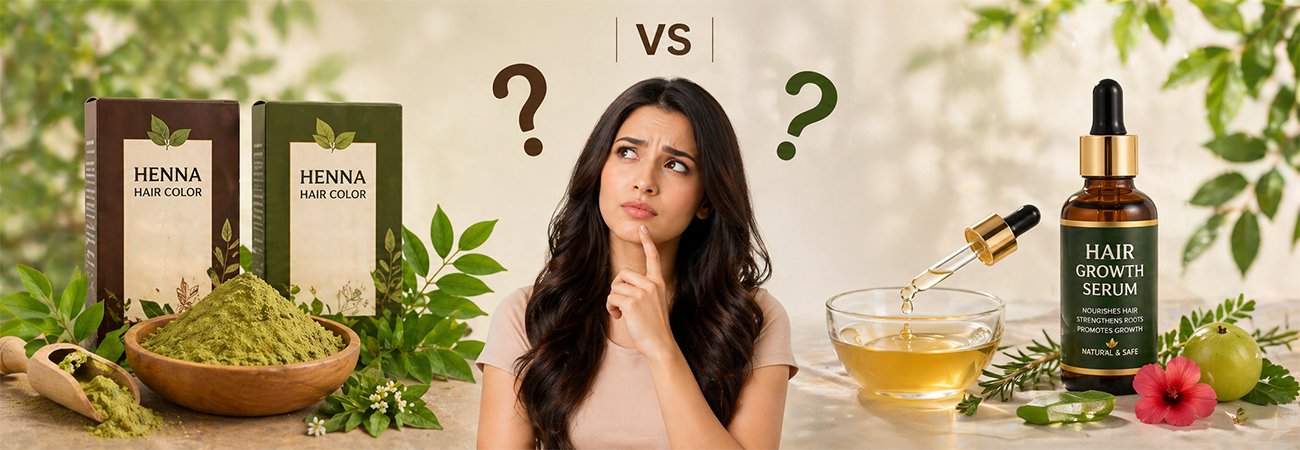
Walk into any beauty store in the USA right now, and you will find two things flying off the shelves faster than almost anything else — hair growth serums and natural henna hair color. Both come with bold promises. Both have massive fan bases. And both have people swearing by them online like they discovered the secret to perfect hair.
But here is the question nobody really stops to answer properly — if your actual goal is healthier hair, which one delivers? Are you better off dropping money on a fancy hair growth serum with a list of ingredients you need a chemistry degree to understand? Or does something as old and natural as henna hair color do more for your hair in the long run?
I spent a lot of time digging into this because I genuinely wanted an honest answer. Not a marketing answer. Not an influencer-sponsored answer. A real one. And what I found surprised me in a few ways.
Let me walk you through all of it.
Before we get into the actual breakdown, it is worth understanding why this topic is trending so hard across the USA right now.
People are tired. Tired of products that promise everything and deliver almost nothing. Tired of spending serious money on serums that come in tiny bottles with fancy packaging and a long list of synthetic ingredients. Tired of chemical hair dyes that leave their scalp burning and their hair looking great for three weeks before it starts breaking off.
At the same time, there is a growing wave of people going back to basics. Plant-based. Natural. Stuff that has actually been tested by generations of real humans, not just a lab study funded by the brand selling the product.
Henna hair color sits right in the middle of that movement. And hair growth serums, despite being a relatively newer product category, have become a daily staple for millions of Americans dealing with thinning, breakage, and sluggish hair growth.
So the comparison makes total sense. One is an ancient plant-based remedy. The other is modern cosmetic science. Which one is actually worth your time and money when it comes to hair health?
Let us start here because there is a lot of confusion about what hair growth serums are even supposed to do.
Most hair growth serums work by targeting the scalp rather than the hair strand itself. The idea is that healthier scalp conditions lead to healthier hair growth from the follicle. Common active ingredients include things like peptides, biotin, caffeine, niacinamide, and various plant extracts. Some higher-end serums include minoxidil, which is an FDA-approved ingredient for hair regrowth that was originally developed as a blood pressure medication and discovered to have hair growth side effects.
The honest truth about most serums on the market is that results vary wildly from person to person. Factors like the cause of your hair thinning, your overall health, your diet, and how consistently you use the product all play a role. Some people see genuine, measurable improvement. Others use a serum for six months and notice absolutely nothing.
What serums do not do is improve the health of existing hair strands. They work upstream — at the scalp and follicle level. Once hair has grown out of the follicle, the serum has done its job. The actual strand itself is on its own after that.
This is an important distinction and it is one that most product marketing conveniently glosses over.
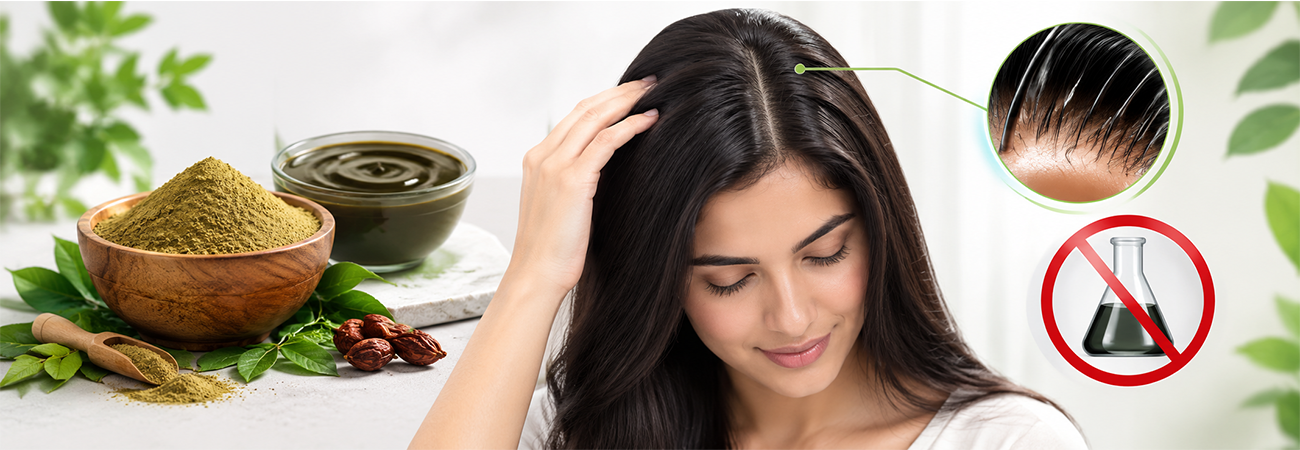
Henna is not a hair growth product. I want to be upfront about that. If you are dealing with significant hair loss or thinning at the scalp level, henna alone is not going to reverse that.
But what henna does to the existing hair strand is genuinely remarkable — and this is where it pulls ahead of serums in a big way.
Henna contains a compound called lawsone, which bonds directly with keratin — the protein that makes up your hair. When you apply good quality henna to your hair, it does not strip the cuticle open like chemical dyes do. Instead, it coats the strand from the outside and actually strengthens it. This is why people who switch to henna often notice that their hair feels noticeably thicker, more resilient, and less prone to breakage after a few months of regular use.
Henna also has natural antifungal and antimicrobial properties, which can improve scalp health over time. A healthier scalp, as we just established, contributes to healthier hair growth. So while henna is not a dedicated growth treatment, it does create better conditions for healthy hair to thrive.
The quality of the henna you use here is everything. Not all henna products are created equal. A trusted herbal hair color manufacturer uses pure Lawsonia inermis leaves, processes them carefully to preserve the lawsone content, and does not cut the product with synthetic dyes, metallic salts, or fillers. The difference in results between genuine herbal henna and low-grade adulterated products is night and day.
Here is the most useful way to think about this.
Your hair has two main zones — the scalp and follicle (where new hair is produced) and the strand itself (the hair that is already grown and visible).
Hair growth serums operate primarily on the scalp and follicle zone. When they work well, they can stimulate dormant follicles, extend the growth phase of the hair cycle, and improve the conditions under which new hair grows. They do not do much for the strands that are already there.
Henna hair color operates primarily on the strand zone. It strengthens, coats, and protects existing hair. It adds body and reduces breakage. It can also improve scalp health through its natural properties, but it is not a targeted follicle treatment.
So if you are dealing with thin, fragile, damaged existing hair — henna has more to offer you right now. If you are dealing with active hair loss, slow growth, or receding areas — a quality hair growth serum is the more targeted tool.
And here is the thing that most people do not consider: you do not have to pick just one. A thoughtful hair care routine can include both — a good serum working on the scalp level and quality herbal henna working on the strand level. Together they actually complement each other rather than cancel each other out.
Let me talk about something that does not get enough attention in these conversations — where your henna comes from and who makes it.
The global market for herbal hair color has exploded in recent years, and like any fast-growing market, it has attracted both excellent producers and a flood of low-quality imitators. Products labeled as “natural henna” or “herbal hair color” can range from genuinely pure plant-based powders to synthetic dye mixtures that just use the word henna as a marketing term.
This is why working with a reputable herbal hair color manufacturer matters so much. A manufacturer that takes quality seriously will source raw Lawsonia inermis leaves from verified farms, process the leaves correctly to preserve dye content and purity, test batches for consistency and freedom from contaminants, and be transparent about what goes into their product.
One name that consistently comes up when people talk about quality and reliability in this space is Kirpal Export Overseas. As an established herbal hair color manufacturer and exporter, Kirpal Export Overseas has built a reputation for producing henna and herbal hair color products that meet genuine export quality standards. When you see their products, you are looking at something made with actual care for the raw material — not just a marketable label slapped on an inferior product.
For anyone buying henna in bulk — whether you are a salon owner, a retailer, or someone who goes through a meaningful amount of henna every month — sourcing from a manufacturer with real export quality credentials like Kirpal Export Overseas makes a significant difference in the consistency and performance of what you are applying to your hair.
Export quality is not just a fancy phrase. It means the product has been manufactured to meet standards required by international markets, which in the world of herbal hair products means purity testing, appropriate processing, and documentation of what is actually in the product. This matters for your hair and for your scalp safety.
Since we are being practical here, let me break down what to look for when choosing between these two product types.
For hair growth serums, the ingredients with the most research behind them include minoxidil if you want something clinically proven, caffeine which has shown genuine results in stimulating follicles in multiple studies, peptides like Capixyl or Redensyl which support follicle health, and saw palmetto which may help with DHT-related hair thinning. What you want to avoid in serums are heavy alcohols that dry out the scalp, heavy silicones that can build up and clog follicles, and overpromising labels with a dozen “proprietary blends” that do not disclose actual concentrations.
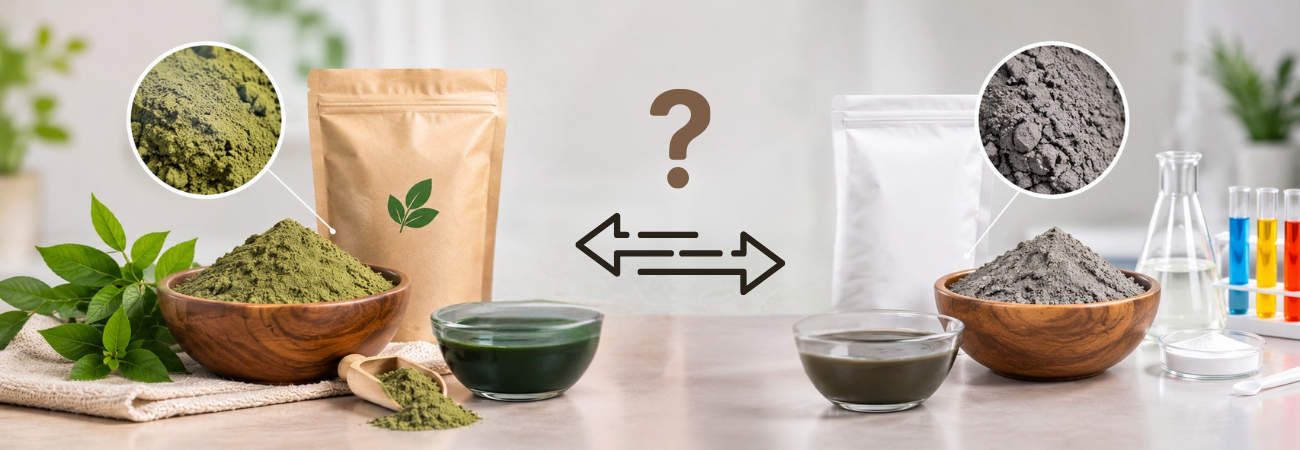
For herbal henna hair color, the ingredient list should be short and recognizable. Pure henna powder from a quality herbal hair color manufacturer will list Lawsonia inermis as the main or only ingredient. Some quality blends will include other herbal additions like amla, brahmi, bhringraj, or shikakai — all of which have their own genuine hair benefits. What should not be in there is PPD (paraphenylenediamine), resorcinol, metallic salts, or anything that sounds synthetic. These additions are how manufacturers fake the “black henna” look, and they are genuinely risky for scalp health.
Here is something worth sitting with for a moment.
The average American woman who colors her hair with chemical dye has been doing it since her mid-twenties or earlier. That is potentially decades of scalp exposure to ammonia, peroxide, and synthetic dye molecules. Over time, this takes a toll — on the hair strand, on the scalp’s natural microbiome, and for some people, on overall hair thickness and health.
This is a big part of why the conversation around henna and herbal hair color has gained so much traction in the USA specifically. People are not just looking for a trendy natural alternative. Many of them are genuinely trying to undo damage and get healthier hair without giving up color entirely.
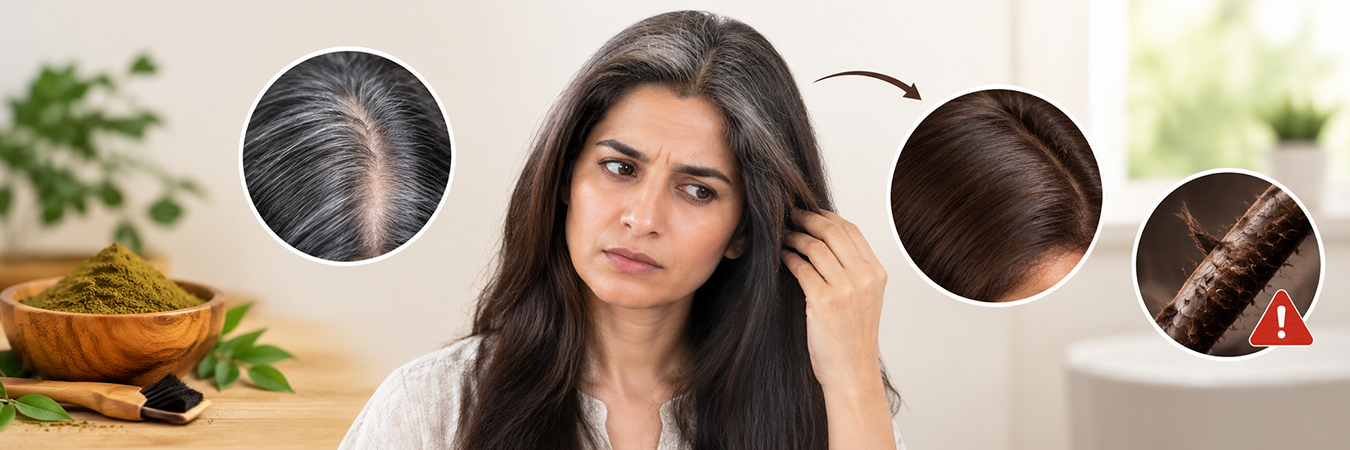
Herbal henna gives them that option. They can cover grey, add warmth and richness to their natural color, and actually improve the condition of their hair in the process — all without the chemical burden of a traditional dye. And when that henna comes from a quality herbal hair color manufacturer that has export-grade standards, they can be confident they are getting exactly what is on the label.
I want to be straight with you about what each of these can and cannot do, because the beauty industry is not always honest about this.
Hair growth serums, even the best ones, typically take three to six months of consistent use before you see meaningful results. Some people see great results. Some people see modest improvement. And some people, despite doing everything right, see very little change — because hair loss and thinning have many causes, and not all of them respond to topical serums.
Henna hair color works more visibly and consistently because what it does is immediate and measurable — it coats the strand, adds color, and creates a physical difference you can see and feel after the very first application. The health improvements build over time with repeated use, but the first session already tells you whether this is working for you.
One more honest note — henna does require more time and patience than chemical dye. You mix it, you wait for dye release, you apply it carefully, you leave it on for a few hours. It is not a 30-minute process. But for most people who have made the switch, the trade-off is completely worth it once they see what regular henna does for the overall health and feel of their hair.
After going through all of this, here is my honest take.
If healthier hair is your goal — not just faster growth, not just better color, but genuinely healthier hair overall — henna from a trusted herbal hair color manufacturer is one of the most underrated tools available. It addresses the existing strand in a way that almost nothing else does. It strengthens, conditions, and protects. And when you source it well — from an established, export-quality manufacturer like Kirpal Export Overseas — you know exactly what you are putting on your head.
Hair growth serums earn their place if you are genuinely dealing with thinning, slow growth, or follicle-level concerns. Used correctly and consistently, the right serum can make a real difference. But they are a scalp treatment, not a hair treatment, and that distinction matters.
Used together thoughtfully, these two products cover almost the entire spectrum of what your hair actually needs — growth support at the root and strength support along the strand.
That is a pretty solid combination. And it is a much better strategy than chasing whichever product just got 100,000 views on TikTok last week.
Your hair deserves more than hype. It deserves something that actually works. And now you know enough to make that call yourself.
The patch test is the most boring step in hair colouring, and the one most…
Every natural hair color manufacturer eventually gets the same message from a buyer: “The black…
Look closely at a microbladed brow around the eighteen-month mark, and the story is usually…
A customer once told us something we still remember. She had been colouring her gray…