Call/WhatsApp: +91-9811618013, +91-9810306077
Email: keohenna@gmail.com, kirpaloverseas@gmail.com
Email: keohenna@gmail.com, kirpaloverseas@gmail.com





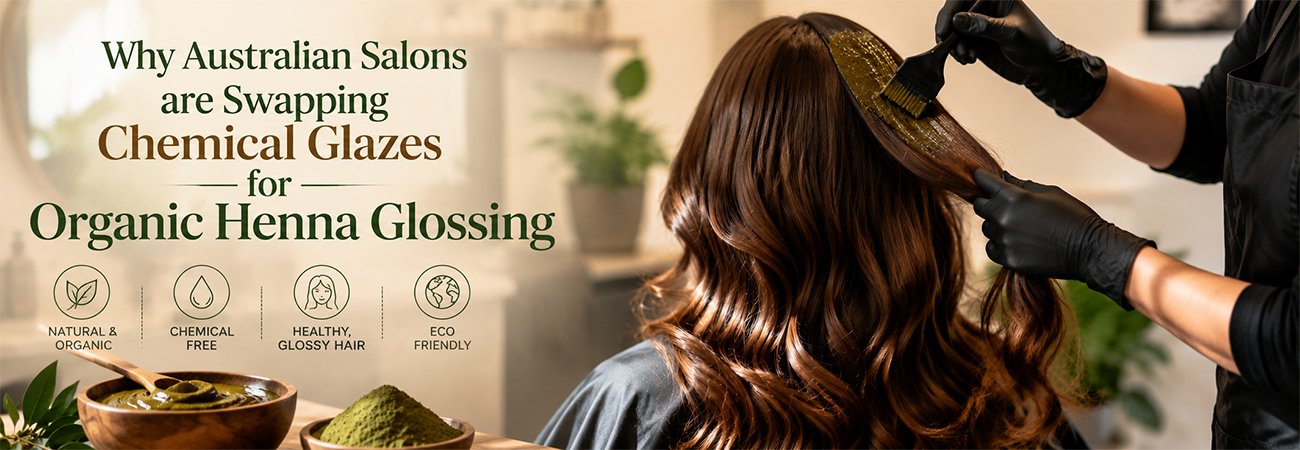
From the treatment rooms of Melbourne to the beachside studios of Byron Bay, something quietly radical is happening in Australian hair salons.
Walk into any forward-thinking salon in Sydney or Brisbane today, and you’re just as likely to hear clients asking for “a henna gloss” as you are a balayage or keratin treatment. Chemical glazes — once considered the gold standard for shine and tone enhancement — are quietly losing ground to a far older, far gentler alternative: organic henna-based glossing, sourced from the sun-baked soils of Rajasthan, India.
This isn’t a passing wellness trend. It’s a fundamental shift in how Australian salon professionals and their increasingly ingredient-conscious clients think about hair colour and scalp health. And at the heart of this shift sits one quietly powerful plant: Lawsonia inermis — the henna shrub — and the centuries-old expertise of Rajasthani henna powder suppliers who have been perfecting its processing long before synthetic chemistry entered the picture.
For years, chemical hair glazes were sold as the “gentle” option compared to permanent colour. Low commitment, high shine, quick processing. But as consumer awareness around cosmetic ingredients has grown sharply in Australia — driven in part by stricter product labelling conversations and a broader clean beauty movement — salon clients have started reading the back of bottles.
What they find isn’t always reassuring.
Most synthetic glazes contain a cocktail of compounds including resorcinol, ethanolamine, synthetic fragrance blends, and in some formulations, residual traces of ammonia or peroxide derivatives. For clients with sensitive scalps, colour-treated hair, or hormonal sensitivities, repeated exposure to these compounds causes cumulative stress — dullness, dryness, scalp irritation, and in some cases, accelerated hair thinning.
Australian salon owners who have built their reputation on client trust are paying attention. The question they’re increasingly asking isn’t “what works?” but “what works and what’s actually safe to use repeatedly?”
That question is leading them directly toward Rajasthani henna hair colour — and to manufacturers and exporters in India who can supply it at professional scale, with full ingredient traceability.
Not all henna is the same. This point cannot be overstated — and it’s one that separates serious professional buyers from those who’ve had disappointing results with commercially processed, low-grade henna products.
Sojat, a small city in the Pali district of Rajasthan, is globally recognised as the henna capital of the world. It holds a Geographic Indication (GI) tag for its henna cultivation — a formal recognition that the specific soil composition, dry climate, and traditional growing practices of this region produce henna leaves with significantly higher lawsone content than those grown elsewhere.
Lawsone is the active pigment compound in henna — the molecule responsible for binding to the keratin in hair strands and delivering that rich, conditioning colour. Higher lawsone concentration means stronger colour payoff, better longevity, and a noticeably more conditioning effect on the hair shaft.
Rajasthani henna powder suppliers who operate out of Sojat — particularly manufacturers with direct farm-to-export operations — offer something that bulk commodity henna simply cannot: origin-verified, single-region raw material with consistent quality across batches.
For a salon chain ordering regularly, batch consistency matters enormously. The last thing a professional colourist needs is unpredictable results from month to month because their supplier blended henna from five different growing regions without disclosure.
Kirpal Export Overseas, based in Sojat, Rajasthan, has spent decades building exactly this kind of supply chain. As one of the most trusted Rajasthani henna powder suppliers operating in the international export market, Kirpal Export Overseas sources directly from GI-tagged Sojat cultivation zones, processes henna under controlled conditions, and exports to salon distributors, private label brands, and OEM cosmetic manufacturers across Australia, the UK, the UAE, the USA, and Germany.
For salon professionals who’ve spent years working with chemistry-based products, the mechanism of henna glossing feels refreshingly logical once you understand it.
Human hair is made primarily of keratin — a protein structure with a slightly negative ionic charge on its surface. Lawsone, the active compound in henna, carries a complementary charge that allows it to bind directly to the cortex layer of the hair strand through a process called dye-coupling. This isn’t a surface coating the way a synthetic glaze works — it’s a genuine molecular bond.
The practical implications for the hair are significant.
Because lawsone binds into the hair fibre rather than sitting on top of it, henna-glossed hair doesn’t have the same slippery, product-dependent shine you get from a synthetic glaze that wears off after a few washes. Instead, clients notice a gradual deepening of their natural tone, a visible reduction in frizz, and hair that behaves differently — stronger, more resilient, and noticeably smoother.
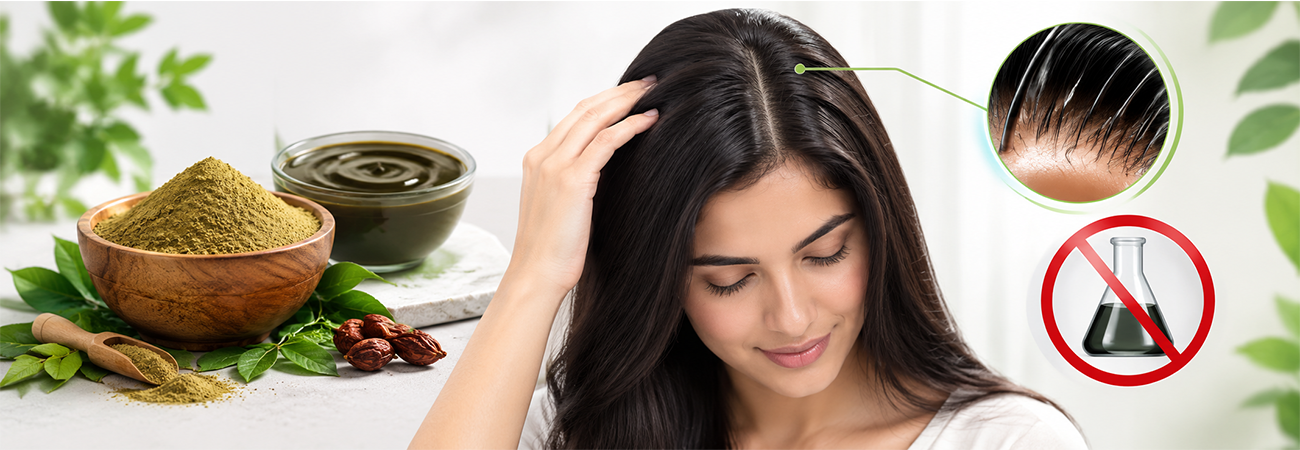
The scalp benefits are equally compelling. Henna has well-documented antifungal and antimicrobial properties. For clients who struggle with flakiness, mild scalp irritation, or oiliness between washes, regular henna glossing treatments deliver a measurable calming effect — without pharmaceutical-grade interventions.
From an EEAT standpoint — the framework Google uses to assess content credibility — it’s worth noting that these benefits are not marketing claims invented by the herbal cosmetics industry. Research published in peer-reviewed dermatological and cosmetic chemistry literature consistently supports the conditioning, strengthening, and antimicrobial effects of Lawsonia inermis on hair and scalp tissue.
Australia’s position as an early adopter of this particular shift makes cultural and commercial sense.
Australian consumers are globally ranked among the most ingredient-literate in the personal care space. Market research consistently places Australia alongside Germany and the Scandinavian markets in terms of demand for clean-label, ethically sourced beauty products. The country’s regulatory environment — increasingly alert to undisclosed sensitisers in cosmetic formulations — further amplifies salon owners’ incentive to shift toward plant-verified alternatives.
There’s also the matter of the Australian salon client demographic. A significant and growing segment of clients walking into Australian salons today are women in their 30s and 40s who have been using chemical colour services since their early teens. Two decades of repeated exposure to conventional colour chemistry is showing up in their hair — as porosity, breakage, and scalp sensitivity. These clients are actively seeking a recalibration. They’re not necessarily looking to go “all natural” forever — but they want a season of restoration, and henna glossing fits that brief perfectly.
For salon owners, offering henna glossing as a premium treatment category serves multiple business objectives simultaneously. It differentiates the salon in a crowded market, it captures a high-margin service that competitors may not offer, and it aligns the brand with the organic and wellness positioning that attracts a loyal, high-value client segment.
Rajasthani henna hair colour — when sourced from a credible supplier with export-grade quality and clean certifications — slots directly into this premium positioning without the formulation complexity that comes with synthetic alternatives.
If you’re a salon distributor, product buyer, or private label cosmetic brand evaluating Rajasthani henna powder suppliers for the Australian market, the sourcing decision goes beyond price per kilogram.
Quality Markers to Verify
The first thing any professional buyer should confirm is origin documentation. GI-tagged Sojat henna comes with verifiable provenance — suppliers like Kirpal Export Overseas can provide batch-level origin certificates. Ask for them. If a supplier can’t produce origin documentation, the henna may be a regional blend passed off as Sojat-grade.
Lawsone content should be tested and declared. Professional-grade henna for salon use typically carries a lawsone concentration of 2.5% or above. Some premium single-harvest batches from Sojat test significantly higher. Insist on third-party lab reports rather than supplier self-declaration.
Formulation Purity
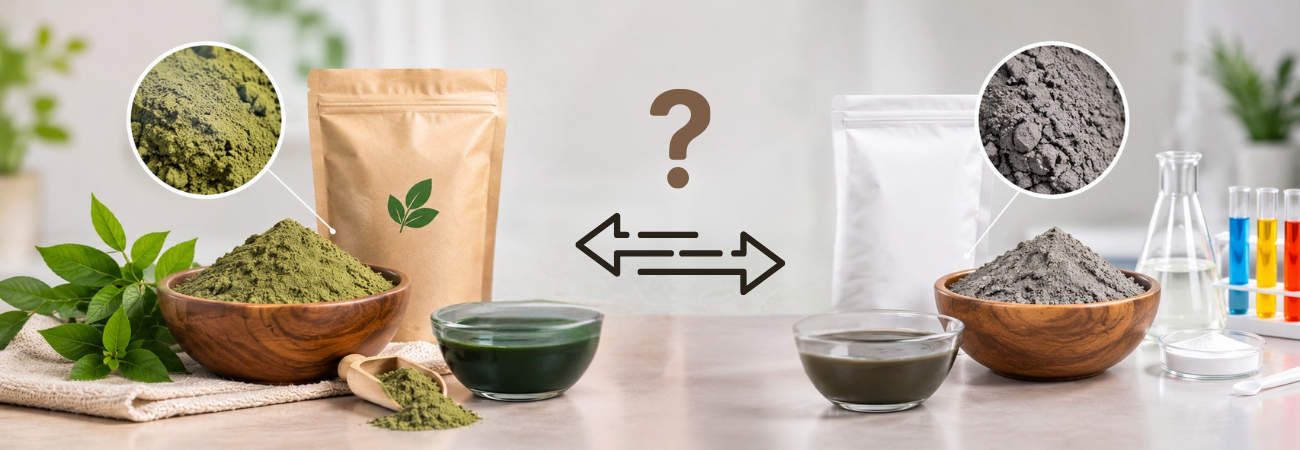
The market contains a troubling volume of “henna” products that contain metallic salts, synthetic dyes, and preservatives not disclosed on the label. This is not henna — it’s a chemically-assisted henna product, and it can react dangerously with residual salon chemicals on a client’s hair. Reputable Rajasthani henna powder suppliers in the export market supply 100% pure, naturally dried henna powder with full ingredient disclosure. Kirpal Export Overseas operates with a strict no-adulteration policy and provides complete ingredient transparency to all international buyers.
Private Label and OEM Capabilities
For brands looking to launch their own professional henna gloss range for the Australian market, Kirpal Export Overseas offers end-to-end private label manufacturing and OEM formulation services. From custom blend development — combining henna with complementary botanicals like amla, brahmi, or shikakai — to packaging design support and export-compliant documentation, the company functions as a complete manufacturing partner rather than simply a raw material supplier.
This is a meaningful distinction for brands that want to move fast in a growing market segment without building internal formulation infrastructure.
Before recommending henna glossing to clients, salon professionals benefit from a clear, evidence-grounded understanding of what the treatment delivers. Here’s a concise reference built on the established expertise around hair colour application and scalp benefits.
Conditioning and Protein Strengthening
Henna’s protein-binding mechanism deposits a protective layer around the hair shaft, reducing moisture loss and improving tensile strength. For clients with chemically damaged or porous hair, this is measurable within a few treatments.
Natural Tone Enhancement Without Bleaching
Henna enriches natural dark hair with warm red-brown tones. When blended with indigo, it produces shades ranging from chestnut to deep brown and near-black — all without lifting or bleaching the hair.
Scalp Microbiome Balance
The antimicrobial and antifungal properties of lawsone create a healthier scalp environment. Clients with dandruff, seborrheic tendencies, or stress-related scalp sensitivity consistently report improvement with regular use.
Zero Synthetic Chemical Burden
For clients building a truly clean hair routine, henna offers colour and conditioning with no ammonia, no resorcinol, no synthetic fragrance, and no para-phenylenediamine (PPD) — the compound responsible for the majority of allergic reactions to conventional hair colour.
Longevity That Beats Synthetic Glazes
Because the colour bond is molecular rather than surface-level, henna gloss treatments fade gracefully and evenly — without the patchy, brassy degradation that clients often experience with synthetic glazes.
Kirpal Export Overseas has built its international reputation on one principle: professional buyers deserve the same quality standards that the best domestic Indian processors apply to premium salon-grade material.
The company’s export operation covers GI-tagged henna powder in multiple mesh grades — fine powder for salon formulations, ultra-fine micronised grades for premium cosmetic applications. All material is sun-dried under traditional methods and triple-sieved to remove impurities before packaging.
For Australian distributors and private label brands specifically, Kirpal Export Overseas provides export documentation compliant with Australian import requirements, including MSDS sheets, Certificate of Analysis, and country of origin certification.
Minimum order quantities are structured to suit both emerging brands and established distributors — with flexible private label packaging options from small artisan quantities upward.
The movement away from synthetic chemical glazes toward organic henna glossing in Australian salons isn’t a question of if — it’s already underway. The salons that are capturing this market now are the ones who moved early: who invested in understanding Rajasthani henna hair colour, sourced from credible Rajasthani henna powder suppliers, and built a treatment menu that speaks directly to what their most valuable clients are asking for.
For distributors, private label brands, and salon buyers evaluating their sourcing strategy, the quality of your henna supply is everything. Origin matters. Purity matters. Supplier expertise matters.
Kirpal Export Overseas brings all three — backed by decades of manufacturing experience, direct Sojat sourcing, and a commitment to export quality that professional buyers across Australia, the UK, and the UAE have built their product lines around.
If you’re ready to discuss bulk supply, private label development, or a sourcing partnership, Kirpal Export Overseas is the manufacturing and export partner built for exactly this moment.
Q1. What makes Rajasthani henna powder suppliers different from generic henna suppliers?
Rajasthani henna — particularly from the Sojat region — carries a GI (Geographic Indication) tag, certifying its origin in a cultivation zone known for high lawsone content. This translates to stronger colour payoff, better conditioning, and batch consistency that generic commodity henna cannot match. Suppliers like Kirpal Export Overseas operate directly from Sojat, offering origin-verified material with full documentation.
Q2. Is Rajasthani henna hair colour safe for clients with scalp sensitivity?
Yes — pure Sojat henna powder contains no synthetic dyes, ammonia, PPD, or metallic salts. Its antimicrobial and antifungal properties actually make it beneficial for sensitive scalps. The critical requirement is sourcing 100% pure henna without chemical additives, which reputable Rajasthani henna powder suppliers will confirm through lab certification.
Q3. Can henna glossing be used on colour-treated or bleached hair?
Henna can be applied to colour-treated hair, but salon professionals should conduct a strand test first — particularly on heavily bleached or highlighted hair. The lawsone-keratin bond is permanent; it will not lift out. For clients with significant lightening history, a test application confirms how the colour deposits before full treatment.
Q4. What private label options does Kirpal Export Overseas offer for Australian brands?
Kirpal Export Overseas provides complete private label and OEM manufacturing services — including custom herbal henna blends (henna + indigo, amla, brahmi combinations), bespoke packaging, and full export documentation. Australian brands can develop their own professional salon range backed by GI-tagged Sojat raw material.
Q5. What certifications should I ask for when sourcing from Rajasthani henna powder suppliers?
Request a Certificate of Analysis (CoA) confirming lawsone percentage, an MSDS sheet, country of origin documentation, and ideally a third-party lab report confirming the absence of metallic salts and synthetic dye additives. Kirpal Export Overseas provides all of these as standard for international export orders.
The patch test is the most boring step in hair colouring, and the one most…
Every natural hair color manufacturer eventually gets the same message from a buyer: “The black…
Look closely at a microbladed brow around the eighteen-month mark, and the story is usually…
A customer once told us something we still remember. She had been colouring her gray…