Call/WhatsApp: +91-9811618013, +91-9810306077
Email: keohenna@gmail.com, kirpaloverseas@gmail.com
Email: keohenna@gmail.com, kirpaloverseas@gmail.com





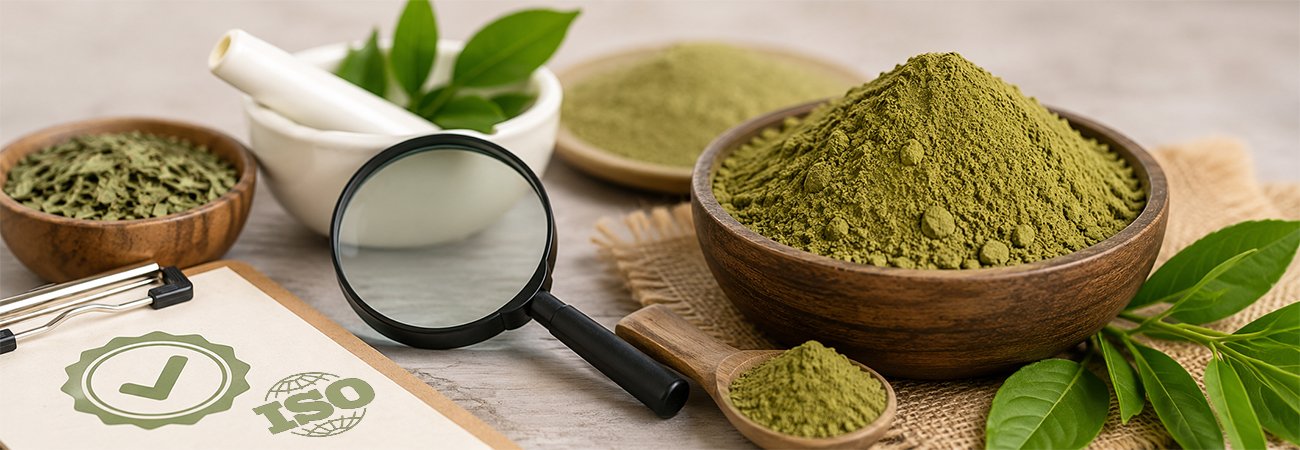
When you are sourcing henna powder—whether you are a private label brand, a salon chain, a wholesale importer, or a cosmetics manufacturer—quality is the one thing you simply cannot afford to compromise on. A batch of substandard henna powder does not just disappoint the end consumer; it can damage your brand, trigger compliance issues, and cost you a supplier relationship that took years to build.
But here is the question that most buyers struggle with: how do you actually verify henna powder quality before it reaches your warehouse?
India’s Bureau of Indian Standards (BIS) answered this question decades ago. The official specification document—IS 11142:1984, Specification for Henna Powder—lays down a clear, testable framework for what pure, export-grade henna powder should look like, how it should behave chemically, and what separates genuine product from adulterated material.
.
IS 11142:1984 is a formal Indian Standard issued by the Bureau of Indian Standards (BIS) under the Cosmetics Sectional Committee (PCD 19). It was adopted on 12 December 1984 and has since been reaffirmed in 2005, with amendments added in 1998 and 2001. meaning the standard has been actively maintained and updated, not just left as a historical document.
The standard exists for a straightforward reason. Henna powder, known as Mehndi in Hindi, is derived from the leaves of Lawsonia inermis Linn. (also called L. alba, family Lythraceae). These leaves, when dried and powdered, are used to dye hair and color fingernails, palms, and the soles of the feet. The plant is also exported from India in considerable quantities to markets across Europe, the Middle East, North America, and Southeast Asia.
Because henna is a natural agricultural product, the raw material quality varies enormously depending on geography, harvest season, processing methods, and — critically — whether unscrupulous processors have mixed in cheaper adulterants to increase volume. IS 11142:1984 was designed precisely to create an objective, measurable baseline that both buyers and sellers can rely on.
The standard prescribes requirements for the physical description of the powder, its chemical composition across eight parameters, packaging and marking requirements, sampling procedures for bulk consignments, and the conformity criteria that determine whether a lot passes or fails.
Before we get into the numbers, it helps to understand what authentic henna powder is supposed to be at a basic physical level.
According to IS 11142:1984, henna powder must be a fine dried powder obtained from fresh leaves of the henna plant. The standard specifies that a minimum of 95 percent of the powder must pass through a 250 micron IS sieve (as per IS:460 Part 1). In practical terms, this means the powder should be very fine—not gritty, not chunky, not full of stem fragments.
Under microscopic examination, genuine powdered henna leaves show a distinctive set of histological structures: olive green or brownish green fragments of cuticle and leaf parenchyma; rosette aggregates and monoclinic prisms of calcium oxalate (up to 15 microns, occasionally up to 40 microns in diameter); globular mucilage cells; fragments of intravascular tissues; long, narrow, and shorter fusiform sclerenchyma fibers with thick walls; and fragments of epidermis with stomata and striated cuticle.
If you are a quality control professional or a laboratory analyst working with a new henna supplier, microscopic examination is one of the fastest ways to spot adulteration—because the cellular signatures of henna leaves are distinct and not easily mimicked by common adulterants like sand, paddy husk, or leaf powder from other plants.
The heart of IS 11142:1984 is Table 1—a set of eight measurable characteristics that define what compliant henna powder must contain within specific ranges. Let us go through each one and explain what it means in practical terms.
Moisture content is the most basic quality check for any powdered botanical product. The standard sets the upper limit at 10 percent by mass.
Why does this matter? High moisture content in henna powder creates multiple problems. It accelerates microbial growth, which degrades the dye content over time. It increases the risk of caking and clumping during storage. It also effectively means the buyer is paying for water — not henna. When moisture climbs above 10%, the shelf life of the product drops, and the effective dye yield per kilogram falls.
For export buyers importing large volumes, moisture content is one of the first things a third-party lab will test, and rightfully so.
The cold water extract measures how much of the henna powder is soluble when mixed with cold water. This range of 25 to 32 percent tells you about the overall soluble content of the leaf material—including pigments, sugars, and other water-soluble compounds.
A reading below 25% may suggest that the leaves were harvested too early, were of poor quality, or the powder has been diluted with inert material. A reading above 32% can sometimes indicate the presence of soluble adulterants. Either deviation from this range is a red flag.
Crude fiber represents the insoluble structural material in the henna leaf—primarily cellulose and lignin from cell walls. The BIS standard sets this range at 10 to 15 percent.
Fiber content is useful as a cross-check for adulteration. If the fiber is too low, it may indicate that the powder has been mixed with low-fiber materials. If it is too high, the powder may contain excessive stems, twigs, or other high-fiber plant material that does not contribute to dyeing ability.
Also called “total ash,” mineral matter represents the inorganic components naturally present in the leaf—primarily mineral salts absorbed by the plant during growth. The standard range is 8 to 12 percent.
Soils in different henna-growing regions, including Sojat in Rajasthan, impart different mineral profiles to the leaf material. However, if mineral matter rises significantly above 12%, it is a strong indicator that the powder has been adulterated with soil, clay, or other mineral-heavy materials to increase weight.
Acid insoluble ash is the residue that remains after the total ash is treated with hydrochloric acid. This fraction primarily represents siliceous matter — essentially sand and grit.
The range of 3 to 6 percent represents the naturally occurring silica in leaf material. If acid-insoluble ash exceeds this range, it almost certainly means sand has been added to the powder—one of the most common and straightforward forms of henna adulteration.
This parameter directly measures how much actual sand is present in the powder. The standard caps it at a maximum of 5 percent.
It is worth noting that some sand content is unavoidable in field-dried, naturally processed henna powder. The 5% limit acknowledges this reality while still setting a ceiling above which the powder becomes unacceptable. The formula used is total vegetable matter = 100 − (sand percentage), and the standard notes that total vegetable matter should be approximately 95 percent.
This is one of the most important parameters for cosmetic-grade henna powder sold in regulated markets. The standard requires that the powder must pass a specific dye test, confirming the absence of artificial coloring agents.
Adulteration with chemical dyes—including synthetic colorants that mimic the orange-red tone of lawsone—has been a documented problem in the henna trade. For buyers in the EU, UK, and US who are selling into regulated cosmetics markets, this test is not optional. Artificial dyes in henna powder can trigger allergic reactions, violate cosmetics regulations, and expose the brand to serious liability. Any reputable supplier should be able to provide third-party test reports confirming their powder is free from extraneous dyes.
This is the single most important quality parameter in the entire standard, and it deserves to be treated as such.
Lawsone (2-hydroxy-1,4-naphthoquinone) is the naturally occurring dye molecule in henna leaves. It is the compound responsible for the orange-red color that henna imparts to hair, skin, and nails. The biological activity of lawsone—its ability to bind with the keratin protein in hair—is what makes henna work as a natural hair colorant.
IS 11142:1984 sets the minimum lawsone content at 1.0 percent by mass. In the real world of export-grade henna from Sojat, high-quality powder typically contains significantly more than this minimum — premium grades can reach 2.5 to 3.5 percent or higher, depending on the harvest year and leaf grade. The BIS minimum of 1.0% is a floor, not a ceiling.
For buyers sourcing henna for hair color products—whether for professional salon use or retail packaging—lawsone content is the primary quality differentiator. A higher lawsone percentage means stronger, longer-lasting color, less processing time, and a better experience for the end consumer.
IS 11142:1984 explicitly acknowledges in its foreword that henna powder is frequently adulterated. The standard notes that common adulterants include sand, stems, fruit of the henna plant, husk of paddy, and leaves and twigs of other shrubs. The requirements and tests in the standard were specifically designed to detect and restrict these malpractices.
For international buyers, this context matters enormously. India is the world’s largest producer and exporter of henna powder, with Sojat in Rajasthan accounting for the dominant share of global supply. But not every powder that leaves India is of equal quality. The price variation in the henna market is wide, and a significant portion of that variation is explained by differences in purity, lawsone content, and the degree to which cheaper materials have been blended in.
A buyer who specifies IS 11142:1984 compliance in their purchase agreement and requests third-party test reports for each batch is protected in a way that a buyer relying on visual inspection and supplier assurances is not.
Quality does not end with the powder itself. The standard also specifies how henna powder must be packed and labeled.
The material must be packed in polythene-lined hessian bags or other suitable containers agreed upon between buyer and supplier. All containers must be dry, clean, and tightly sealed to prevent contamination during transit and storage.
Each container must carry the following mandatory information: the name of the material, the manufacturer’s name or trademark, the gross, net, and tare mass, and the date of packing. Following Amendment No. 1 (July 1998) and Amendment No. 2 (March 2001), containers must also carry a “Best Use Before” date (month and year, declared by the manufacturer), along with a list of key ingredients.
For export buyers receiving containers at ports in the UK, Germany, the UAE, Australia, or the United States, correct and complete marking is not just a quality matter—it is often a customs and import compliance requirement. Working with a supplier who understands and follows IS 11142:1984 marking standards reduces the risk of consignment delays, rejection at port, or compliance failures in the destination country.
For buyers importing large consignments—full container loads or multi-pallet shipments—understanding the sampling protocol is important, because it determines how representative your quality check actually is.
IS 11142:1984 specifies that all containers in a single consignment from a single batch of manufacture constitute a “lot.” The number of containers to be sampled depends on the lot size: for a lot of 3 to 50 containers, 3 must be sampled; for 51 to 200 containers, 4 must be sampled; for 201 to 400, a minimum of 5 containers; and so on up to 7 containers for lots of 651 to 1,000.
From each selected container, material is drawn from multiple points inside the bag and combined to form a composite sample of not less than 0.5 kg. This composite sample is then divided into three equal parts—one for the buyer, one for the supplier, and one retained as a referee sample that can be used in case of a dispute between the two parties.
The fact that BIS built a referee sample protocol into the standard speaks to how seriously the question of quality disputes has been taken since the early days of the henna export trade.
Not all henna is created equal, and geography plays a significant role in the natural lawsone content of the leaf. The semi-arid climate of Sojat in Rajasthan — with its characteristic soil composition, temperature cycles, and low rainfall — produces henna leaves with naturally high dye content. The plant thrives under these conditions in a way it does not in more humid environments.
This is one of the reasons why Sojat henna has earned a Geographical Indication (GI) tag—formal recognition that the henna grown in this specific region has characteristics that are distinctively tied to its origin. Buyers who specify Sojat-origin henna powder are not paying for a marketing label; they are paying for a measurably different chemical profile.
At Kirpal Export Overseas, our henna powder is sourced directly from farms and processors in and around Sojat, ensuring that the raw material entering our supply chain carries the natural quality advantage of the region before any processing or quality control begins.
If you are a private label brand, an importer, or a cosmetics manufacturer sourcing henna powder from India, here is how to put this standard to practical use.
Include IS 11142:1984 compliance as a specification in your purchase order or supplier agreement. Request a Certificate of Analysis (CoA) for each batch, which should report values for all eight parameters in Table 1. For large or ongoing orders, consider commissioning third-party testing through an accredited laboratory—either in India before shipment or in your destination country upon arrival.
Pay particular attention to the lawsone content value. This single number tells you more about the real dyeing quality of the powder than any other parameter. If a supplier cannot provide lawsone content data, that alone should prompt caution.
Finally, verify the packaging and marking comply with the standard’s requirements, including the “Best Use Before” date. For henna powder intended for cosmetic use—hair coloring, body art products, or salon applications—this documentation becomes part of your product compliance record.
From a consumer perspective, the parameters in IS 11142:1984 translate directly into the quality of experience when using henna on hair.
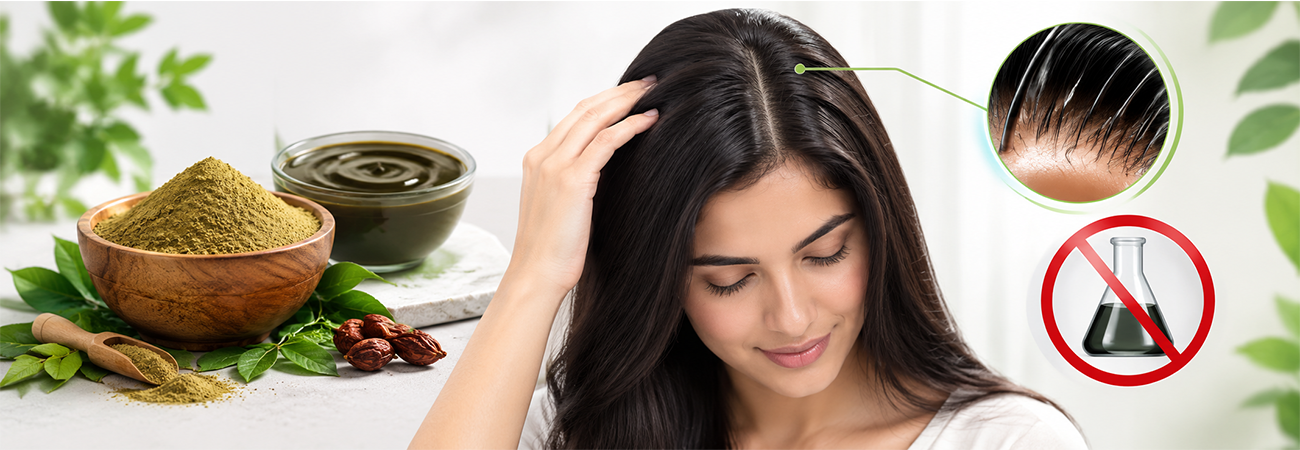
Pure, high-lawsone henna powder produces a rich, warm color on hair—covering gray strands thoroughly and leaving a natural-looking result that deepens over the first 24 to 48 hours after application. The color builds over repeated applications, becoming richer and more conditioning over time. Henna’s mechanism of action—lawsone binding with the keratin in the hair shaft—means it does not damage hair the way oxidative chemical dyes do. Many consumers who switch to henna from conventional hair color report improved hair texture, reduced breakage, and a healthier scalp.
None of these benefits are achievable with adulterated henna. A powder loaded with sand, paddy husk, or artificial dyes will produce an inconsistent result at best, and a skin reaction or compliance violation at worst.
This is why quality at the manufacturing and export stage is not just a B2B concern. Every specification in IS 11142:1984 ultimately exists to protect the experience of the person who applies the product to their hair.
IS 11142:1984 is not just a piece of bureaucratic paperwork. It is a practical, well-designed quality framework that has guided the henna powder trade for decades. Understanding its eight parameters — and what each one tells you about the powder you are buying — puts you in a position to source with confidence, verify what you receive, and build a supply chain that your own customers can trust.
At Kirpal Export Overseas, we welcome buyers who ask the right questions. If you would like to discuss quality specifications, request a sample with a Certificate of Analysis, or explore a private label or OEM arrangement for henna powder export, we are ready to talk.
Pure henna. Transparent specifications. Sojat at its source.
What is IS 11142:1984? IS 11142:1984 is the official Indian Standard specification for henna powder issued by the Bureau of Indian Standards (BIS). It defines the quality requirements, testing parameters, packaging standards, and sampling procedures that henna powder must meet to be considered compliant. The standard was adopted in December 1984 and reaffirmed in 2005.
What is lawsone, and why is it important in henna powder? Lawsone (2-hydroxy-1,4-naphthoquinone) is the natural dye molecule found in henna leaves. It is the compound responsible for henna’s ability to color hair, skin, and nails. IS 11142:1984 sets the minimum lawsone content at 1.0 percent by mass. Higher lawsone content means stronger, deeper color and better dyeing performance.
How can I tell if henna powder is adulterated? Common adulterants in henna powder include sand, paddy husk, stems, and leaves from other plants. The parameters in IS 11142:1984 — particularly acid insoluble ash (3–6%), extraneous sand (max 5%), and the extraneous dye test — are specifically designed to detect these adulterants. Third-party laboratory testing using these parameters is the most reliable way to verify purity.
What moisture level is acceptable in henna powder? According to IS 11142:1984, henna powder must have a moisture and volatile matter content of no more than 10 percent by mass. Higher moisture reduces shelf life, encourages microbial growth, and lowers the effective dye content per kilogram.
What fineness should henna powder be for hair use? IS 11142:1984 specifies that a minimum of 95 percent of the powder must pass through a 250-micron IS sieve. This ensures a fine, consistent texture that mixes well into paste form and applies evenly to hair.
Does Kirpal Export Overseas supply IS 11142:1984-compliant henna powder? Yes. Kirpal Export Overseas manufactures and exports henna powder from Sojat, Rajasthan, aligned with IS 11142:1984 specifications. We supply private label brands, OEM manufacturers, wholesale importers, and salon chains across the UK, USA, UAE, Germany, and Australia. Contact us to request a sample or certificate of analysis.
The patch test is the most boring step in hair colouring, and the one most…
Every natural hair color manufacturer eventually gets the same message from a buyer: “The black…
Look closely at a microbladed brow around the eighteen-month mark, and the story is usually…
A customer once told us something we still remember. She had been colouring her gray…