Call/WhatsApp: +91-9811618013, +91-9810306077
Email: keohenna@gmail.com, kirpaloverseas@gmail.com
Email: keohenna@gmail.com, kirpaloverseas@gmail.com




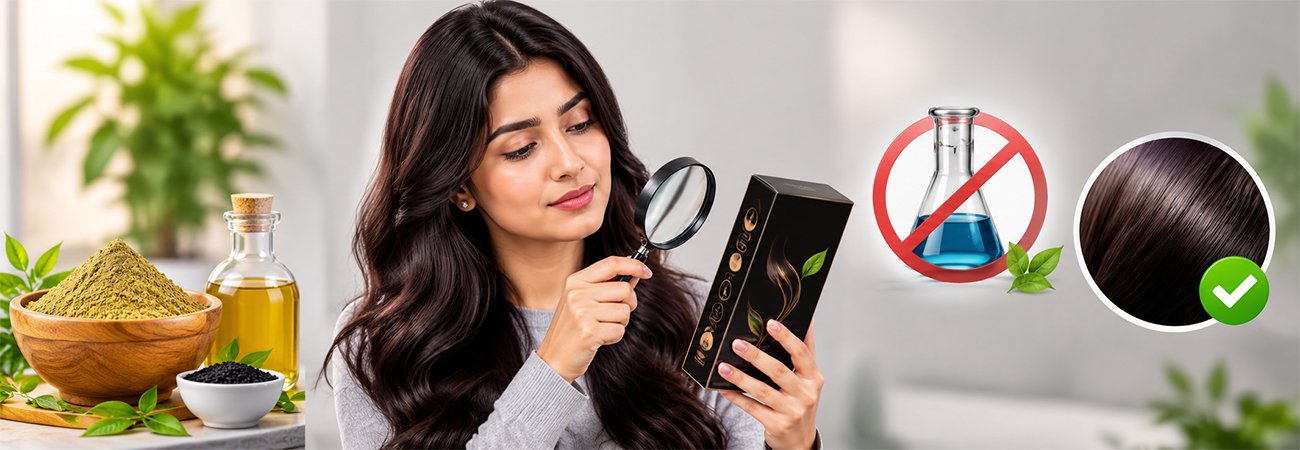
If you sell hair color, you already know the question. A customer picks up the box, flips it over, and asks, “Is this PPD-free?” You say yes. They ask, “So it’s safe for sensitive skin?” And now the answer gets complicated.
“PPD-free” has become one of the most used phrases on hair color packaging, and one of the least understood. It sounds like a safety guarantee. It isn’t one. For buyers who source henna and herbal colors in bulk, knowing exactly what the claim covers (and what it doesn’t) is the difference between a product line that earns repeat orders and one that comes back as complaints.
This guide walks through what PPD is, what “PPD-free” actually tells you, why henna sits at the clean end of the spectrum, and what to check before you place an order with any of the henna powder suppliers on your shortlist.
PPD stands for p-phenylenediamine. It’s a synthetic dye precursor used in permanent (oxidative) hair colors. On its own it’s nearly colorless. Mixed with a developer, usually hydrogen peroxide, it reacts and forms large dye molecules inside the hair shaft. That reaction is why PPD-based colors give deep browns and blacks that last, and why it’s so common in budget dyes.
The trouble is that PPD is also a well-known skin sensitizer. Some people react to it with itching, redness, swelling or a rash on the scalp, ears and face. Reactions can be mild the first time and stronger on later exposures. That’s the reason you see the patch-test warning on every conventional box dye, and why regulators cap it. In the EU, for example, PPD in hair dye is limited to a maximum concentration on the head after mixing, and products must carry a warning label.
So when someone asks for PPD-free color, they usually mean one of two things: “I had a reaction before,” or “I want something gentler and more natural.” Both are fair reasons. But neither is fully answered by the words “PPD-free” alone.
Here’s the part packaging doesn’t explain.
It only tells you one ingredient is missing. A product can be PPD-free and still contain other dye precursors from the same chemical family. Toluene-2,5-diamine (PTD) is a common swap. People who are allergic to PPD can cross-react to similar molecules, so a PPD-free label is not automatically safe for them.
It isn’t the same as ammonia-free. Ammonia-free colors can still contain PPD. These are two separate claims and brands mix them up all the time, sometimes on purpose.
It isn’t the same as “natural.” Plenty of colors with botanical extracts on the front still use synthetic dyes and developers in the formula. Read the ingredient list, not the front label.
It isn’t a regulated promise of “allergy-free.” No hair color is. Even pure herbal products can trigger reactions in a small number of people. Honest marketing says “free from PPD” and recommends a patch test, which is what a trustworthy supplier will tell you too.
The takeaway: treat “PPD-free” as a starting point for questions, not as the final answer.
True henna comes from the leaves of Lawsonia inermis, a shrub grown in hot, dry regions. The leaves are dried and ground into a fine powder. The coloring molecule is called lawsone, and it works in a completely different way from oxidative dye. Instead of building new dye molecules inside the hair using a developer, lawsone binds to the keratin on the outside of the hair strand and stains it. No peroxide, no ammonia, no PPD.
That’s why pure henna powder is the foundation of most herbal hair color. It’s also why the global demand for it keeps growing among organic beauty brands, salon chains, and private label owners.
A few honest notes, though:
This is the single most important thing for buyers to understand.
Authentic henna is never black. Products sold as “black henna” or “neutral black henna” very often get their dark color from added PPD or other synthetic dyes. In other words, the label says henna and the chemistry says something else entirely. This is the main way PPD ends up in products that look herbal, and it’s a known cause of serious skin reactions, especially when it’s used on skin for temporary tattoos.
A related issue is adulteration at the powder stage. Lower-grade lots are sometimes boosted with synthetic dye, or with metallic salts, to make the color look stronger or darker. You can’t see this by looking at the powder. You find it through testing and through supplier transparency.
In the US, the FDA approves henna for hair dyeing only, not for skin decoration, and a lot of the adverse-event reports tied to “black henna” involve PPD. That’s one more reason to be strict about what goes into your supply chain.
When you’re comparing henna powder suppliers, a good price per kilo tells you very little. These are the things that actually separate a reliable source from a risky one.
The product should be declared as Lawsonia inermis leaf powder. If the INCI list includes anything else (colorants, “color enhancers,” unnamed “natural dyes”), ask what it is and why it’s there.
Not a one-time document from two years ago. A batch-specific COA should cover lawsone content, moisture, pH, particle size, and ideally microbial counts. Lawsone content is what tells you how well the powder will actually dye. It varies by crop and processing, so ask for the figure rather than accepting “high quality.”
This is the document that backs up the claim you plan to print on your own label. Ask for a lab report (HPLC or equivalent) showing PPD is not detected, from an independent or accredited lab where possible. A verbal “we don’t add it” is not evidence.
Henna is a leaf product grown in soil, so lead, arsenic and other metals, plus pesticide residues, are legitimate concerns. A supplier who tests for these will usually share the results without fuss.
Fine, well-sifted powder mixes smoothly, rinses out cleanly and doesn’t leave grit in the hair. Ask for the mesh size. A lot of customer complaints about “messy” henna are really particle size problems.
Hair-grade and body-art-grade powders aren’t always processed the same way. Make sure the grade you’re buying matches the way your customers will use it.
Can the supplier tell you which region the leaves came from and which batch your order belongs to? Do they hold GMP, ISO or organic certifications relevant to your market, and can they supply an SDS and export documents? For EU, UK and US importers, this paperwork matters as much as the powder.
Henna loses dye strength with age and exposure to moisture and light. Ask about manufacturing date, recommended shelf life and the packaging used (foil-lined or multilayer bags protect better than plain pouches).
Most of the world’s commercial henna powder is processed in India, with Rajasthan, especially the Sojat and Pali belt, being the best-known hub. Pakistan, Egypt, Sudan and Yemen also produce henna, and each origin has its own reputation for color release and leaf quality.
When you buy wholesale henna powder, origin is only part of the picture. What counts is how the leaves were harvested, dried and milled, and how consistent the supplier is from one batch to the next. A supplier with its own processing and sifting facility usually has tighter control than a trader who buys from several mills and relabels the result.
Questions worth asking any wholesale supplier:
None of these automatically means a supplier is bad, but each one is worth a closer look:
Paper reports are essential, but a small practical test saves a lot of money.
Once you’ve approved a supplier, keep a retained sample from every delivery. If a customer ever raises an issue, you’ll be glad to have it.
If you plan to sell under your own brand, the claim on your pack is your responsibility, not your supplier’s. A few habits keep you safe:
Is PPD-free hair color completely safe? No hair color can be called completely safe for everyone. PPD-free means PPD isn’t used, but other ingredients can still cause sensitivity, and people allergic to PPD can cross-react to similar chemicals. A patch test is recommended for any hair color, including pure henna.
Does pure henna powder contain PPD? Pure henna powder made only from Lawsonia inermis leaves does not contain PPD. The risk comes from products sold as “black henna” or from adulterated powders where synthetic dyes have been added, which is why testing and supplier transparency matter.
How can I verify that henna powder is PPD-free? Ask the supplier for a batch-specific lab report showing PPD was not detected, ideally from an independent laboratory. You can also send a sample to a lab yourself before placing a bulk order.
What should I look for in henna powder suppliers? Look for a declared botanical ingredient, batch-wise COA, PPD and heavy metal test reports, clear particle size, traceable origin, relevant certifications and a willingness to send production samples.
What is the minimum order for wholesale henna powder? It varies by supplier and by whether you want bulk powder or private label packaging. Ask for MOQ, packaging options and lead times in writing before comparing prices.
Can henna give black or brown hair color? Henna alone gives orange to red tones. Brown and black shades are usually made by combining henna with indigo or by using a carefully formulated herbal blend.
The PPD-free conversation is really a trust conversation. Your customers trust the label, and you trust your supplier. The more of that trust you can back with paperwork and testing, the stronger your brand becomes. Take your time with samples, ask for the documents, and choose suppliers who are happy to be checked.
Yes, you can often dye gray hair blonde without bleach. If that’s all you came…
Most private label henna brands don’t fail because of weak marketing. They fail because of…
Entra hoy en un salón de Milán, Berlín o Londres y notarás algo pequeño pero…
Ask ten people which hair dye brand is the safest and you’ll get ten different…