Call/WhatsApp: +91-9811618013, +91-9810306077
Email: keohenna@gmail.com, kirpaloverseas@gmail.com
Email: keohenna@gmail.com, kirpaloverseas@gmail.com





Ask ten people which hair dye brand is the safest and you’ll get ten different answers, most of them based on what worked for their own scalp. That’s the first problem. Hair dye safety is not really about a single brand name. It’s about what’s inside the box, how your skin reacts to it, and whether the product is what it claims to be.
We’re Kirpal Export Overseas (KEO), a natural henna powder manufacturer based in Sojat, Rajasthan, and we supply henna and herbal hair colour to buyers across the UK, USA, UAE, Germany and Australia. We make plant-based colour for a living, so we have an obvious bias, and we’ll be upfront about it. But we also see, every week, what goes wrong when people choose hair colour by marketing instead of ingredients. This guide tells you what to look for, what to avoid, and where plant-based options genuinely help and where they don’t.
Let’s get the uncomfortable part out of the way. No brand can honestly promise that its hair dye is safe for everyone. Skin sensitivity varies from person to person. Something that causes no trouble for you may cause a rash, burning or swelling for someone else.
You can reduce your risk. That means understanding the main types of hair colour, reading the ingredient list properly, and doing a patch test every single time, even if you’ve used the same product for years. Sensitivity can develop later.
Permanent (oxidative) dyes. These use a developer, usually hydrogen peroxide, along with dye intermediates to change the colour inside the hair shaft. They give the widest range of shades and the best grey coverage, and they also contain the ingredients most often linked to irritation and allergy.
Semi-permanent and demi-permanent dyes. These are gentler in general and fade over weeks. Some still contain the same allergens as permanent dyes, just at lower levels, so “gentle” on the front of the pack isn’t a safety guarantee.
Plant-based colours. Henna, indigo, amla, cassia and similar botanicals coat the hair and stain it rather than chemically lifting the natural pigment. The range of shades is narrower, but the ingredient list can be very short, sometimes just one ingredient.
When you flip a hair dye box over, these are the names worth noticing.
PPD (p-phenylenediamine) and related compounds like PTD. PPD is one of the best-known contact allergens in hair colour. Reactions can range from mild itching to severe swelling of the face and scalp. Regulators such as those in the EU restrict how much can be used, but restriction is not the same as absence. If you’ve ever reacted to a dye, take that history seriously.
Ammonia and ammonia substitutes. Ammonia opens up the hair cuticle so colour can penetrate. It has a strong smell and can irritate the eyes, nose and scalp. “Ammonia-free” products often use other alkaline agents that do a similar job, so check the full list rather than trusting the label.
Resorcinol. Common in permanent dyes and a known skin irritant for some people.
Fragrance. One of the most overlooked triggers. A product can be free of the big-name chemicals and still cause a reaction because of added perfume.
Hydrogen peroxide developer. Needed for oxidative colour, and it can irritate the scalp if left on too long or used at a high strength.
None of these mean a product is dangerous for everyone. They simply tell you where reactions usually come from.
Often, yes, but with some important conditions.
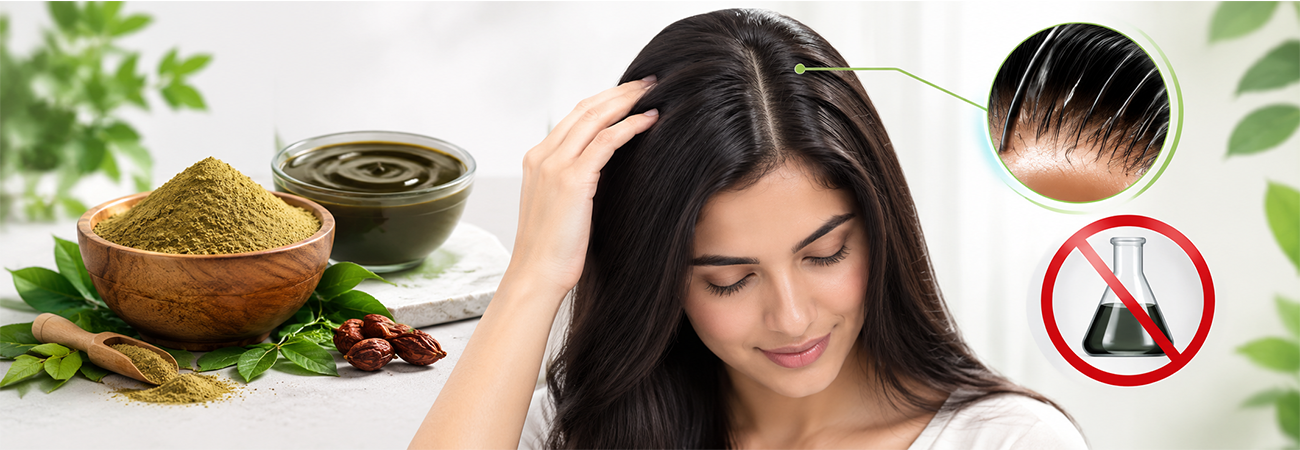
Pure henna powder comes from the dried, ground leaves of the Lawsonia inermis plant. When it’s genuinely pure, it contains no ammonia, no peroxide and no PPD. It conditions the hair, adds shine, and gives a natural reddish tint that builds with repeated use. For many people with chemical sensitivities, it’s a practical alternative.
But “natural” on a label is not a certification. Here’s where it gets tricky.
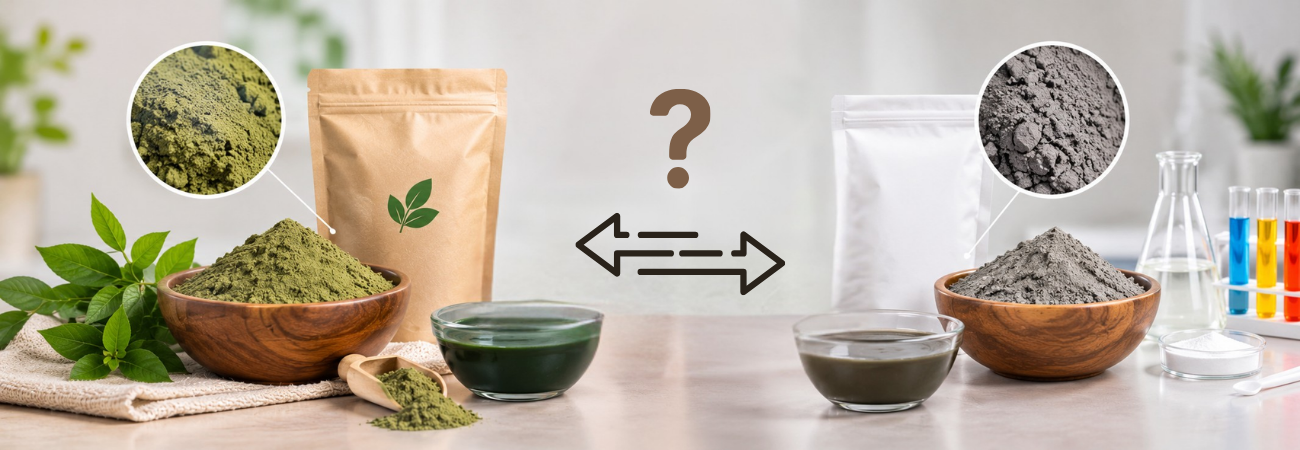
“Black henna” is a red flag. Real henna does not produce black. Products sold as black henna hair dye or black henna paste frequently contain PPD or other synthetic dyes added to get a dark colour fast. These are the products responsible for many of the serious reactions people associate with henna, and the plant gets blamed for what the chemical did.
Adulterated henna exists. Some low-cost powders are mixed with synthetic dyes, fillers, or metallic salts to deepen the colour or extend shelf life. You can’t see this by looking at the powder. Only proper testing and a trustworthy supplier can protect you from it.
Henna can still cause allergies. True henna allergy is uncommon, but it’s possible. Patch test first.
Henna has limits. It won’t lighten your hair, it gives a narrower palette than chemical dye, and it can interact unpredictably with later chemical treatments. If you plan to colour with chemicals afterward, speak to a professional stylist before mixing methods.
A medical note. Some health authorities advise caution with henna for people with G6PD deficiency, particularly infants. If this applies to you or your child, ask a doctor before using henna.
Instead of hunting for one winning brand, run any product through this checklist.
If you’re a salon owner, importer or private-label brand choosing a henna supplier, the question “which brand is safest” turns into “who can I trust to make this properly?” A dependable natural henna powder manufacturer should be able to show you the following.
At Kirpal Export Overseas, we manufacture henna powder and herbal hair colour in Sojat, Rajasthan, and export under our Indalo brand as well as for private-label and OEM partners. Our buyers include wholesale importers, salon chains and organic beauty distributors who need consistent quality and clear documentation, not just a low price per kilo.
[Add your specifics here: certifications held, testing partners, years in operation, production capacity, and any quality process you can verify. Only include claims you can document.]
We won’t tell you our henna is the safest hair dye on the market, because safety depends on the person using it. What we can tell you is that we aim to be a natural henna powder manufacturer you can question, audit and hold to a standard. If you’re sourcing for a brand or a salon, ask us for specifications and testing details. If we can’t answer, don’t buy.
Plant-based doesn’t suit everyone. Henna may not be the right fit if:
In these cases, a patch-tested, professionally applied conventional dye may serve you better. Being honest about that is part of why you can trust a supplier.
The safest hair dye brand is the one you’ve read the label on, patch tested, and bought from a company that can prove what’s inside. For many people, pure henna from a transparent source is a sensible choice, and for others, a carefully chosen conventional dye is. Both can be used badly, and both can be used well.
If you’re a buyer looking for a reliable natural henna powder manufacturer, whether for retail, salon use or private label, Kirpal Export Overseas would be glad to talk. [Insert CTA: “Request a sample and specification sheet” with link to your contact/inquiry page.]
Which is the safest hair dye brand?
No brand is safe for everyone. Safety depends on ingredients and your own sensitivity. Look for short ingredient lists, avoid products with PPD if you’ve reacted before, and always patch test.
Is henna safer than chemical hair dye?
Pure henna has no ammonia, peroxide or PPD, so it avoids the most common irritants. However, adulterated or “black henna” products can be harmful, and allergy to henna is possible.
How can I tell if henna is pure?
Pure henna gives a reddish-orange stain, not black. Check for a full ingredient list, ask the supplier for test reports, and be cautious of products promising dark shades quickly.
Can henna cause an allergic reaction?
It’s uncommon, but it can happen. Do a patch test 48 hours before use and stop if you notice itching, redness or swelling.
What should I look for in a natural henna powder manufacturer?
Look for source transparency, batch testing, clear labelling and willingness to share documentation. A trustworthy manufacturer will answer questions directly.
Does Kirpal Export Overseas supply private-label henna?
Yes. KEO supplies henna and herbal hair colour for wholesale, private-label and OEM buyers. Contact the team for specifications and samples.
Entra hoy en un salón de Milán, Berlín o Londres y notarás algo pequeño pero…
Why would a pharaoh who lived to around ninety be buried with red hair instead…
The patch test is the most boring step in hair colouring, and the one most…
Every natural hair color manufacturer eventually gets the same message from a buyer: “The black…