Call/WhatsApp: +91-9811618013, +91-9810306077
Email: keohenna@gmail.com, kirpaloverseas@gmail.com
Email: keohenna@gmail.com, kirpaloverseas@gmail.com





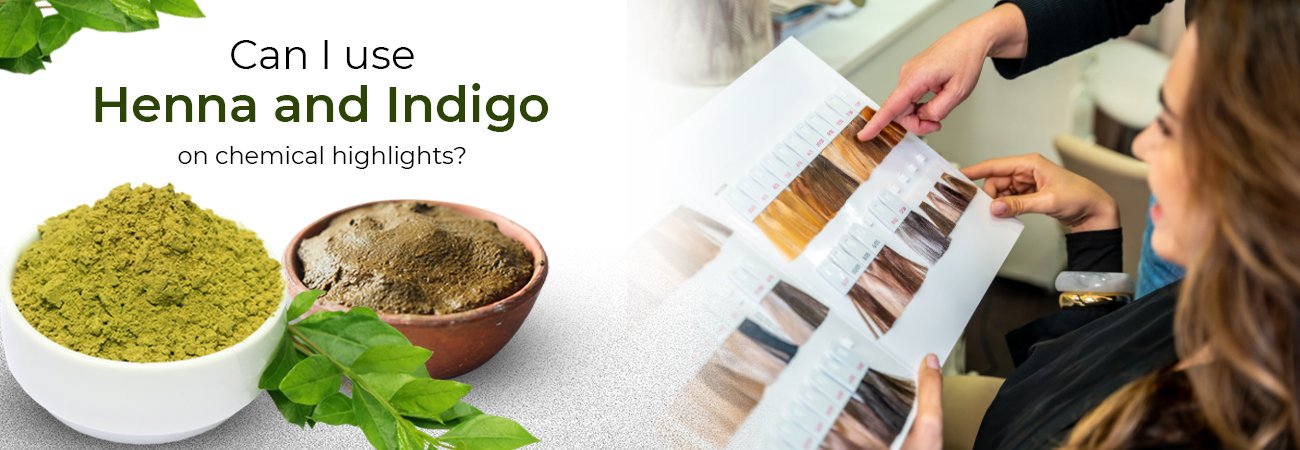
If you have chemically highlighted hair and you are now curious about switching to something more natural, you are not alone. Across the UK, USA, Australia, Spain, and beyond, more and more people are moving away from harsh chemical dyes and exploring plant-based alternatives like henna and indigo. The question is a genuinely important one, and it deserves an honest, thorough answer rather than a simple.
So let us walk through it properly — and along the way, we will also cover what to look for when choosing wholesale henna powder, whether you are a consumer or a brand sourcing ingredients for a natural hair care line.
Before we talk about henna and indigo, we need to talk about what highlights have already done to your hair structure — because this is the real reason why applying henna or indigo on highlighted hair requires careful thought.
Chemical highlights — whether you used bleach, peroxide-based lighteners, or a professional salon service — work by lifting the natural melanin (colour pigment) from your hair shaft. To do this, the chemicals have to open up the hair cuticle, strip out existing colour, and then, if a toner or colour was applied afterwards, deposit a new tone.
The result is hair that has been structurally altered. The cuticle layers are more porous. The hair shaft is more fragile. And most critically, the chemical residue from the bleach or developer does not fully leave the hair strand even after washing.
This matters because henna and indigo are not dyes in the traditional chemical sense. They are plant-based pigments that work by bonding directly to the protein structure of your hair. When those two worlds meet — chemical residue and plant pigment — the outcome can be unpredictable.
Henna comes from the dried and powdered leaves of the Lawsonia inermis plant, which is cultivated extensively in Rajasthan, India — the same region where Kirpal Export Overseas sources and processes its wholesale henna powder. When mixed with a mildly acidic liquid and applied to hair, the active compound in henna — lawsone — migrates into the hair shaft and forms a semi-permanent bond with the keratin protein.
This is important to understand: henna does not sit on top of the hair. It bonds inside it. This is what makes it so long-lasting, and also what makes it so permanent in practice. Once henna is properly applied and bonded, it is genuinely very difficult to remove.
The natural colour result of pure henna is a warm red-orange tone. Depending on your original hair colour and the quality of the henna powder used, results can range from a bright copper on lighter hair to a deep auburn on darker hair. This is precisely why the grade and purity of wholesale henna powder makes such a significant difference — low-quality or adulterated powder produces inconsistent, unreliable results regardless of how carefully you apply it.
Indigo (Indigofera tinctoria) is a separate plant entirely. Its powder is blue-green in colour and, on its own, does not produce a lasting result on hair. However, when applied over a henna base, indigo bonds on top of the red-orange tones that henna deposits — and the combination produces shades ranging from warm brown to deep black, depending on the ratio and timing.
This two-step process is how natural black and brown hair colours have been created for centuries across South Asia, the Middle East, and North Africa. Henna first. Indigo second. No chemicals required.
The honest answer is: yes, but with significant caveats that you must understand before you proceed.
Here is what actually happens when henna meets chemically highlighted hair:
Highlighted sections of your hair are lighter — often significantly lighter — than your natural base. Because henna’s colour is transparent and builds on what is already there, it will appear more vibrant and more saturated on your highlighted areas than on your darker roots or mid-lengths. You may end up with a noticeably uneven, multi-tonal result — bright copper on the highlights and a deeper red-brown on the rest.
This is not necessarily a disaster. Some people find the result beautiful and dimensional. But if you were hoping for a uniform, even colour all over, henna on highlighted hair will likely disappoint you.
Bleached and highlighted hair is highly porous. Porous hair absorbs pigment faster and more intensely — which means henna may deposit very quickly, very deeply, and much darker than you expected on your highlighted sections. Once that happens, you cannot simply wash it out.
If you do decide to proceed, use a shorter processing time on your first application and do a strand test — always, without exception.
This is the most important thing to understand if you are not ready to fully commit. Once henna is applied to your hair, you are largely closing the door on future chemical lightening. Attempting to bleach or highlight over henna-treated hair can cause unpredictable colour shifts (think green, khaki, or burnt orange tones) and serious structural damage to your hair.
If you still want the flexibility to chemically colour your hair in the future, henna is not the right choice for you right now.
Everything stated above about henna applies equally to indigo. Additionally, indigo is more sensitive to residual chemical compounds in the hair and can sometimes produce unusual tones — particularly greenish or ashy results — on highly bleached hair. Again, a strand test is your best friend here.
Given the variables involved, a strand test is not optional — it is essential. Here is how to do it correctly:
Only once you are satisfied with the strand test result should you proceed with full application.
If you have decided to go ahead, here are practical steps that can improve your outcome:
Use a high-quality, pure henna powder. Many commercial henna products contain added chemicals, metallic salts, or synthetic dyes — often marketed as “black henna” or “neutral henna.” These additives are exactly what you want to avoid on chemically treated hair, as they can react unpredictably and cause damage. Look for 100% pure Lawsonia inermis powder with no additives. If you are a brand or retailer building a natural hair care range, sourcing genuine wholesale henna powder from a certified manufacturer is the only reliable way to guarantee this standard across your entire product line.
Start with a shorter application time. Because highlighted hair is porous, it absorbs colour faster. Start with 1–2 hours rather than the 4–6 hours sometimes recommended for a first henna application.
Apply a light oil to your highlighted sections before henna. Coconut oil or olive oil applied to your highlights before the henna paste can act as a mild barrier, slowing absorption and giving you more even colour development.
Be prepared for a gradual transition. If you are moving from chemically highlighted hair to a fully natural henna and indigo routine, accept that it will take multiple applications over several months to achieve a consistent result. This is not a one-step solution.
Condition thoroughly after each application. Both henna and indigo can feel drying on already-processed hair. A deep conditioning treatment 48 hours after application, will help restore softness and manageability.
Not all henna powder is the same, and when you are applying it to chemically treated hair, the quality of what you use matters enormously.
At Kirpal Export Overseas, we have been a wholesale henna powder manufacturer and hair color manufacturer for over 30 years. Our henna is sourced from cultivated crops in Rajasthan, processed in our own facility, tested for purity, and exported to distributors, retailers, and private label brands across the UK, USA, Australia, Spain, and dozens of other markets.When we say pure, we mean pure — no metallic salts, no PPD, no synthetic additives. This is the standard that international buyers expect, and it is the standard we hold ourselves to on every batch we produce.
If you are a wholesale buyer, a retailer, or a private label brand building a natural hair care line, the quality of your raw material is the foundation of everything. Choosing the right wholesale henna powder supplier — one who can provide batch testing records, certifications, and consistent mesh grade — is not a minor detail. You can formulate beautifully, package professionally, and market effectively — but if the henna powder itself is adulterated or inconsistently processed, your customers will notice, and your brand will suffer.
Will henna cover my highlights completely? No — henna is translucent. It tones rather than covers. Your highlights will still be visible as warmer, more copper-toned sections rather than being hidden.
Can I use henna just on my roots to avoid my highlights? Yes, this is actually a sensible approach for many people. Applying henna only to the regrowth and keeping it away from the highlighted lengths reduces risk and gives you more control.
What if I want a dark brown or black result? You would need to follow the henna step with an indigo application. On highlighted hair, this two-step process may give you a warm brown rather than a true neutral brown or black, depending on how light your highlights are.
Is there any way to remove henna if I do not like the result? Henna fades slowly over time but cannot be chemically stripped the way synthetic dye can. Repeated oiling treatments, clarifying washes, and sun exposure will gradually fade it, but this takes months. There is no quick fix once henna is applied.
Can I go back to chemical highlights after using henna? Technically yes, once the henna has fully grown out. Attempting to chemically lighten hair that still has henna on it is strongly discouraged and can lead to significant damage and unpredictable colour results.
Where do brands and retailers source wholesale henna powder? Most established natural hair care brands source their wholesale henna powder directly from certified manufacturers in India — particularly from Rajasthan, which produces the highest-grade Lawsonia inermis crops in the world. Sourcing direct from a manufacturer rather than a middleman ensures consistent quality, correct documentation for import, and competitive pricing at scale.
Using henna and indigo over chemically highlighted hair is possible, but it is not something to approach casually. The results will be variable, the commitment is significant, and the quality of the product you choose will directly affect your experience.
If you go in with realistic expectations, do your strand test, use genuinely pure henna powder, and understand that this is a gradual transition rather than an instant fix, you may find that the shift to plant-based hair colour is one of the best decisions you make for the long-term health of your hair.
And if you are a buyer, brand, or distributor looking for a reliable wholesale henna powder manufacturer or hair color manufacturer who understands international quality standards, Kirpal Export Overseas has been doing this for over three decades. We are happy to talk.
Kirpal Export Overseas is a wholesale henna powder manufacturer and hair color manufacturer based in India, exporting to the UK, USA, Australia, Spain, and 80+ countries.
worldwide. All products are 100% pure, certified, and manufactured in-house
Every henna powder supplier claims to sell the “purest” product on the market. Walk through…
Walk into any natural hair care store, or scroll through a beauty forum for five…
Launching a private label hair color line sounds simple on paper — pick a formula,…
If you’re a UK-based salon chain, hair color brand, or distributor trying to source henna…