Call/WhatsApp: +91-9811618013, +91-9810306077
Email: keohenna@gmail.com, kirpaloverseas@gmail.com
Email: keohenna@gmail.com, kirpaloverseas@gmail.com





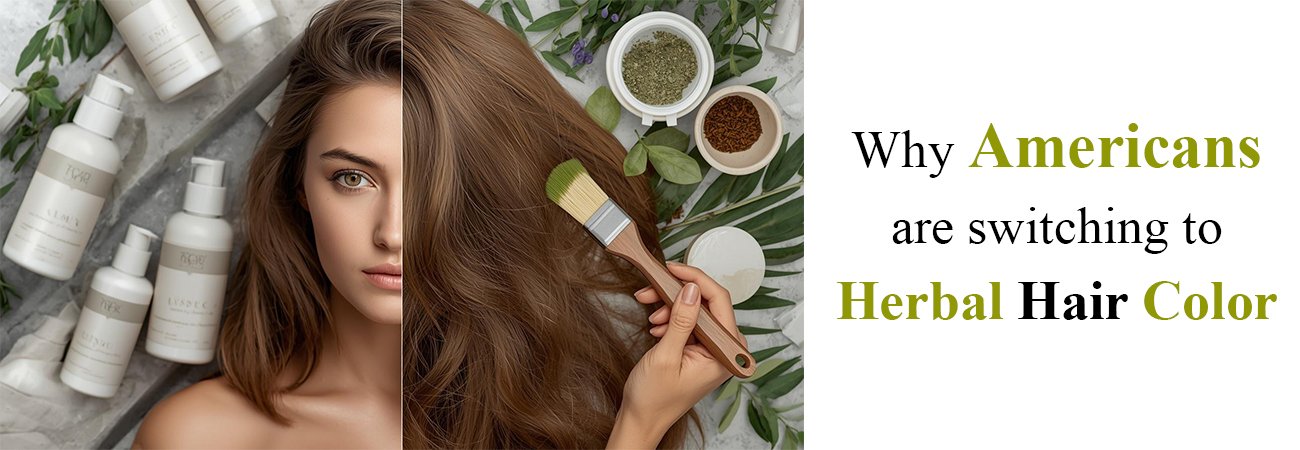
There’s a quiet revolution happening in bathrooms across North America, and it doesn’t smell like ammonia anymore.
If you’ve been paying attention to the beauty space lately, you’ve probably noticed something shifting. People are tired. Tired of scalp burns. Tired of reading ingredient labels that look like chemistry homework. Tired of paying salon prices for color that fades in three weeks and leaves their hair feeling like straw. In 2026, the conversation has moved from “how vibrant is my color?” to “what is this product actually doing to my head?”
Welcome to the Scalp-First movement — and welcome to the world of herbal, plant-based hair color.
It sounds like a buzzword, but there’s real substance behind it. The Scalp-First philosophy is simple: your scalp is skin. It’s living, breathing tissue with follicles, sebaceous glands, and nerve endings. Whatever you put on it gets absorbed — partially into your bloodstream, partially into your hair structure, and almost entirely into your long-term hair health story.
Conventional chemical hair dyes — the kind stacked on pharmacy shelves — typically contain a cocktail of ingredients including PPD (para-phenylenediamine), resorcinol, ammonia, and hydrogen peroxide in aggressive concentrations. These aren’t just irritants for sensitive skin types. Over time, they strip the natural oils from your scalp, weaken the hair shaft, trigger allergic reactions, and, for many people, accelerate hair thinning.
The Scalp-First crowd isn’t anti-color. They love color. They just want color that loves them back.
That’s exactly where henna powder enters the conversation — and why henna powder suppliers have become some of the most searched terms in the wellness-beauty crossover space heading into mid-2026.
Henna has been used for over 5,000 years. Ancient Egyptians used it. Women across South Asia, the Middle East, and North Africa have built entire beauty traditions around it. So why is the Western world only now catching up?
Partly, it’s timing. The clean beauty movement needed time to mature before consumers started asking harder questions about hair color, specifically. Skincare went clean first — serums, moisturizers, SPF. Then makeup. Hair color is the frontier that’s finally getting its moment.
And partly, it’s access. For a long time, finding high-quality henna in North America meant hunting through specialty stores or ordering from unreliable sources with questionable supply chains. Today, professional wholesale henna powder is accessible, the quality has improved dramatically, and suppliers who specialize in pure, plant-based formulations are stepping forward to meet demand.
One name that keeps coming up in that conversation — especially among salon owners, holistic beauty practitioners, and health-conscious retailers — is Kirpal Export Overseas.
Kirpal Export Overseas isn’t a trend-chasing startup riding the clean beauty wave. They’re a deeply rooted company with years of experience in the herbal hair color industry, built on a foundation that was plant-based before plant-based was a marketing slogan.
What makes Kirpal Export Overseas stand out in a growing market of henna powder suppliers is their uncompromising commitment to purity. Their flagship product — Kirpal Hari’s Color — is formulated entirely from plant-derived ingredients. No synthetic additives. No hidden chemical accelerants. No, PPD sneaked in to intensify the color payoff. What you see on the label is genuinely what’s inside the package.
For consumers who’ve been burned (sometimes literally) by “natural” hair color products that turned out to contain chemical enhancers, this matters enormously. The clean beauty space has a greenwashing problem, and Kirpal Export Overseas has built its reputation by being the exception to that pattern.
Let’s get specific, because the devil is always in the details when it comes to hair color formulations.
It’s 100% plant-based. Kirpal Hari’s Color derives its coloring power entirely from botanical sources. Henna (Lawsonia inermis) has been scientifically demonstrated to bind to the keratin protein in hair strands, creating a color that doesn’t sit on top of the hair — it integrates with it. This is fundamentally different from how chemical dyes work, and it’s why henna color tends to last longer and fade more gracefully.
No toxic chemicals, zero. This isn’t a “low chemical” formula or a “reduced chemical” approach. Kirpal Hari’s Color contains no ammonia, no peroxide, no PPD, no resorcinol, no synthetic fragrance added for marketing purposes. For people with chemical sensitivities, scalp conditions like psoriasis or seborrheic dermatitis, or anyone simply trying to reduce their toxic load, this is a genuinely meaningful distinction.
It’s kind to your scalp. Here’s something that doesn’t get said enough about pure henna: it actually has conditioning properties. Henna is mildly antifungal and anti-inflammatory in nature. Many users report that consistent use of plant-based henna color leads to a healthier scalp environment over time — less flaking, less irritation, and noticeably stronger hair. Chemical dyes do the opposite. They disrupt your scalp’s natural pH, damage the cuticle layer, and create a cycle where you need more and more conditioning treatments to compensate for the damage.
The results are genuinely beautiful. There’s a persistent myth that natural hair color means compromised results. Kirpal Hari’s Color challenges that assumption directly. The color is rich, multi-dimensional, and because it works by bonding with your hair’s protein structure rather than bleaching and depositing synthetic pigment, it tends to look more naturally vibrant — not flat or artificial. It’s the kind of color that people actually ask you about in a good way.
Here’s a perspective shift worth considering if you’re approaching this from a business angle rather than a personal use angle.
The demand for plant-based hair color isn’t a niche anymore. Across North America and Europe, consumers are actively looking for salons and retailers that offer chemical-free alternatives. Health food stores, holistic beauty boutiques, organic spas, and even mainstream salons are fielding these requests daily. The clients exist. The question is whether the supply chain can keep up.
This is where sourcing wholesale henna powder from a trusted supplier becomes a genuinely strategic business decision.
Working with an established henna powder supplier like Kirpal Export Overseas gives retailers and salon professionals several concrete advantages:
Consistency of quality. When you’re retailing a product or using it professionally on clients, you cannot afford batch-to-batch variation. Kirpal Export Overseas maintains strict quality standards throughout their production process, which means the henna powder you receive in March performs the same way as the batch you received in October.
Transparency in sourcing. Serious buyers want to know where their henna comes from, how it’s processed, and what testing it undergoes. A reputable wholesale henna powder supplier should be able to answer those questions clearly. Kirpal Export Overseas operates with that level of transparency built into their supply chain model.
Scale and reliability. Whether you’re a small boutique ordering modest quantities or a distributor moving serious volume, you need a supplier who can fulfill orders reliably. Kirpal Export Overseas has the infrastructure to support wholesale relationships at multiple scales.
The marketing story writes itself. In 2026, being able to tell your customers “this color contains zero toxic chemicals, it’s 100% plant-based, and it’s sourced from a supplier who’s been doing this for years” is a powerful retail narrative. Consumers are hungry for that story — and they’re willing to pay for it.
Does it cover gray? Yes — though the result on gray hair is often a beautiful warm copper or auburn rather than a deep brown or black, unless combined with other complementary herbs like indigo. Pure plant-based formulations give you real color on gray, not a tinted gloss that washes out in a week.
How long does it last? Because henna binds to your hair’s keratin rather than coating the outer shaft, it doesn’t wash out the way chemical color does. Most people see color lasting six to eight weeks with gradual, natural fading — no harsh lines of demarcation as roots grow in.
Is the application process difficult? It’s different from chemical color, not harder. Henna paste requires a longer processing time, typically 2 to 3 hours for optimal color depth, and it’s applied as a paste rather than a liquid. Many people find the process meditative rather than stressful.
Can you use it if you’ve had chemical color before? Generally, yes, with some caveats depending on the level of chemical processing your hair has undergone. This is where working with a knowledgeable supplier or practitioner matters — getting the right guidance before your first application makes a significant difference.
At the end of the day, the Scalp-First movement isn’t just about hair. It’s about the slow, steady cultural shift toward asking harder questions of the products we use on our bodies every day. It’s about recognizing that “what works” and “what’s safe” don’t have to be in conflict — that you can have vibrant, beautiful, lasting hair color without subjecting your scalp to a chemical process that your grandmother never would have recognized as beauty.
Henna powder suppliers like Kirpal Export Overseas are part of that story not because they’re new, but because they’ve been telling that story all along. The market is finally catching up to what they’ve always offered: pure, plant-based hair color that respects the body, honors tradition, and delivers results that speak for themselves.
If you’re a consumer looking to make the switch, a salon professional exploring cleaner service offerings, or a retailer trying to meet the demand your customers are already bringing to your door — this is the moment. The wholesale henna powder market has never been more organized, more accessible, or more ready to support you.
Your scalp will thank you. Your hair will show it.
Every henna powder supplier claims to sell the “purest” product on the market. Walk through…
Walk into any natural hair care store, or scroll through a beauty forum for five…
Launching a private label hair color line sounds simple on paper — pick a formula,…
If you’re a UK-based salon chain, hair color brand, or distributor trying to source henna…