Call/WhatsApp: +91-9811618013, +91-9810306077
Email: keohenna@gmail.com, kirpaloverseas@gmail.com
Email: keohenna@gmail.com, kirpaloverseas@gmail.com





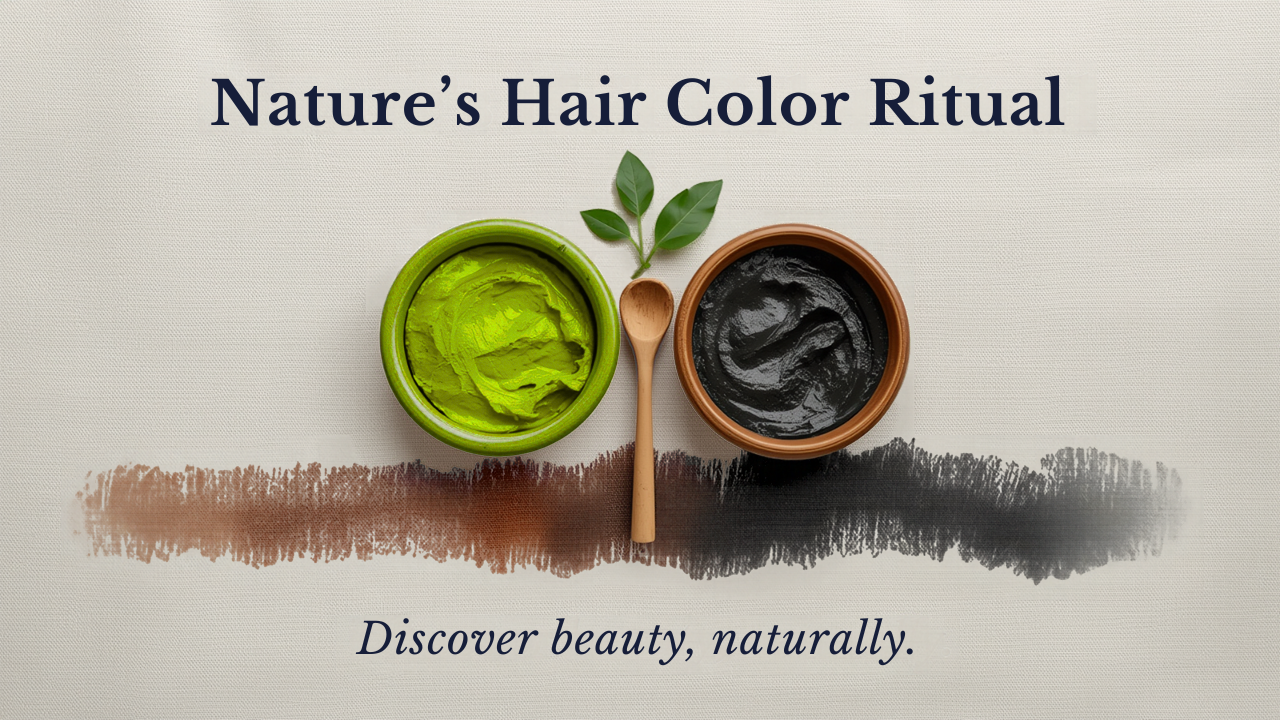
Why would a pharaoh who lived to around ninety be buried with red hair instead of black? When Ramesses II’s mummy travelled to Paris for study in the mid-1970s, the analysis suggested his white hair had been dyed red, possibly with henna, over hair that was likely auburn in his youth. Whatever his reasons, the colour shows something every modern henna user rediscovers: henna on its own gives red-orange, never black. The missing piece is a second plant that pulls the colour the other way, towards blue. Together, henna and indigo are how people get natural black hair and deep natural brown hair without a single synthetic dye.
To get black, apply henna powder first, rinse, then apply indigo powder in a second step. For brown, mix the two in one paste, with more henna for warm browns and more indigo for darker ones. The indigo decides the result, so anyone sourcing in bulk should ask indigo powder manufacturers about purity, testing and batch consistency before anything else.
Henna comes from the leaves of Lawsonia inermis. Its pigment, lawsone, is orange-red, which is why grey hair dyed with henna alone often turns coppery. The lighter the hair and the more grey it holds, the more red or orange it pulls.
Indigo comes from Indigofera tinctoria. The crushed leaves make a green powder that colours deep blue. Lay blue over red-orange and you get something close to black. That is the whole trick.
Indigo has a history as a textile dye, and the synthetic indigo used on fabric is not suitable for hair. The indigo sold for hair should be plant-based leaf powder. It also tends to give weak, bluish results when used alone, so it is normally paired with henna.
Black needs the two-step method: all the henna first, then all the indigo. Colour guides agree on the broad outline, though times vary by brand and hair type.
Plant-based does not mean allergy-proof. Test a small amount on the skin before the full application.
Mix the henna powder with water to a thick paste. Many guides suggest resting it for several hours, around 4 to 6, and some people leave it overnight, so the dye releases properly.
Cover the hair and leave the henna on for roughly 2 to 4 hours, then rinse thoroughly. Your hair will now be orange-red. That is the base coat, not the finished look.
Mix the indigo powder with lukewarm water to a thick paste. Apply it section by section over the henna-coloured hair and leave it for about 1 to 2 hours.
Skip shampoo and conditioner for 2 to 3 days, because the black can take a couple of days to fully develop. If you want it deeper, repeat the indigo step after a few days.
Expect a touch-up roughly every 4 to 6 weeks. Aloe vera powder or natural oils help with dryness, which is the usual complaint with henna and indigo.
Brown is the one-step route. You mix henna powder and indigo powder in one paste, and the ratio sets the shade. The ratios below are commonly cited starting points from usage guides, not guarantees, because your base colour and grey percentage change the outcome.
| Target shade | Henna | Indigo |
| Reddish brown | 75% | 25% |
| Medium brown | 50% | 50% |
| Dark brown | 25% | 75% |
| Black | 100% first, rinse | 100% second |
Some guides use equal parts for dark brown to soft black. Do a strand test, then adjust the ratio in the next batch.
Three things move the result more than the recipe does.
That third point is where a home recipe becomes a business question.
Industry market reports published in 2026 keep naming plant-based, ammonia-free and vegan formulations among the growth drivers in hair colour. Regulators have kept looking at synthetic dye ingredients too. In February 2026, the EU’s scientific consumer safety committee adopted its final advice that a brown direct-dye ingredient, Basic Brown 16, could not be considered safe for use in non-oxidative hair dyes, citing mutagenicity concerns.
That finding is about one ingredient. It says nothing about every dye, and it does not make plants automatically safe. It does push buyers to ask harder questions of every colour they stock, natural or not. For plant colours the questions are about purity, contamination and consistency, and they lead to the next section.
Choosing between indigo powder manufacturers is easier when you ask for specifics in writing. The table lists the questions that separate a reliable supplier from a vague one.
| Question | Why it matters |
| Is it 100% Indigofera tinctoria leaf powder, with no synthetic indigo, fillers or added dyes? | Synthetic indigo is unsuitable for hair, and additives ruin shade and safety. |
| How is indigotin content measured (for example by HPLC), and can you share a recent batch Certificate of Analysis? | Indigotin is the active pigment, and a number without a method means little. |
| What do you test for beyond colour: heavy metals, microbial counts, moisture? | Plant powders can carry contaminants, and buyers in regulated markets need the paperwork. |
| What fineness (mesh) do you supply? | Coarse powder rinses badly and applies unevenly. |
| Do you grow or source directly, and process in-house, or trade? | Traceability shows who is accountable for each batch. |
| Can you share shade results from two or three different lots on the same hair swatch? | Consistency across batches matters more than one perfect sample. |
| What are your shelf life and packaging barriers? | Moisture and light degrade the powder. |
| Do you offer private label printing, co-packing and henna-plus-indigo kits? | Many brands sell the two as a paired system. |
| What are your minimum order, sample policy and lead times? | These decide whether a trial order is realistic. |
| Which export documents can you provide for my market? | Paperwork delays cost more than a few cents per kilo. |
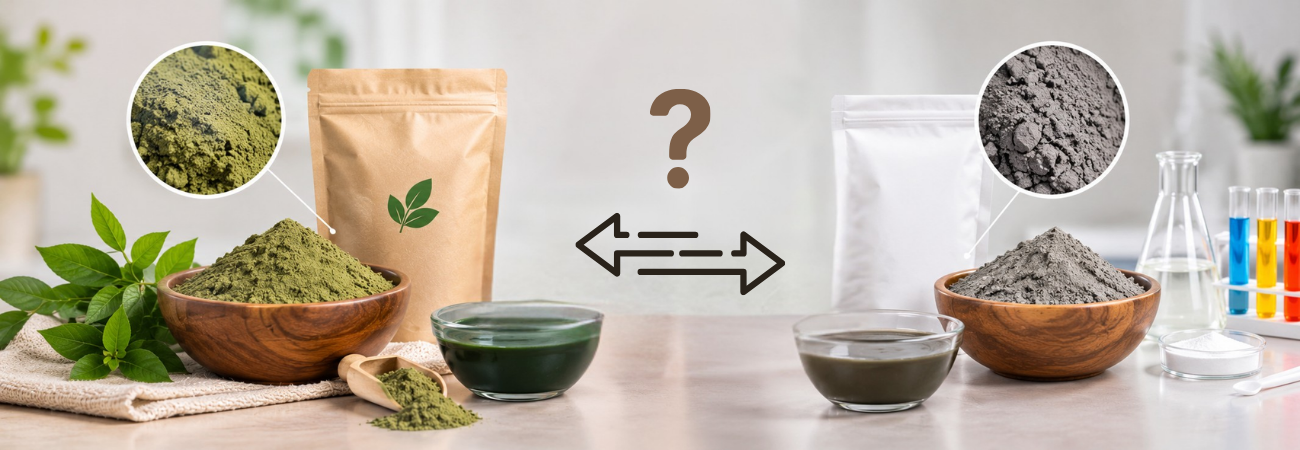
Some red flags are worth knowing. Natural indigo leaf powder is typically green, so a vivid blue powder deserves questions. A refusal to share a Certificate of Analysis is a problem, and so is a price far below everyone else’s with no explanation.
Some manufacturer-exporters publish exactly this kind of detail: farm photos, in-house units, packaging lines and private-label services. A page like this overview of a manufacturer-exporter’s indigo, henna and private-label range shows the sort of transparency worth looking for, whichever supplier you end up choosing.
Yes, and the idea is already established. Brands now sell ready-blended indigo-with-henna formulas aimed at brunettes who want to darken grey hair without coppery tones, as well as separate two-step kits. For a brand owner, that makes the ability to co-pack and print instructions a practical reason to compare indigo powder manufacturers, not a side feature. The consumer instructions on the pack, such as the two-step order and the 2 to 3 day wait before washing, also do much of your customer service for you.
Q: Can I get black hair with indigo powder alone?
A: Usually not well. Indigo alone tends to give weak, bluish results, so the standard route to natural black hair is henna first, then indigo.
Q: How much indigo powder do I need for dark brown?
A: A commonly cited starting mix is 75% indigo and 25% henna. Adjust after a strand test, since your base colour and grey level change the result.
Q: How long does a henna and indigo black last?
A: Plan on touch-ups roughly every 4 to 6 weeks, with root applications in between if needed. Fading is gradual rather than sudden.
Q: Is the indigo used on hair the same as textile indigo?
A: No. The synthetic indigo used on fabric is not suitable for hair. Hair use calls for plant-based indigo leaf powder.
Q: What should a Certificate of Analysis for indigo powder show?
A: At minimum, the batch number, indigotin content with the test method, heavy-metal and microbial results, moisture and the testing date.
Q: How can I check that indigo powder is pure?
A: Ask for a batch CoA, compare lot-to-lot shade swatches, and treat a vivid blue powder or a vague origin as a warning sign.
Q: Do indigo powder manufacturers offer private label and co-packing?
A: Many do, but terms differ, so ask about minimum orders, packaging, printing and whether henna and indigo can be packed together as a kit.
Q: Is henna and indigo safe for sensitive scalps?
A: Plant-based colours can still cause reactions in some people. Patch test first, and see a doctor if you have a history of severe dye allergies.
Two plants and the right order. Henna gives the warm base, indigo gives the depth, and a ratio or a second step decides whether you land on chestnut or near-black. For brands and importers, the same logic applies one level up: the shade you promise depends on the indigo you buy. Shortlist two or three indigo powder manufacturers, request samples, test them on swatches, and read the Certificate of Analysis before you read the price list.
Entra hoy en un salón de Milán, Berlín o Londres y notarás algo pequeño pero…
Ask ten people which hair dye brand is the safest and you’ll get ten different…
The patch test is the most boring step in hair colouring, and the one most…
Every natural hair color manufacturer eventually gets the same message from a buyer: “The black…