Call/WhatsApp: +91-9811618013, +91-9810306077
Email: keohenna@gmail.com, kirpaloverseas@gmail.com
Email: keohenna@gmail.com, kirpaloverseas@gmail.com





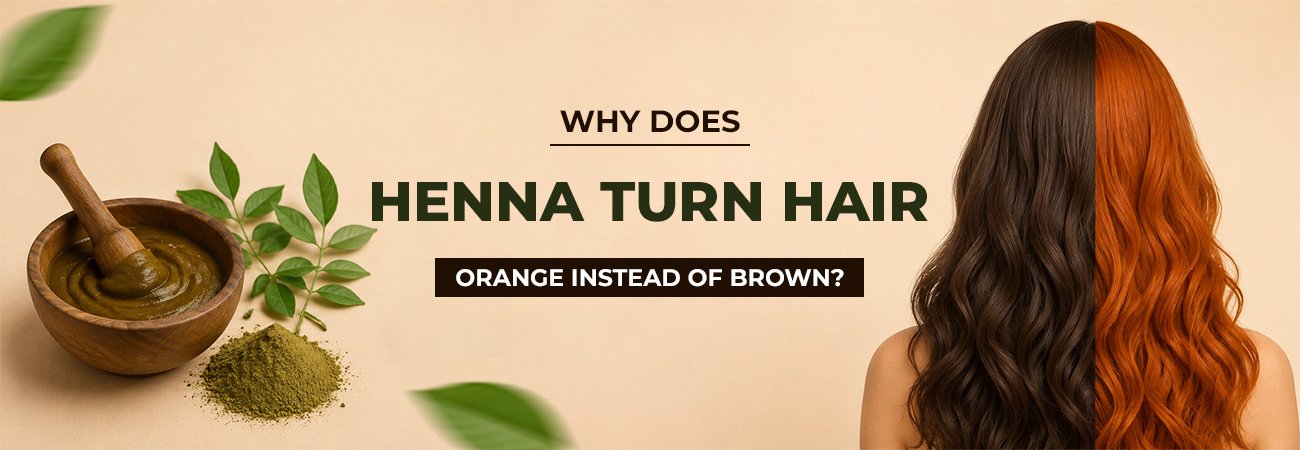
If you have ever mixed henna paste with excitement, waited patiently for hours, washed it out, and then stared into the mirror wondering why your hair looks more like a carrot than a chestnut brown, you are not alone. This is one of the most common frustrations people have with natural hair color, and it usually has nothing to do with henna being a bad product. More often, it comes down to a handful of factors that most people never learn until it is too late.
In this article, we will walk through exactly why henna can turn orange instead of brown, what your hair’s natural chemistry has to do with it, and how choosing the right quality of henna, like traditional Rajasthani henna, can completely change your results.
Henna gets its coloring power from a natural pigment molecule called lawsone. When henna paste sits on your hair, lawsone binds to the keratin protein in each strand and releases a reddish-orange dye. This is not a defect. It is simply how pure henna behaves at a molecular level.
The important thing to understand is that henna on its own only ever produces shades of orange to reddish-copper. The deep browns, chestnuts, and near-blacks that people associate with “henna hair color” almost always come from henna blended with other natural ingredients, most commonly indigo. Indigo is what shifts the tone from orange toward brown or black.
So if you applied pure henna powder expecting a chocolate brown result, the orange you are seeing is actually henna working exactly as it should. The confusion usually comes from marketing language, not from the plant itself.
Your hair’s porosity, meaning how easily it absorbs and holds moisture and pigment, plays a bigger role than most people realize.
Hair that is porous, damaged, or previously chemically treated tends to grab onto lawsone very quickly and very intensely. This often results in a brighter, more vivid orange because the cuticle is open and absorbing pigment faster than usual.
Hair that is smooth, healthy, and less porous absorbs pigment more gradually, which can sometimes lead to a softer, more muted tone. This is one reason why two people using the exact same henna batch can end up with noticeably different shades.
Henna does not lift or lighten your existing hair color. It deposits color on top of what is already there. This means:
This is exactly why grey hair, which has no melanin left, often shows the most dramatic and sometimes unwanted orange results.
Beyond natural chemistry, there are a few practical mistakes that make the orange outcome more likely.
Using low-quality or adulterated henna. Not all henna powder is created equal. Cheap, mass-produced henna is sometimes mixed with fillers, dried leaves from other plants, or synthetic dyes to bulk up the product or intensify color quickly. This can throw off the natural balance and lead to patchy or overly bright orange results. Pure, high-lawsone-content henna, like the kind traditionally grown in Sojat, Rajasthan, tends to give a more even, predictable tone because it is not diluted with anything else.
Not leaving the paste on long enough. Lawsone needs time to fully bind to the hair shaft. Rinsing henna out too early, sometimes because the smell or mess becomes uncomfortable, can leave the color looking incomplete, patchy, or unusually orange rather than allowing it to deepen naturally.
Skipping the dye release process. Good henna paste needs time to rest after mixing so the lawsone can activate properly, usually several hours at room temperature. Applying henna paste immediately after mixing, before the dye has released, often gives a weaker, more orange-leaning result.
Using the wrong liquid to mix the paste. Some people mix henna with plain water, others use lemon juice, tea, or other acidic liquids to help release dye faster. While acidity does help lawsone release, using it incorrectly or in the wrong ratio can sometimes affect how evenly the color develops.
Not all henna is grown or processed the same way, and this matters more than most people expect.
Henna from Sojat, Rajasthan, is widely regarded as some of the finest in the world because of the region’s specific climate and soil conditions. The hot, arid environment encourages the henna plant to develop unusually high lawsone content, which is the actual coloring compound. Higher lawsone content generally means a richer, more saturated tone and more consistent results, rather than a flat, uneven orange.
This is also why Sojat henna carries strong recognition internationally, including GI tag status, since the region’s henna has measurably different color-release properties compared to henna grown elsewhere.
For anyone who has tried henna in the past and been disappointed by patchy or overly orange results, the quality and purity of the raw henna itself is often the real culprit, not the concept of natural hair color as a whole.
If your goal is a natural brown rather than orange, here are a few practical adjustments that make a real difference.
Use a henna and indigo blend. Since henna alone leans orange, combining it with indigo is the traditional way to achieve brown to black tones. Many pre-blended natural hair color powders are formulated specifically to balance these two ingredients for a predictable brown shade.
Choose pure, unadulterated henna powder. Sourcing henna that has not been mixed with fillers or synthetic additives means the color you get is consistent and repeatable each time you use it, rather than a surprise every application.
Do a strand test first. Before applying henna to your entire head, testing a small, hidden section of hair helps you see exactly how your hair will react, especially if you have grey hair or previously colored hair.
Be patient with processing time. Leaving the paste on for the recommended duration, rather than rushing the process, allows the color to develop fully rather than looking half-finished and orange.
Consider your hair’s condition beforehand. Healthy, well-conditioned hair tends to take henna color more evenly than dry, damaged, or over-processed hair.
Even when people are focused on getting the perfect brown shade, it is worth remembering why henna has been trusted for centuries in the first place, well beyond just coloring hair.
It conditions as it colors. Unlike many chemical hair dyes that can leave hair feeling dry or brittle, henna coats each strand and often leaves hair feeling thicker and smoother.
It is gentle on the scalp. Pure henna does not contain ammonia or peroxide, which are common irritants in chemical hair dyes. This makes it a popular choice for people with sensitive scalps or those looking to avoid harsh chemical exposure.
It may help with dandruff and scalp buildup. Henna has natural antimicrobial properties that some people find helpful for a cleaner, calmer scalp over time.
It strengthens hair over repeated use. Many long-term henna users report that their hair feels stronger and has more natural shine, likely due to the way henna binds to and reinforces the hair shaft.
It is a safer option for those avoiding synthetic chemicals. For people managing allergies to common chemical hair dye ingredients, pure henna offers a plant-based alternative that many find more comfortable to use.
1. Does henna always turn hair orange? Pure henna on its own typically produces shades ranging from copper to reddish-orange. Brown or black tones usually come from henna blended with indigo, not from henna alone.
2. Can I fix orange hair from henna without waiting for it to grow out? Applying an indigo treatment after henna is the traditional method to deepen orange tones toward brown or black. It is generally best to wait a few days between applications rather than layering colors immediately.
3. Does grey hair react differently to henna? Yes. Grey hair has no natural pigment, so it tends to show the truest, brightest version of henna’s orange tone, since there is nothing underneath to mute the effect.
4. Is orange hair from henna a sign of bad-quality henna? Not necessarily. It is often simply how pure henna behaves. However, using low-quality or adulterated henna can make results more unpredictable or patchy.
5. How long should henna paste sit on hair for the best color? Most people leave henna paste on for two to four hours, though this can vary depending on the henna’s quality and the depth of color desired. Leaving it on too briefly is a common reason for weaker, more orange-leaning results.
Henna turning orange instead of brown is not a flaw in natural hair color. It is simply the true nature of pure henna, shaped further by your hair’s porosity, natural shade, and the quality of the henna itself. Understanding this helps set realistic expectations and makes it much easier to get the shade you actually want.
For anyone serious about consistent, rich, and predictable results, sourcing pure, high-lawsone-content henna, like the traditional henna grown in Sojat, Rajasthan, makes a noticeable difference. When the raw material is trustworthy, the outcome becomes far more reliable, whether you are going for a warm coppery tone or working toward a deeper natural brown.
Every henna powder supplier claims to sell the “purest” product on the market. Walk through…
Walk into any natural hair care store, or scroll through a beauty forum for five…
Launching a private label hair color line sounds simple on paper — pick a formula,…
If you’re a UK-based salon chain, hair color brand, or distributor trying to source henna…