Call/WhatsApp: +91-9811618013, +91-9810306077
Email: keohenna@gmail.com, kirpaloverseas@gmail.com
Email: keohenna@gmail.com, kirpaloverseas@gmail.com





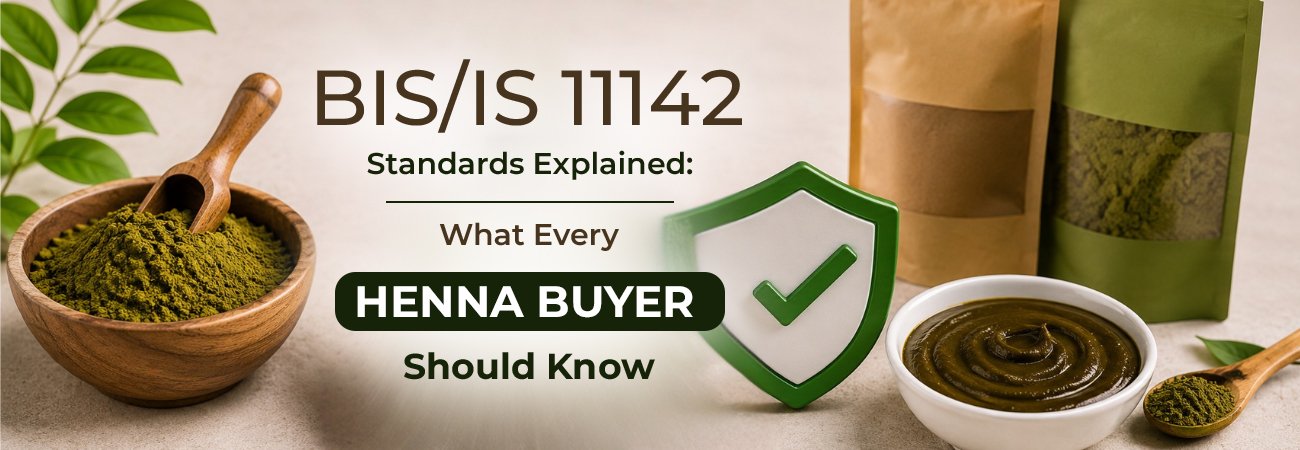
Ask any experienced henna importer what keeps them up at night, and quality inconsistency will usually top the list. One batch performs beautifully, the next barely deposits color, and nobody at the buyer’s end can figure out why. More often than not, the answer traces back to whether the manufacturer actually follows BIS IS 11142 or just claims to.
At Kirpal Export Overseas, a Sojat henna powder manufacturer working with buyers across the UK, USA, UAE, Germany, and Australia, this comes up in nearly every serious conversation we have with new clients. It’s not a minor technicality. It’s often the single biggest factor separating a dependable supplier from one that’ll cause you headaches three shipments in.
So let’s actually talk through what this standard means and why it should shape how you source henna powder going forward.
BIS is the Bureau of Indian Standards — India’s official body for setting quality benchmarks across manufactured goods. IS 11142 happens to be the specification written specifically for henna powder. It covers things like how much moisture the powder can hold, how finely it needs to be ground, and how much foreign material (think sand, twigs, other plant matter) is acceptable before a batch fails the test.
Here’s the thing most buyers don’t realize until they’ve been burned once: not every supplier who claims “pure henna” is actually testing against these parameters. Some are. Plenty aren’t. The powder might look fine, smell right, and even pass a casual sniff test—but without lab verification, you’re essentially trusting a stranger’s word on something your entire product line depends on.
We’ve had buyers tell us their customs clearance process got noticeably smoother once they switched to a certified supplier. Others mention that batch-to-batch color consistency finally stopped being a guessing game. Small things, but they add up when you’re running a business on repeat orders.
I won’t pretend this is thrilling reading, but if you’re sourcing henna at scale, it’s worth understanding what’s being measured—because it directly affects what lands on your production floor.
Moisture content is one of the first checks. Too much moisture and you’re looking at fungal risk and a shorter shelf life. Too little, and the powder doesn’t blend the way it should when mixed with water or other bases in your formulation.
Then there’s fineness — basically, how finely the leaves have been ground. This gets tested through mesh sieving, and it matters more than people expect. Coarser powder feels gritty, doesn’t dissolve evenly, and gives an inconsistent paste texture. If you’re a cosmetic manufacturer formulating hair color or henna-based skincare, this alone can make or break your product’s feel.
Ash content and acid-insoluble ash are checked too, mainly to catch contamination—soil, sand, that sort of thing that sometimes sneaks in when leaves aren’t processed carefully. And of course, there’s testing for adulterants, since some cheaper henna is bulked out with other plant material unrelated to actual henna.
Color value is really the heart of it, though. Since henna’s whole purpose is the dye it produces, testing typically estimates lawsone percentage—the compound responsible for that rich color deposit everyone’s after.
Honestly, if a supplier can’t hand you recent batch-specific test data covering these points, that tells you something on its own.
There’s a reason “Sojat henna” gets thrown around so much in sourcing circles, and it’s not just marketing. Sojat, in Rajasthan, has earned its reputation as the henna capital of the world over generations—the soil here, the climate, even the farming knowledge passed down through families all contribute to leaves with noticeably higher lawsone content than henna grown elsewhere.
We’re based right in this region, and that proximity genuinely changes how we operate. We’re not buying from three middlemen removed from the farm—we’re working directly with growers we’ve known for years, which means we can influence harvest timing, monitor drying conditions, and catch quality issues before they ever become a shipment problem.
This matters because certification alone doesn’t guarantee excellence. A supplier could technically meet BIS minimums using average-grade henna. Origin still counts. A lot.
I’ll be straightforward—we didn’t build our client base by cutting corners, and we’ve lost a few price-sensitive deals over the years because we wouldn’t compromise on process. That’s fine by us.
Our sourcing starts at the farm level. We pay attention to when leaves get harvested, because timing genuinely affects lawsone content—pick Pali ortoo early or too late and you lose potency, no matter how good the processing afterward is.
From there, drying and grinding are handled under controlled conditions specifically to preserve color strength while still hitting the fineness levels our cosmetic and hair color clients need. And every batch gets tested before it’s cleared for packing — not occasionally, not as some annual formality, but as a standard part of how we run production.
For clients doing private label or OEM work, we also work around their specific packaging and formulation needs. And for international buyers, we handle documentation that satisfies import requirements across different markets, since we know that’s often the part that trips people up most.
If you’re formulating herbal hair color, this whole conversation matters even more. Your finished product can only be as good as the raw henna going into it. You can have the best formulation team in the world, but weak base powder will always show up in weak results.
This is exactly why so many hair color brands specifically ask about Sojat origin and BIS compliance before even requesting a sample. It’s become a quiet but real filter in how serious buyers evaluate suppliers.
Before you commit to a bulk order with anyone, it’s worth asking a few direct questions. Do they have recent lab reports for moisture and color value? Is the henna actually sourced from Sojat or Pali, or bought through traders further down the chain? What’s their typical Lawson range across batches, and can they keep that consistent for repeat orders? Can they support your private label packaging and paperwork needs?
Suppliers who answer these without stumbling are usually the ones worth building a real relationship with.
Even seasoned importers slip up here sometimes, so a few honest observations from years of dealing with international buyers.
Marketing copy claiming “100% natural” or “pure henna” means very little without actual test data behind it. Words on a website cost nothing to write.
Storage and shipping conditions get overlooked more often than they should. Even great henna powder can degrade if it picks up moisture during a long shipping route or sits in a poorly ventilated container.
Price sometimes wins over consistency, especially when margins are tight. But cheaper henna is often cheaper for a reason—usually lower-grade sourcing or blending with filler material. And when your customers notice inconsistent color results, that costs you more in returns and lost trust than you saved on the initial order.
And honestly, skipping the sample stage before placing a big order is still surprisingly common, usually because of time pressure. It’s a small step, but it saves a lot of grief.
BIS IS 11142 isn’t just paperwork to file away—it’s a genuinely practical tool for judging henna powder quality, especially when you’re buying from thousands of miles away and can’t inspect the product yourself before it ships. Pair that with an understanding of why Sojat-origin henna carries the reputation it does, and you’ve got a much clearer way to tell reliable manufacturers apart from the rest.
At Kirpal Export Overseas, this is basically the foundation of how we work — strong sourcing relationships, consistent testing, and being upfront with buyers about what they’re actually getting. Whether you’re building a private label cosmetic line, running wholesale imports, or supplying a salon chain, knowing what to look for here puts you in a much stronger position.
Next time you’re evaluating a henna supplier, don’t be shy about asking for test reports and sourcing details. It’s a small ask that can save you a lot of trouble later.
FAQs
1. What is BIS IS 11142 for henna powder?
It’s the Bureau of Indian Standards specification for henna powder quality, covering moisture content, fineness, ash content, and color value, to help ensure consistent, pure batches.
2. Why is Sojat henna considered better quality?
Sojat’s soil and climate naturally support henna with higher lawsone content, the compound responsible for color deposit, which gives it an edge over henna grown in many other regions.
3. How do I verify a supplier’s henna quality claims?
Ask for recent, batch-specific lab reports covering moisture and color values, plus details on sourcing origin. Reliable manufacturers will provide this without hesitation.
4. Is BIS certification mandatory for exporting henna powder?
It depends on the destination country’s import rules, but BIS compliance generally makes customs clearance and quality verification much easier for international buyers.
5. Does Kirpal Export Overseas support private label and OEM orders?
Yes. We work with cosmetic manufacturers, wholesale importers, and salon distributors on custom formulations, packaging, and documentation suited to their specific market.
Every henna powder supplier claims to sell the “purest” product on the market. Walk through…
Walk into any natural hair care store, or scroll through a beauty forum for five…
Launching a private label hair color line sounds simple on paper — pick a formula,…
If you’re a UK-based salon chain, hair color brand, or distributor trying to source henna…