Call/WhatsApp: +91-9811618013, +91-9810306077
Email: keohenna@gmail.com, kirpaloverseas@gmail.com
Email: keohenna@gmail.com, kirpaloverseas@gmail.com





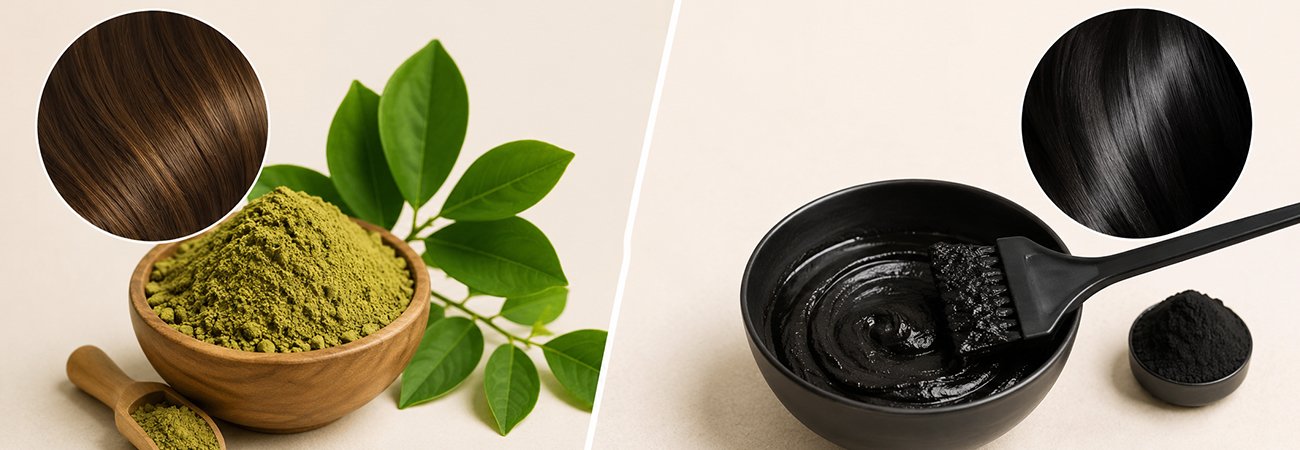
If you’ve ever stood in front of a henna supplier’s catalogue and wondered why one powder is labelled “100% natural” while another promises “instant black” results, you’re not alone. This is one of the most common questions we get from salon owners, private label brands, and everyday buyers who want to understand what they’re actually putting on their skin or hair.
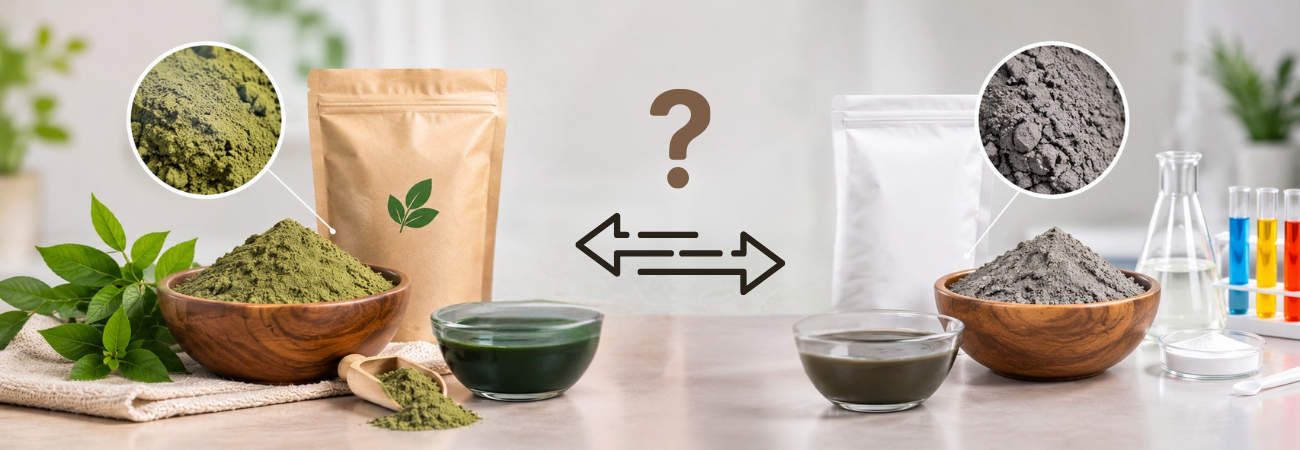
The short answer: natural henna and black henna are not the same product, and mixing them up can lead to allergic reactions, damaged hair, or a batch of unhappy customers. Let’s break down exactly what separates the two, why the distinction matters so much for buyers, and how to tell them apart before you place a bulk order.
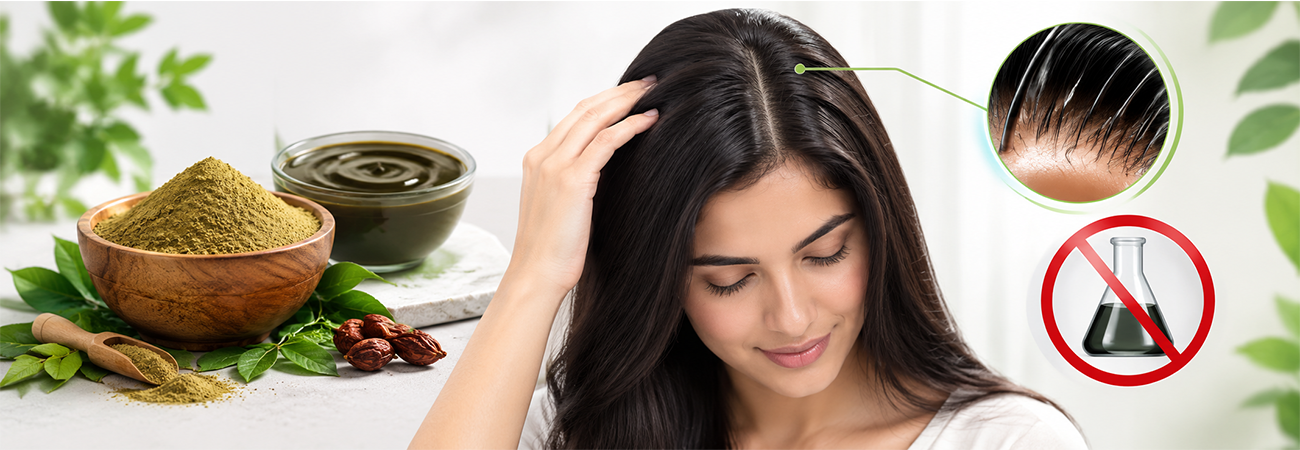
Natural henna comes from the dried and powdered leaves of the Lawsonia inermis plant, a shrub that grows abundantly in hot, arid regions. Rajasthan, particularly the Sojat belt, has earned a GI (Geographical Indication) tag for producing some of the finest henna in the world, thanks to the region’s specific soil composition and climate that concentrates lawsone — the active dye molecule responsible for henna’s reddish-brown stain.
When you buy pure henna powder from established Rajasthani henna manufacturers, you’re getting a single-ingredient product: crushed, sieved leaves and nothing else. No additives, no synthetic dyes, no metallic salts. The color it produces ranges from a warm orange to a deep reddish-brown, depending on:
This is why natural henna has been used for centuries across South Asia and the Middle East — not just for its color, but for its conditioning properties. It coats the hair shaft, adds shine, and is widely considered gentler than chemical dyes for people with sensitive scalps.
Here’s where things get concerning. “Black henna” is not henna at all in the traditional sense — pure henna simply cannot produce a jet black color. To achieve that deep black shade quickly (often within minutes, unlike the hours natural henna needs), manufacturers or unregulated vendors add a chemical called para-phenylenediamine (PPD).
PPD is a coal-tar derivative also used in some permanent hair dyes, but at much higher, unregulated concentrations in so-called black henna. This is what makes black henna:
Temporary black henna tattoos sold at tourist spots and beach markets are the most common source of PPD-related skin reactions reported globally. For hair color manufacturers, using PPD-laden mixtures instead of verified herbal formulations is a shortcut that can seriously damage brand trust — and in many export markets, it can trigger compliance and safety issues.
| Feature | Natural Henna | Black Henna |
| Source | Pure Lawsonia inermis leaf powder | Henna (sometimes) mixed with PPD or other synthetic dyes |
| Color result | Orange to reddish-brown | Jet black |
| Development time | 2–6 hours | 10–30 minutes |
| Skin/scalp safety | Generally safe, patch test still advised | High allergy and irritation risk |
| Regulatory standing | Recognized as safe cosmetic ingredient (BIS/IS 11142 compliant when sourced properly) | Restricted or banned in several countries for skin application |
| Hair conditioning benefit | Yes — strengthens and adds shine | No — can dry out and damage hair over repeated use |
If you’re a private label brand, salon chain, or wholesale importer sourcing herbal hair color, the natural-vs-black henna distinction isn’t just a labelling detail — it’s a safety and compliance issue.
1. Regulatory compliance: Countries across the EU, UK, and parts of the Middle East have tightened restrictions on PPD concentrations in cosmetic products. Sourcing from manufacturers who follow BIS/IS 11142 henna quality standards protects your brand from customs issues, product recalls, or import rejections.
2. Customer safety and brand reputation: A single reported allergic reaction from an undisclosed PPD additive can undo years of brand-building. Buyers working with reputable Rajasthani henna manufacturers can request Certificates of Analysis (CoA) and lab test reports confirming the absence of PPD, heavy metals, and other adulterants.
3. Consistency in results: Genuine henna performs predictably batch after batch when sourced from a manufacturer with controlled cultivation, drying, and milling processes. Black henna’s chemical additives can vary wildly in concentration from one supplier to another, making quality control nearly impossible.
Whether you’re sourcing henna powder in bulk for private labeling or vetting a new supplier, keep these checks in mind:
Natural henna and black henna may share a name, but they couldn’t be more different in composition, safety, and long-term effect on hair and skin. For buyers — whether you’re a salon owner, an organic beauty distributor, or a brand building a private label hair color line — understanding this difference is the first step toward sourcing responsibly.
Working with established Rajasthani henna manufacturers who follow transparent sourcing, testing, and export practices ensures you’re getting the real thing: a product that’s been trusted for generations, without the hidden risks that come with shortcuts like PPD-laden black henna.
1. Can natural henna ever turn hair completely black? No. Pure henna produces shades ranging from orange to reddish-brown depending on hair type and application time. A true black result almost always indicates the presence of added chemicals like PPD.
2. Is black henna banned everywhere? Not universally, but many countries restrict or ban high concentrations of PPD in cosmetic and temporary tattoo products due to documented allergic reactions. Regulations vary by region, so buyers should check local compliance requirements.
3. How can I verify a henna manufacturer is selling genuine natural henna? Ask for lab test certificates confirming the absence of PPD and heavy metals, request the full ingredient list, and check whether the henna is sourced from a recognized region like Sojat, Rajasthan, which carries a GI tag for quality assurance.
4. Does natural henna damage hair like black henna can? No — natural henna is generally conditioning and can improve hair strength and shine over time. Black henna, due to its chemical additives, can dry out hair and cause long-term damage with repeated use.
5. Why do Rajasthani henna manufacturers have a reputation for quality? The Sojat region of Rajasthan has ideal soil and climate conditions for cultivating henna with high lawsone content, which is the compound responsible for natural color development. This, combined with generations of processing expertise, has made the region a globally recognized source for premium henna powder.
The patch test is the most boring step in hair colouring, and the one most…
Every natural hair color manufacturer eventually gets the same message from a buyer: “The black…
Look closely at a microbladed brow around the eighteen-month mark, and the story is usually…
A customer once told us something we still remember. She had been colouring her gray…