Call/WhatsApp: +91-9811618013, +91-9810306077
Email: keohenna@gmail.com, kirpaloverseas@gmail.com
Email: keohenna@gmail.com, kirpaloverseas@gmail.com





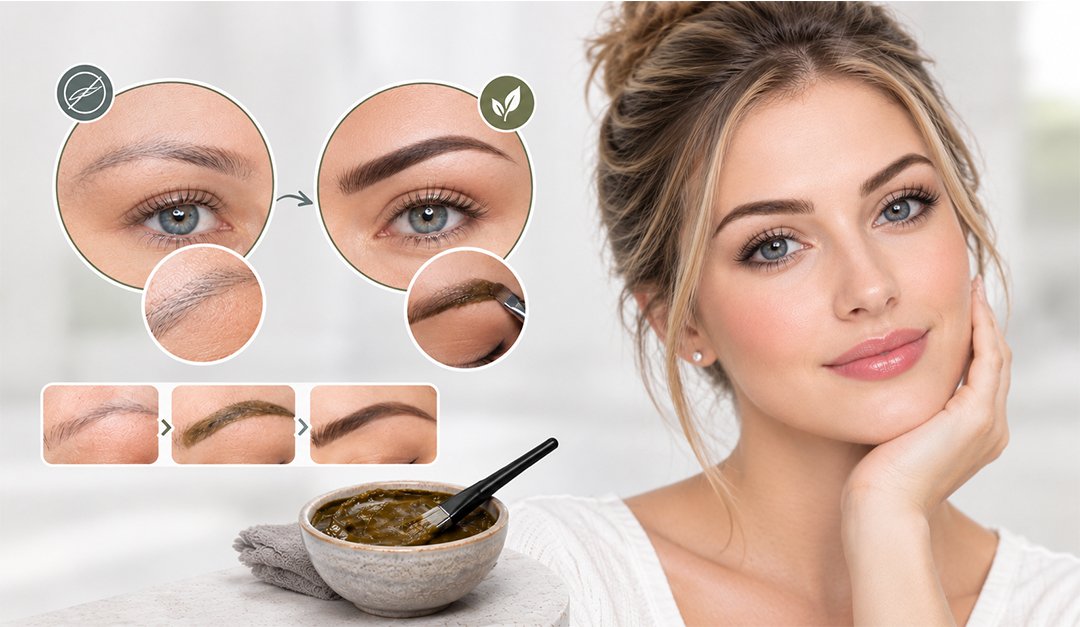
Look closely at a microbladed brow around the eighteen-month mark, and the story is usually the same. The crisp, hair-like strokes have softened into a faint smudge. A few have turned slightly grey. Others have gone the color of weak tea. The client isn’t ready to book another session, but the mirror isn’t being kind either.
That’s when henna enters the conversation. It’s plant-based, it costs far less than a touch-up, and it tints the real hairs that are still there. So is henna for faded microblading actually a good idea?
The short answer: partly, and only for a while. Henna can make a faded brow look fuller and warmer for a week or two. It cannot remove old pigment, redraw lost strokes, or replace a professional touch-up. This guide covers how it works, where it helps, where it falls short and how to use it without creating a bigger problem.
To understand what henna can do, it helps to know what it is working on top of.
Microblading deposits pigment in the upper layers of the dermis, which is shallower than a traditional tattoo. That shallow placement is what gives the strokes their fine, natural look. It is also why they don’t last. Your skin renews itself constantly, and your body’s immune cells slowly carry pigment particles away.
Most people notice real fading somewhere between one and three years, though it varies a lot. Oily skin tends to lose pigment faster. So does skin that gets plenty of sun or skin treated regularly with retinoids, glycolic acid, and other exfoliants. The pigment color matters too. Some shades drift toward ash grey or blue as they fade, while others turn warm, pinkish, or orange.
That color shift is the detail most people overlook, and it becomes important once henna enters the picture.
Henna’s coloring molecule is called lawsone. It binds to keratin, the protein in your hair, and to the outermost layer of your skin. That’s it. It doesn’t travel down to the dermis, where microblading pigment sits.
So when you apply henna over faded microblading, you are not touching the old pigment at all. You are laying a thin, temporary stain on top of it. Think of it as a tinted veil over a faded painting rather than a restoration of the painting.
That veil behaves predictably:
Those numbers shift with skin type, product quality, and how long the paste sat on the skin, so treat them as ballpark figures.
Used well, henna does a few useful things.
It fills in the gaps. Where some strokes remain and others have vanished, a skin stain between them makes the brow look continuous again.
It darkens your natural hairs. Many people with microblading still have fine, pale brow hairs that were never visible. Tinting them lets the real hairs and the old strokes read as one brow.
It sharpens the shape. A faded brow loses its edges first. A henna stain along the original outline brings back that definition.
It buys you time. If your touch-up appointment is six weeks away, or you’d like to stretch the gap between sessions, a henna tint is a low-commitment way to look polished in the meantime.
It’s gentle in a way many people appreciate. A well-made henna tint contains no ammonia or peroxide, which is one reason brow artists often suggest it to clients who dislike synthetic dyes.
This is the part people tend to skip, and it’s where most disappointment comes from.
It can’t remove or lighten old pigment. If your microblading has turned grey-blue, henna will sit over it, not erase it.
It can’t recreate hair strokes. Henna on skin gives a soft, slightly diffused stain. You’ll get a powdered look, not crisp individual hairs. For fine strokes you need a skilled artist and a needle.
It can’t fix a color mismatch. Henna is warm by nature. Over ashy, faded pigment, it can look redder than you expected. Over pigment that has already turned orange, a reddish henna can double down on the warmth.
It can’t last. Skin exfoliates, so the stain on skin fades unevenly. Around day five to seven, you may see a patchy look as it breaks up.
It can’t correct a poor shape. If the original microblading was uneven, henna will follow that shape faithfully, flaws included.
Here’s a rough guide. Always test before committing to the full brow.
| What your faded pigment looks like | How henna tends to behave | What usually works |
| Soft, even light brown | In the easiest case, henna blends in and adds depth. | A medium to dark brown henna |
| Grey or ashy | Henna reads warmer than the old strokes. | Deep brown, applied lightly, and accepts a slightly warmer finish. |
| Warm, orange or salmon | Red-toned henna adds more warmth. | A cooler, deeper brown rather than auburn |
| Blue or greenish | Henna can only partly mask it. | Talk to a professional about color correction before using henna. |
Safety matters more than shape here, so read this section before you reach for a brush.
Not during healing. Fresh microblading is an open, sensitive wound while it heals. Most artists want you to wait until the skin has fully healed, usually at least four to six weeks, before putting anything tinted on it. Henna in that window can irritate the skin and interfere with how the pigment settles.
Not without a patch test. Apply a small amount behind the ear or on the inner forearm and wait 24 to 48 hours. If you see redness, itching, or swelling, stop.
Never “black henna.” Real henna produces orange to deep brown tones and takes time to darken. A product that promises jet black in minutes usually contains PPD (paraphenylenediamine), a synthetic dye that can cause serious allergic reactions on skin. Check the ingredient list, and buy only from sellers who can tell you exactly what is in the jar.
Not near the eyes. Keep the paste away from the eye area, and rinse with clean water if any gets in. Rules for eyebrow products also vary from country to country, so buy from a manufacturer that can show proper documentation.
Ask your doctor first if you have G6PD deficiency or if your skin is irritated, broken, or reactive.
Tell your brow artist. A henna stain can make it harder to judge your existing pigment color. Many artists like clients to skip tinting for a week or two before a session, so ask what they prefer.
To keep both the henna and the microblading going longer, avoid retinol, acids, and scrubs on the brow area, and use sunscreen on your face.
Henna works best as a bridge, not a destination. If most of the strokes are gone, a color-boost session with your artist is the real fix. If the pigment has shifted to an odd color, ask about professional color correction rather than layering product on top. On the days in between, a powder or pencil gives you a quick, removable option.
For many people, a good rhythm is a touch-up every year or two, with henna filling in the gaps between sessions.
Here’s something the beauty world doesn’t talk about much: results depend heavily on the powder itself. Coarse, poorly milled or old henna stains unevenly, which is the last thing you want over delicate, faded brows.
Kirpal Export Overseas is an eyebrow henna manufacturer and exporter based in Sojat, Rajasthan, the region whose henna carries a Geographical Indication tag. Our eyebrow henna is made from carefully selected leaves, dried, milled to a fine and even texture, and tested batch by batch for lawsone content and purity. It is PPD-free and free from ammonia and peroxide, so it fits naturally into clean, plant-based brow routines.
That consistency matters when brow studios, distributors, and beauty brands need the same result every time. We supply eyebrow henna in bulk with private label and OEM options, along with the export documentation overseas buyers expect.
If you run a brow studio or you’re building your own line, you can see our eyebrow tint range at hennasupplier.com or reach us through kirpalexport.com.
Henna won’t erase faded microblading, and it won’t give you back the strokes you had in month one. What it will do is add a soft, natural-looking tint to the skin and hairs, so a fading brow looks fuller, warmer, and better defined for a couple of weeks.
Use it after the skin has fully healed, patch test first, avoid anything sold as black henna, and tell your artist about it. Treat it as a bridge between professional sessions, and it can be genuinely useful too
The patch test is the most boring step in hair colouring, and the one most…
Every natural hair color manufacturer eventually gets the same message from a buyer: “The black…
A customer once told us something we still remember. She had been colouring her gray…
Betreten Sie eine Drogerie in Berlin, Paris oder Mailand, finden Sie im selben Regal zwei…