Call/WhatsApp: +91-9811618013, +91-9810306077
Email: keohenna@gmail.com, kirpaloverseas@gmail.com
Email: keohenna@gmail.com, kirpaloverseas@gmail.com





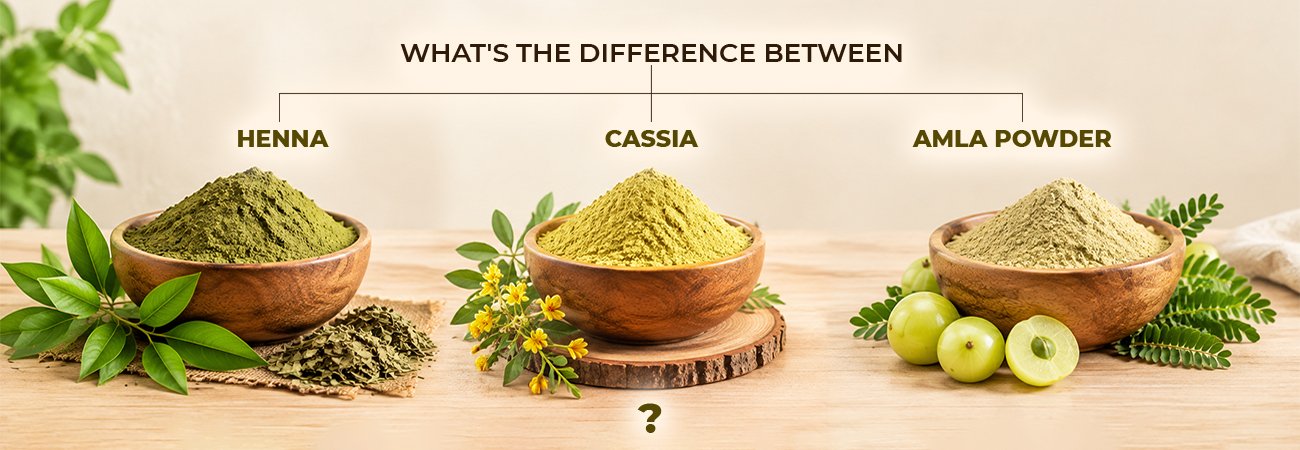
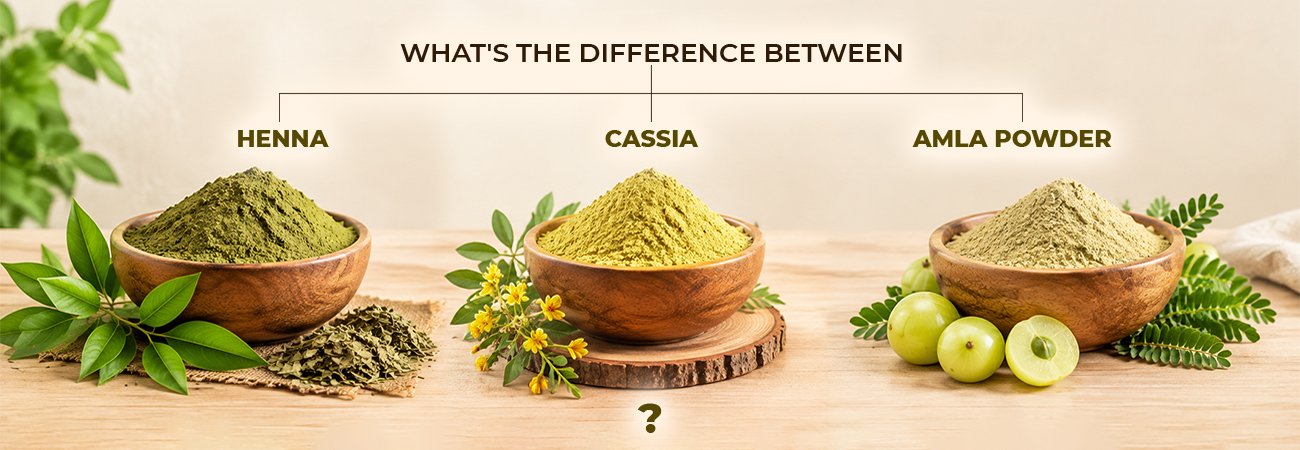
Walk into any natural hair care store, or scroll through a beauty forum for five minutes, and you’ll see these three names thrown around like they mean the same thing. Henna. Cassia. Amla. Somebody’s using one to go auburn, somebody else swears by another for hair growth, and a third person is mixing all three and hoping for the best. If you’ve ever stood there holding three unmarked pouches of green-brown powder wondering which one actually does what, you’re not alone — and you’re definitely not the only person asking a wholesale henna supplier to explain the difference before placing an order.
The confusion is fair. All three come from plants. All three are ground into fine powders. All three get used on hair. But that’s roughly where the similarities end, and understanding what sets them apart matters whether you’re a home user trying to get the right shade or a business owner sourcing raw material for a private label hair color line.
Let’s start with the plant that gets all the attention. Henna comes from Lawsonia inermis, a shrub that’s been cultivated across South Asia, North Africa, and the Middle East for centuries. Its leaves contain a molecule called lawsone, which is the actual dye compound responsible for that reddish-orange to deep auburn stain you get when you apply a henna paste to hair or skin.
Here’s the part people often miss: lawsone doesn’t sit on top of the hair shaft the way a chemical dye does. It binds to keratin, the protein your hair is made of, which is why a proper henna application lasts through washes and fades gradually rather than rinsing out or leaving a harsh demarcation line as it grows out. This is also why lawsone content matters so much when you’re evaluating henna powder manufacturers — a leaf grown in the right soil, harvested at the right time, and processed without excessive heat retains far more of this compound than a rushed, lower-grade batch.
Sojat, a town in Rajasthan, has built its reputation almost entirely around this. The region’s climate and soil composition produce henna leaves with notably higher lawsone concentration, which is part of why Sojat henna carries a GI (Geographical Indication) tag — it’s recognized, officially, as a distinct and superior product tied to its place of origin. If you’ve ever wondered why so much of the world’s henna supply chain runs back through Rajasthan, this is the reason.
Beyond color, henna has a genuine reputation for conditioning hair. It coats the cuticle, adds body and shine, and many users report less breakage over time. It doesn’t lighten hair — it only adds warmth and depth to your existing color — which is a distinction that trips up a lot of first-time buyers who expect it to work like a conventional dye.
Cassia obovata, sometimes sold as “neutral henna” (a name that causes no end of confusion), is a completely different plant from the same broader family. It doesn’t contain lawsone in any meaningful amount, which means it doesn’t deposit color on dark hair. On very light or grey hair, it can leave a faint golden or yellowish cast, but on most heads of hair, its job isn’t pigmentation at all.
What cassia actually does is condition. It’s rich in the kind of plant compounds that smooth the hair cuticle, add shine, and give strands a fuller, thicker feel without altering the underlying color. People who love their natural shade but want the strengthening benefits associated with henna often reach for cassia instead — it lets them get the conditioning treatment without the auburn tint.
This is also why cassia shows up so often in blended hair color formulas. Manufacturers use it to soften and balance a henna-based color, or to stretch a formulation without diluting its conditioning properties. A hair color manufacturer working on herbal, PPD-free formulations will frequently combine cassia with henna and other botanicals to fine-tune both the shade and the texture of the final product.
Then there’s amla — Indian gooseberry, or Phyllanthus emblica if you want the botanical name. Amla isn’t primarily a coloring agent at all. It’s valued for what’s inside it: an extraordinarily high vitamin C content, along with tannins, antioxidants, and minerals that have made it a staple of Ayurvedic hair and skin care for generations.
Used on its own, amla powder can impart a very subtle darkening or cooling effect, but that’s not really why people buy it. It’s added to hair care routines to support scalp health, reduce hair fall, and encourage a shinier, stronger strand. It’s often mixed into henna or henna-cassia blends not for color, but to round out the formulation with nourishing properties — which is exactly why you’ll see amla listed as a supporting ingredient in a lot of “hybrid” herbal hair color products rather than standing alone as the star ingredient.
It genuinely depends on what you’re trying to achieve, and this is where a lot of buyers — both individual consumers and B2B purchasers — get stuck picking one when they might actually need a combination.
If you want color change — real, lasting reddish or auburn tones — henna is the only one of the three that delivers that. If you want the conditioning and thickening benefits without any tint, cassia is the better fit. And if your priority is scalp and hair health rather than appearance at all, amla earns its place in the routine.
For businesses formulating a product, the smarter move is usually a blend: henna for pigment, cassia to soften and balance the final tone, and amla to round out the nutritional profile. This is precisely the kind of formulation work that separates a serious henna powder manufacturer from someone just repackaging raw leaf powder and calling it a finished product.
Here’s something that doesn’t get discussed enough: the plant is only half the story. Two bags of henna powder can come from the same species and still perform completely differently, because so much depends on where the leaves were grown, when they were harvested, how they were dried, and how finely and cleanly they were milled.
Leaves harvested at peak maturity and dried away from direct heat retain significantly more lawsone. Leaves that sit too long post-harvest, or get dried aggressively to speed up processing, lose potency — and no amount of clever marketing changes what’s actually in the powder. This is the exact reason quality standards like BIS/IS 11142 exist for henna powder in India: to give buyers a benchmark for purity and consistency rather than leaving it to guesswork.
This is also where the difference between a manufacturer and a trader becomes important for wholesale buyers. A trader is sourcing from wherever’s cheapest that week and reselling. A manufacturer who controls the supply chain from farm to finished powder can actually vouch for leaf origin, harvest timing, moisture content, and lawsone percentage — because they’re the ones doing the processing, not just the packaging.
This is a subject we think about constantly at Kirpal Export Overseas, because it’s essentially our entire business. We’re based in Sojat, Rajasthan — the same region responsible for that GI-tagged henna reputation — and we manufacture and export henna powder, cassia, amla, and herbal hair color formulations to buyers across the UK, USA, UAE, Germany, and Australia.
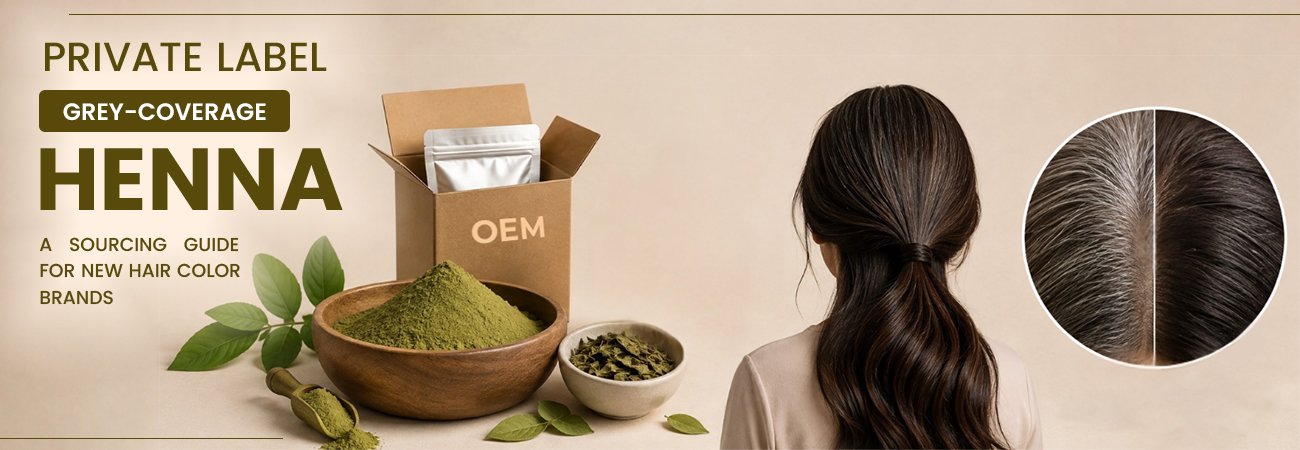
What that means in practice is that we’re not sourcing leaves from a broker and hoping for consistency batch to batch. We control processing from raw leaf to finished powder, which lets us maintain the lawsone content and purity standards that private label brands, salons, and wholesale distributors actually need to build a reliable product around. Whether you’re looking for pure henna, a cassia blend, an amla-enriched formula, or a custom herbal hair color mix, working directly with a wholesale henna supplier that understands the agronomy — not just the packaging — makes a measurable difference in what ends up in your finished product.
If you’re evaluating henna powder manufacturers for a private label line, or you’re simply trying to source a cleaner, more consistent supply than what you’ve been getting, it’s worth having that origin-and-processing conversation before you commit to a bulk order.
Henna, cassia, and amla aren’t interchangeable, and they’re not competitors, either. They’re three different tools that, used well — separately or blended — cover color, conditioning, and hair health in ways no single powder manages on its own. Understanding what each one actually does is the difference between guessing your way through a hair care routine and building one that genuinely works for what you need.
FAQs
Is cassia the same thing as “neutral henna”? It’s often sold under that name, but cassia isn’t henna at all — it’s a different plant with no meaningful lawsone content, so it conditions hair without adding color.
Can I mix henna, cassia, and amla together? Yes, and many herbal hair color formulations do exactly this — henna for color, cassia to soften the tone, and amla for added nourishment.
Will amla powder change my hair color? Used alone, amla may impart a very subtle darkening or cooling tint, but it isn’t used as a primary coloring agent — it’s added mainly for scalp and hair health benefits.
Why does henna from Sojat, Rajasthan have a reputation for being higher quality? The region’s soil and climate produce henna leaves with a notably higher lawsone concentration, which is why Sojat henna carries a GI tag recognizing it as a distinct, higher-grade product.
How do I know if a henna powder supplier is reliable for bulk or private label orders? Look for a manufacturer — not just a trader — who controls sourcing and processing directly, ideally with documented lawsone content and adherence to quality standards like BIS/IS 11142.
Every henna powder supplier claims to sell the “purest” product on the market. Walk through…
Launching a private label hair color line sounds simple on paper — pick a formula,…
If you’re a UK-based salon chain, hair color brand, or distributor trying to source henna…
Beauty trends move fast, and most of them disappear just as quickly. A new “miracle”…