Call/WhatsApp: +91-9811618013, +91-9810306077
Email: keohenna@gmail.com, kirpaloverseas@gmail.com
Email: keohenna@gmail.com, kirpaloverseas@gmail.com





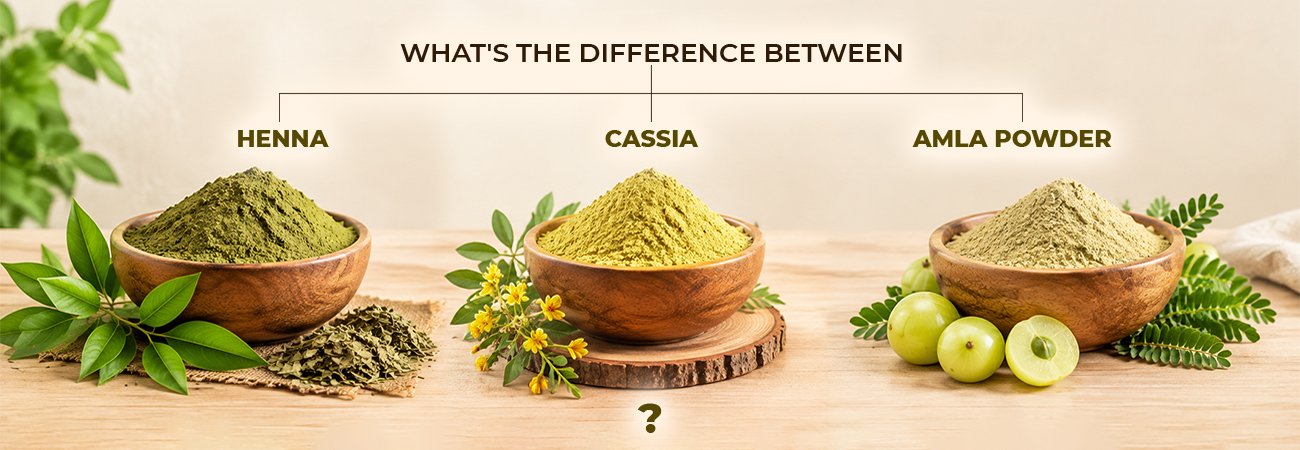
Every henna powder supplier claims to sell the “purest” product on the market. Walk through any B2B marketplace listing and you’ll see the same words repeated — natural, chemical-free, export quality — until they stop meaning anything at all. For a buyer trying to place a real order, whether that’s a private label brand, a salon chain, or a wholesale distributor, the actual work starts after those claims: figuring out which supplier can back them up with documentation, consistent batches, and a production process you can actually trust.
This guide breaks down what separates a genuine henna powder manufacturer from a reseller repackaging someone else’s stock, what a wholesale henna powder buyer should be checking before signing anything, and why origin — specifically Rajasthan — still matters more than most sourcing guides give it credit for.
One of the first things buyers get wrong is treating every henna powder supplier as interchangeable. In practice, the supply chain has at least three distinct layers, and knowing which one you’re dealing with changes everything about pricing, consistency, and accountability.
Manufacturers grow or source raw henna leaves, process them in-house, and control the entire chain from harvest to packaged powder. Traders buy finished powder in bulk from manufacturers and resell it, often across multiple brands with no processing control of their own. Repackagers take generic or lower-grade henna and rebrand it under private label without disclosing the original source.
None of these are automatically dishonest — traders serve a real function in smaller-volume trade — but if you’re a buyer planning recurring bulk orders or building a private label line, working directly with a henna powder manufacturer gives you leverage a trader simply can’t offer: traceability, the ability to request custom particle sizes or moisture specs, and pricing that isn’t marked up through two extra hands.
If you’ve researched henna sourcing for more than an afternoon, you’ve noticed that almost every credible supplier traces back to Rajasthan, and more specifically to the Sojat belt. That’s not a coincidence or a marketing angle — it’s agricultural chemistry. Sojat’s soil and semi-arid climate produce henna leaves with a naturally higher lawsone content, the compound responsible for the depth of stain and colour payoff that separates a strong henna powder from a weak, chalky one.
This is significant enough that Sojat henna carries a Geographical Indication (GI) tag, the same kind of protected-origin status given to products like Darjeeling tea or Champagne. For a buyer, that GI tag isn’t just a badge — it’s a legal marker tying the product back to a specific growing region with verifiable characteristics, which is exactly the kind of documentation that should back up any “authentic Rajasthani henna” claim you see in a listing.
So when a wholesale henna powder buyer sees “Rajasthan” or “Sojat” attached to a product, it’s worth treating that as a claim to verify, not just a location tag to skim past. Ask for origin certification. A supplier confident in their sourcing will have it ready.
Most sourcing guides stop at “check for certifications,” which is true but not specific enough to be useful. Here’s what that should actually look like in practice.
Quality standards documentation. In India, henna powder intended for hair colour use falls under BIS/IS 11142 standards. A manufacturer who can produce this certification on request is signaling that their processing — drying temperature, sieving, contamination control — has been through an actual compliance framework, not just internal quality claims.
Lawsone content and purity testing. Ask for lab test results showing lawsone percentage and confirming the absence of para-phenylenediamine (PPD) or metallic salts, which some low-cost suppliers add to intensify or speed up colour deposit. These additives are exactly what causes allergic reactions and scalp irritation in end users, and they’re becoming a bigger red flag for buyers selling into markets like the UK and EU, where PPD-related cosmetic regulations have tightened.
Minimum order quantity and private label flexibility. A genuine henna powder manufacturer should be able to tell you clearly what their MOQ is, whether they offer OEM/private label packaging, and what customization is realistically possible — grind size, moisture percentage, blend ratios if you’re sourcing a henna-based hair colour rather than pure henna. Vague answers here usually mean you’re talking to a trader, not the source.
Export documentation and shipping history. This is where trade data tools like Volza, ImportGenius, or Seair Exim become genuinely useful — they let you cross-check whether a supplier’s directory listing matches actual export shipment records. A company that’s listed but has no verifiable export history is a risk you can catch before it costs you a delayed or failed order.
Sample consistency across batches. One good sample doesn’t prove anything. Ask for samples from two or three different production batches if possible, or at minimum ask how the supplier controls for batch-to-batch consistency. This is often the single biggest gap between manufacturers who scale reliably and ones who don’t.
Global marketplaces like Alibaba, IndiaMART, and TradeKey remain the first stop for most buyers, and they’re useful for building an initial shortlist. But listing rank on these platforms is frequently tied to advertising spend rather than verified production capacity, which means the top results aren’t necessarily the most reliable ones. Region-specific platforms like Europages tend to attract buyers already filtering for EU-compliant suppliers, while Global Sources sees heavier traffic from Middle Eastern and Southeast Asian buyers.
The pattern that shows up again and again: directory listings are a starting point for discovery, not a substitute for direct verification. The real vetting happens once you’ve shortlisted a few names and start asking the specific questions above directly with the supplier.
Henna powder isn’t a commodity in the way, say, packaging materials are. It’s applied directly to hair and scalp, which means purity and processing quality translate directly into whether an end customer has a good experience or an allergic reaction. A wholesale henna powder buyer building a private label brand isn’t just sourcing a raw material — they’re inheriting the quality decisions of whoever grew, dried, and milled that henna, whether they know it or not.
This is also why natural, unadulterated henna continues to outperform chemically enhanced alternatives in markets that have grown more label-conscious. Buyers in the UK, US, and EU are increasingly steering private label and salon-line sourcing toward suppliers who can prove a clean, additive-free process — not because “natural” sounds better in marketing copy, but because it holds up better under the compliance and safety scrutiny those markets now apply to hair colour products.
Kirpal Export Overseas (KEO) is a henna powder manufacturer and exporter based directly in Sojat, Rajasthan — meaning the sourcing advantage described throughout this guide isn’t a claim layered on top of the business; it’s the actual location the company operates from. KEO works with GI-tagged Sojat henna, processes it under BIS/IS 11142 quality standards, and supports private label and OEM orders for international buyers across the UK, USA, UAE, Germany, and Australia.
For buyers evaluating this guide’s checklist against a real supplier, KEO is built to answer every point on it directly: origin documentation tied to Sojat’s GI status, lab-verifiable purity without PPD or metallic salt additives, clear MOQ and private label customization, and export documentation that reflects actual, ongoing shipment history rather than a listing with no track record behind it. For a wholesale henna powder supplier relationship meant to last beyond a single order, that combination of verified origin and export-ready process is exactly what reduces risk on the buyer’s side.
A henna powder supplier search that starts on a B2B directory should never end there. Directories are good for discovery — they’re not good for verification. The buyers who avoid costly sourcing mistakes are the ones who take the extra step: checking certifications, requesting multi-batch samples, cross-referencing export history, and asking direct questions about origin and processing before any purchase order gets signed.
Rajasthan, and Sojat specifically, remains the benchmark for a reason grounded in soil chemistry and decades of processing expertise, not marketing language. When that origin is paired with verifiable quality standards and a manufacturer willing to document every step, it stops being a sourcing gamble and starts being a supply chain you can actually build a brand on.
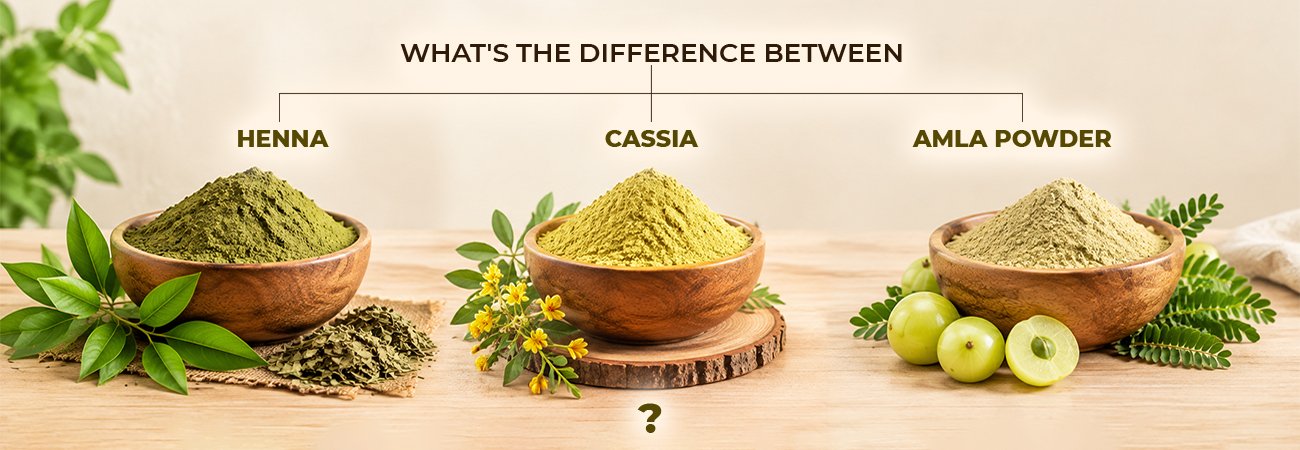
Walk into any natural hair care store, or scroll through a beauty forum for five…
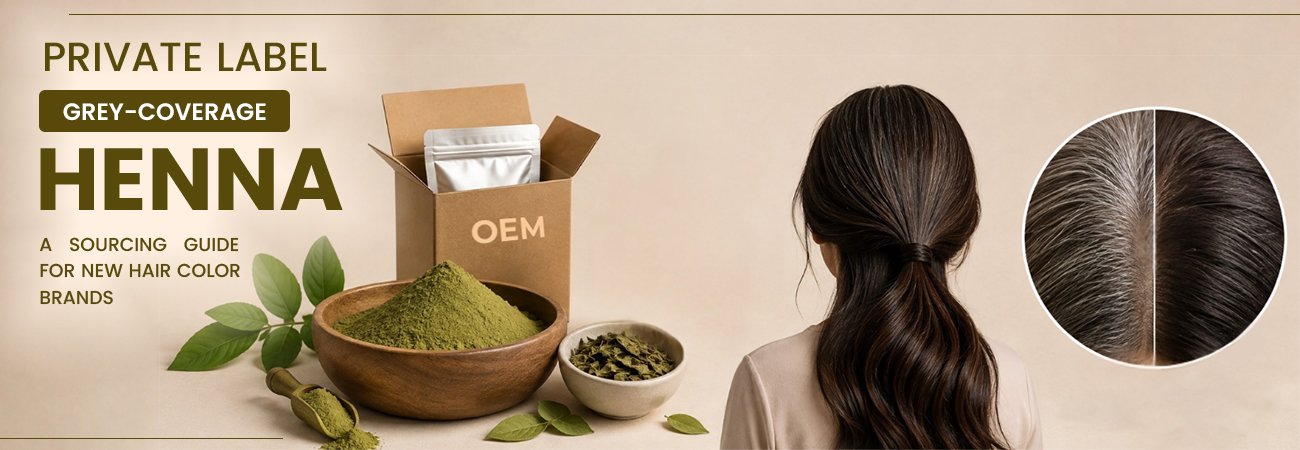
Launching a private label hair color line sounds simple on paper — pick a formula,…
If you’re a UK-based salon chain, hair color brand, or distributor trying to source henna…
Beauty trends move fast, and most of them disappear just as quickly. A new “miracle”…