Call/WhatsApp: +91-9811618013, +91-9810306077
Email: keohenna@gmail.com, kirpaloverseas@gmail.com
Email: keohenna@gmail.com, kirpaloverseas@gmail.com





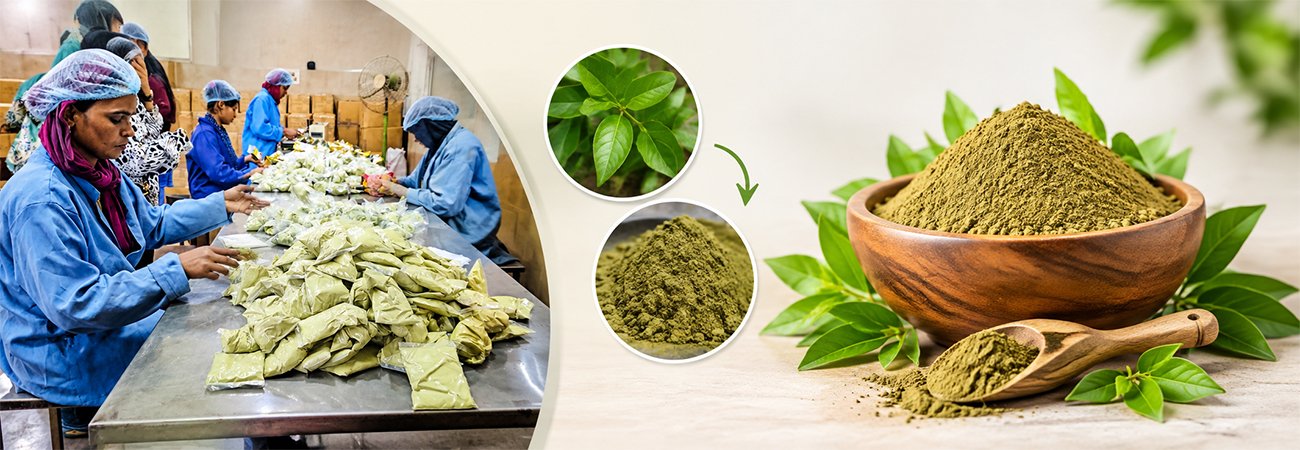
Every henna powder listing on a B2B marketplace says “100% natural.” Scroll through a hundred of them and you’ll see the same three words copy-pasted across suppliers who have never seen a henna field, let alone processed a leaf. For a buyer placing a bulk order — whether it’s for a private label hair color line, a salon chain, or a wholesale import business — that repetition is exactly the problem. The claim costs nothing to print on a label. Proving it is a different matter entirely.
The gap between authentic, unadulterated henna powder and one that’s been cut with filler or treated with synthetic dye intermediates doesn’t show up on the packaging. It shows up later — in a failed patch test, a customer allergic reaction, a shipment held up at customs, or a certificate of analysis that doesn’t match what’s actually in the drum. So the real sourcing question isn’t “who sells natural henna powder.” It’s “who can prove theirs is natural before money changes hands, and who’s willing to let you check.”
This guide covers what “natural” should actually mean in henna powder, how to identify a genuine natural hair color manufacturer versus a reseller, what documentation to demand before committing to bulk volume, and the practical checklist worth running through before you place your next wholesale order.
Genuine natural henna powder is simply dried, ground leaves of Lawsonia inermis. No additives, no bulking agents, no chemical enhancers to intensify the stain. The compound responsible for henna’s reddish-brown colour, lawsone, occurs naturally in the leaf — its concentration depends on the plant’s growing conditions, not on anything added afterward.
This is exactly where a lot of “natural” henna quietly stops being natural. Some suppliers blend in metallic salts or PPD-based compounds to force a darker, faster stain, particularly for powders marketed as “black henna.” Others cut pure henna with cheaper leaf powders to stretch volume. None of this is visible by looking at a sample bag. It shows up in lab testing, and it shows up on skin — which is exactly why buyers sourcing for hair color or eyebrow tint products need to treat “natural” as a claim to verify, not a description to accept.
A genuinely pure henna powder also behaves consistently — same stain intensity, same texture when mixed, same drying time — from one order to the next. Inconsistency between shipments is often the first practical sign that a “natural” claim isn’t backed by a controlled process.
Search “henna powder manufacturer” on any sourcing platform, and most results are traders. They buy in bulk from various regional processors, blend or repackage, and sell under their own listing — with no real control over what went into the batch before it reached them.
A genuine natural hair color manufacturer controls the chain from leaf to packaged powder: sourcing from a known growing region, running its own drying and milling process, and testing each batch before it ships. That control is what makes consistency possible order after order. It’s also the difference between a supplier who can answer detailed questions about lawsone content, moisture percentage, and particle size on the spot, and one who has to “check with the factory” and gets back to you days later.
For a bulk buyer, this distinction affects pricing (traders add a margin layer manufacturers don’t), lead times, and your ability to negotiate private label or OEM terms — something only a manufacturer with its own production line can realistically offer. If there’s a quality dispute later, a trader also has limited ability to investigate or correct it at the source, since they don’t control the process.
If you’re researching where to buy natural henna powder, you’ll likely come across Sojat — a town in Rajasthan responsible for a significant share of the world’s henna cultivation and processing. Sojat henna carries a Geographical Indication (GI) tag, tied to the region’s soil and climate conditions that produce leaves with naturally high lawsone content.
This matters practically, not just as a marketing point. A manufacturer sourcing from Sojat has access to consistently strong raw material without needing chemical enhancement to hit staining benchmarks. It’s one reason buyers targeting a natural, PPD-free henna hair color manufacturer specifically look for Sojat-origin suppliers rather than generic “Indian henna,” which could be sourced from anywhere and blended to mask inconsistency.
India’s BIS standard IS 11142 sets quality parameters for henna powder — covering moisture content, ash value, and other measures that determine purity and consistency. A manufacturer that tests against this standard and can produce documentation to show it, is operating at a different level of accountability than one that can’t.
This single question — “can you show me your IS 11142 test results for this batch?” — filters out a surprising number of suppliers early in a conversation. It’s a fast way to separate manufacturers who treat quality control as routine from those who treat it as optional.
Import requirements aren’t identical across markets, and it’s worth understanding the differences before committing to a wholesale henna supplier exporter.
An experienced exporter serving these regions will already have this paperwork ready. A newer supplier may need weeks to assemble it — worth factoring into your timeline if you’re working toward a launch date.
Price is where a lot of buyers get misled, because unadulterated henna powder has a real cost floor set by raw leaf cost, drying, milling, testing, and packaging. When a quote comes in well below what every other verified supplier is charging for comparable purity, that gap has to come from somewhere — usually dilution, lower-grade leaf, or skipped testing.
Pricing at scale should also reflect consistency guarantees. A manufacturer confident in their process is generally willing to commit to tighter specification tolerances — lawsone percentage range, moisture ceiling — in a supply agreement. A trader working off variable stock is less likely to commit to the same terms, because they don’t control the input.
Even correctly sourced natural henna powder needs proper handling after it leaves the supplier to retain quality through your supply chain. Henna powder is hygroscopic — it absorbs ambient moisture, which can accelerate degradation of lawsone content and create microbial risk over time.
Confirm packaging is moisture-barrier rated for your transit and storage conditions, particularly for shipments passing through humid ports or extended warehousing. Ask for a recommended shelf life under proper storage conditions, and build that into inventory planning rather than assuming an indefinite shelf life just because the product is a dried powder.
Regulatory scrutiny on hair color and cosmetic ingredients has tightened across most major import markets. The UK and EU have flagged synthetic dye compounds historically used to darken or “improve” henna, and US retailers are facing more consumer pressure around clean-label claims following allergy-related lawsuits tied to PPD in hair dye. Buyers importing henna-based products into these markets aren’t just protecting brand reputation by sourcing verified natural powder — they’re increasingly protecting themselves from compliance exposure.
This is also why more private label and OEM buyers now ask suppliers for full traceability rather than accepting a spec sheet at face value. A batch-level COA, a named growing region, and a documented testing process have become the baseline for serious buyers, not an extra request.
For buyers who reach this stage having done the vetting properly, working with an established Sojat-based henna hair color manufacturer — one that can produce IS 11142 test results and export documentation on request — remains the most reliable way to secure consistent, genuinely natural bulk henna powder for hair color or eyebrow tint production.
Q1: How can I tell if henna powder is genuinely 100% natural before I buy in bulk? Request a Certificate of Analysis for the specific batch, ask for the raw material’s growing region, and test a sample independently before committing to volume.
Q2: Why does Sojat, Rajasthan matter for henna sourcing? Sojat’s GI-tagged henna is grown in conditions that naturally produce high lawsone content, meaning manufacturers sourcing from the region typically don’t need chemical enhancement to achieve strong, consistent staining results.
Q3: What’s the practical difference between a natural hair color manufacturer and a henna trader? A manufacturer controls the process from raw leaf to finished powder — sourcing, drying, milling, and testing in-house. A trader resells finished or semi-finished product, usually with less visibility into what went into the batch.
Q4: Is “black henna” ever truly 100% natural? No. Natural henna produces a reddish-brown to brown stain. Products marketed as “black henna” typically contain PPD or other additives, which carries allergy risk.
Q5: What documentation should a wholesale henna supplier exporter provide? At minimum: a batch-specific COA, MSDS, and phytosanitary certification for export, along with any destination-specific compliance documents your import market requires.
You know that moment. You’re standing in the bathroom with gloves on, a bowl of…
Ask ten different brow technicians what “natural-looking” tint means, and you’ll get ten slightly different…
Every henna powder supplier claims to sell the “purest” product on the market. Walk through…
Walk into any natural hair care store, or scroll through a beauty forum for five…