Call/WhatsApp: +91-9811618013, +91-9810306077
Email: keohenna@gmail.com, kirpaloverseas@gmail.com
Email: keohenna@gmail.com, kirpaloverseas@gmail.com





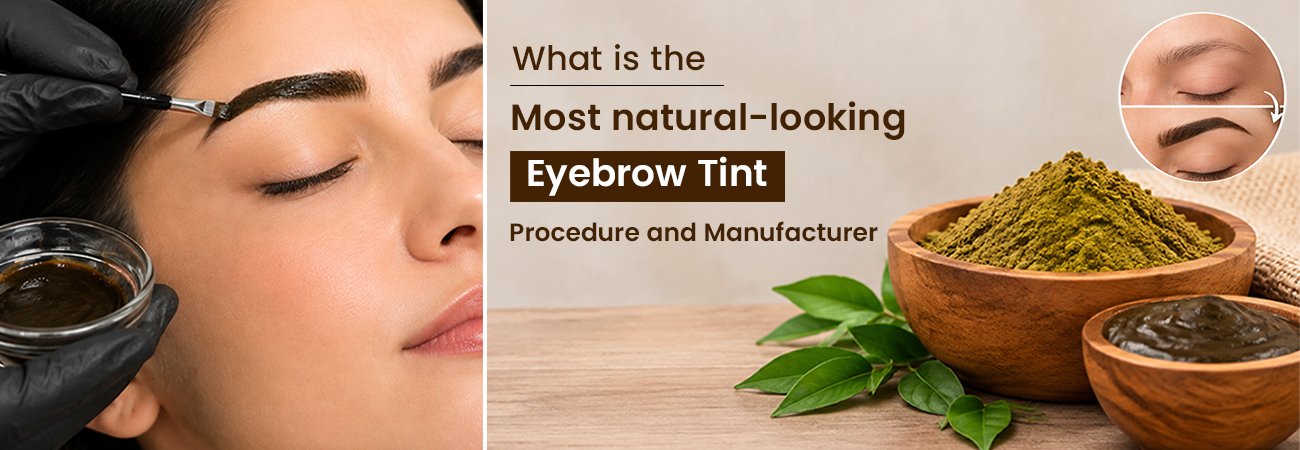
Ask ten different brow technicians what “natural-looking” tint means, and you’ll get ten slightly different answers. Some will talk about shade matching. Others will point to application technique. A few will tell you the truth: a lot of it comes down to what’s actually in the tint before it ever reaches the client’s face. Formulation and procedure aren’t separate conversations — they’re the same conversation, just looked at from two ends.
This matters more than it used to. Brow tinting has moved from a niche salon add-on to a mainstream service, and clients have gotten sharper about spotting the difference between brows that look filled-in-but-real and brows that look, well, tinted. That shift in client expectation is exactly why more salons, private label brands, and distributors are now asking a very specific sourcing question: who’s actually manufacturing this product, and can they deliver the consistency that a natural result depends on?
Before technique even enters the picture, the tint itself sets the ceiling on how natural the result can look. Three formulation factors decide that ceiling.
This is the least talked about factor, and it matters most. Coarser, unrefined pigment particles sit on the hair and skin unevenly, which is what produces that flat, painted-on look people associate with bad tint jobs. Finer, well-milled pigment disperses evenly through the paste, coats each brow hair uniformly, and fades in a gradual, believable way instead of wearing off in patches.
Henna-based tints stain the skin and hair using lawsone, a natural dye molecule, rather than sitting on the surface the way many chemical tints do. That staining action is part of why henna tint tends to look more like natural pigmentation and less like a layer of color — it’s working with the hair and skin rather than coating them.
A tint manufacturer offering only four or five flat shades forces technicians to guess-mix, which is where a lot of “too dark” or “too orange” results come from. A wider, well-calibrated shade range with the right cool, neutral, and warm undertones gives technicians the room to match a client’s actual brow color instead of approximating it.
Assuming the formulation is right, the procedure itself follows a fairly consistent sequence across the technicians who get the most natural outcomes.
Brows are cleaned of oil and makeup residue, and a patch test is done at least 24–48 hours ahead for new clients — not just for safety, but because clean, oil-free skin holds tint more evenly.
The brow shape is mapped and, where needed, lightly groomed before any tint touches the skin. Applying tint to an unshaped brow is one of the most common reasons for an uneven, “drawn-on” final look.
Technicians who get natural results typically go slightly lighter than the client’s natural brow hair color if skin is fair, and closer to a true match if the hair is dark — the goal is depth without contrast that reads as artificial.
Tint is applied from the tail toward the front in thin, even strokes, and left on for a timed window — usually 5 to 15 minutes depending on the formulation and desired intensity. Henna-based tints often need a longer sit time than chemical tints to develop properly, which is a formulation-driven timing difference technicians need to know rather than guess at.
Rather than wiping all the tint off at once, technicians often remove it in a staged way, checking depth as they go, since it’s far easier to leave tint on a few minutes longer than to fix an over-tinted brow.
Skip any one of these steps, or use a tint that doesn’t disperse evenly, and the “natural” result becomes much harder to hit no matter how skilled the technician is.
Here’s where a lot of buyers — salons stocking retail tint, distributors, and private label beauty brands — run into trouble. The market is full of eyebrow tint being sold under different labels, but a meaningful share of it isn’t actually made by the company selling it. It’s bought in bulk from someone else, repacked, and resold.
This distinction matters specifically because of the formulation factors above. A trader reselling bought-in stock generally can’t tell you the pigment particle size, can’t guarantee batch-to-batch shade consistency, and often can’t say with certainty where the raw henna or colorant was sourced. A genuine brow tint bulk manufacturer, by contrast, controls the entire chain — from raw material sourcing through milling, blending, and batch testing — which is exactly the control that produces a consistent, natural-looking result shipment after shipment.
If you’re a salon chain sourcing retail tint, a distributor building a catalog, or a beauty brand developing a private label brow product, the question worth asking every prospective supplier is blunt but useful: do you manufacture this, or are you reselling someone else’s stock? The answer tends to explain a lot about why some tint batches look great and others don’t.
Beyond the manufacturer-versus-reseller question, a few concrete checks separate a dependable supplier from a risky one.
Henna grown in regions with naturally higher lawsone content produces stronger, more consistent staining. Sojat, Rajasthan, carries a Geographical Indication tag specifically for this reason — the soil and climate there are recognized for producing henna with a higher natural dye concentration than henna grown elsewhere.
A serious supplier should be able to provide a Certificate of Analysis specific to the batch being shipped, not a generic spec sheet. This is what actually confirms particle fineness, moisture content, and purity — the things that determine how natural the tint looks once applied.
For brands and distributors, the ability to customize shade depth or packaging matters. A supplier limited to a narrow, fixed shade catalog restricts how well technicians downstream can match real brow colors.
MSDS, phytosanitary certification, and BIS/IS 11142 compliance where applicable aren’t just customs formalities — they’re a reasonable proxy for how seriously a supplier treats quality control across the board.
Any eyebrow henna supplier confident in their own consistency should have no hesitation sending samples before a bulk order. Hesitation here is usually a signal worth paying attention to.
Kirpal Export Overseas (KEO) manufactures its eyebrow henna tint in-house, working directly with raw henna sourced from Sojat, Rajasthan — the GI-tagged origin behind much of what makes henna-based brow tint stain evenly and fade naturally rather than flake off in patches. As a working brow tint bulk manufacturer rather than a reseller, KEO controls particle fineness, batch-to-batch shade consistency, and moisture content on every production run, and backs shipments with Certificates of Analysis, MSDS, and phytosanitary documentation on request.
For salons and distributors comparing eyebrow henna suppliers, KEO offers a full shade range built for realistic brow matching, along with private label and OEM formulation support for beauty brands that want their own packaging and specification input rather than a generic off-the-shelf tint. Buyers evaluating a first order are welcome to request samples ahead of a bulk commitment — a straightforward way to judge pigment quality and consistency before it becomes a supply relationship.
A natural-looking eyebrow tint result isn’t luck, and it isn’t purely a technician’s skill either — it’s the product of a well-milled, properly sourced formulation applied with a careful, staged procedure. Getting the procedure right is on the technician. Getting the formulation right starts with choosing a brow tint bulk manufacturer who actually makes the product rather than one who’s simply reselling it, and being willing to ask the harder sourcing questions before signing a supply agreement.
You know that moment. You’re standing in the bathroom with gloves on, a bowl of…
Every henna powder supplier claims to sell the “purest” product on the market. Walk through…
Walk into any natural hair care store, or scroll through a beauty forum for five…
Launching a private label hair color line sounds simple on paper — pick a formula,…