Call/WhatsApp: +91-9811618013, +91-9810306077
Email: keohenna@gmail.com, kirpaloverseas@gmail.com
Email: keohenna@gmail.com, kirpaloverseas@gmail.com





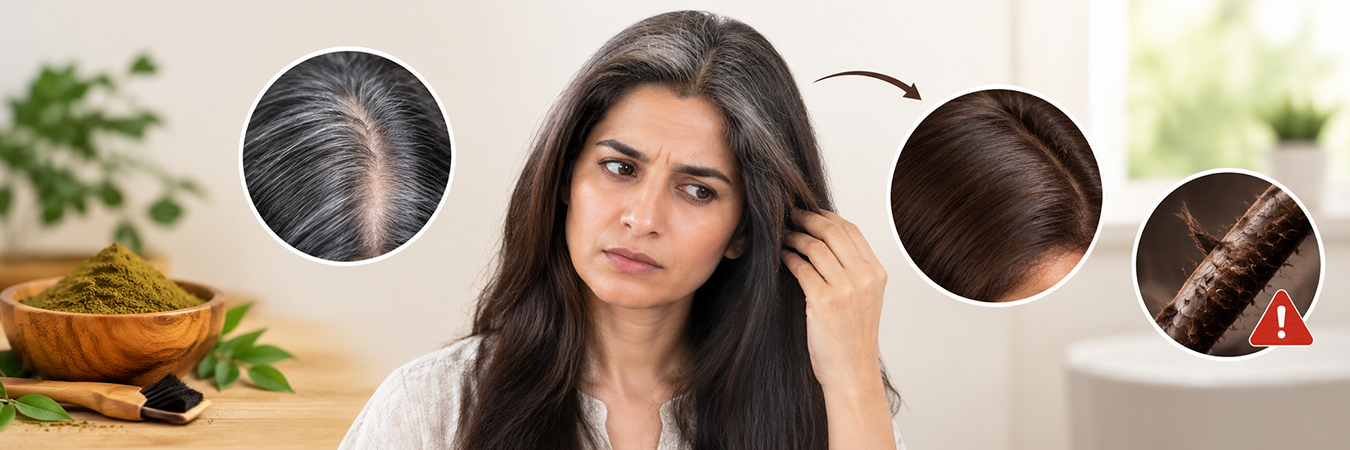
A customer once told us something we still remember. She had been colouring her gray roots every three weeks for years, and one morning she noticed her hair felt like dry straw at the ends but strangely soft near the scalp. “Is it the dye,” she asked, “or is it just age?”
Honestly? Usually it’s a bit of both.
The idea that gray hair is more fragile than pigmented hair, and that colouring makes it worse, comes up constantly in salons and in our own conversations with European buyers. As a henna powder manufacturer supplying salons, private label brands, and importers, we hear this question in some form almost every week. So instead of a vague answer, this article walks through what really changes in a gray strand, what different colouring methods do to it, and where plant-based options like henna genuinely help (and where they don’t).
Gray hair is not simply “hair with the colour switched off.” Yes, the pigment cells in the follicle (called melanocytes) slow down and eventually stop producing melanin. But a few other things tend to change alongside that.
The texture often shifts. Many people notice gray hairs feel wiry or coarse and refuse to sit flat like the rest. The outer layer of the strand, the cuticle, can be more tightly packed and less flexible, so the hair reflects light differently and can look duller.
Natural oil drops. Scalp oil (sebum) travels down the hair and acts as a built-in conditioner. With age, production usually falls. Less oil means less moisture, and dry hair is hard to keep smooth.
Colour is harder to get in. That sealed cuticle works like a well-fitted door. Dye molecules struggle to enter, which is why gray roots often turn out patchy, and why colour on gray tends to fade sooner than on the rest of the head.
Put these together and you can see why gray hair feels different. It’s not weak by nature. It just starts with less moisture and less give, so it has less room for rough treatment.
Here’s the fair answer: colouring can affect gray hair more noticeably, but only under certain conditions. The strand isn’t fragile because it’s gray. The routine around it is what usually makes the difference.
Think about what people typically do to cover gray. They pick a stronger shade or formula. They leave it on longer to make sure the roots take. They repeat it every few weeks because that silver line comes back so fast. Each of those steps adds a bit of stress, and dry hair shows stress quickly.
Three things decide how much damage you see:
If you change even one of those, the result changes. A gentle product used every eight weeks on well-conditioned hair can be perfectly fine. A strong formula used every three weeks on dry, brittle hair is asking for trouble.
Most permanent hair colours, whether from a salon or a shop shelf, work in a similar way. An alkaline agent, commonly ammonia or a milder alternative, lifts the cuticle open. Hydrogen peroxide then helps colour form inside the strand. After that, conditioners in the formula help the cuticle settle back down.
Used properly, this system is safe and effective for most people, and skilled colourists cover gray with it every single day. The trouble starts when the process is repeated often on hair that is already dry.
Every time the cuticle is opened, it loses a little of its smoothness. Over months, the surface can turn rough, which shows up as frizz, dullness and tangles. Gray hair, with its already tight cuticle, often needs stronger developer or longer processing time to accept the colour, and that extra load adds up.
There’s also the matter of allergies. Many permanent dyes contain para-phenylenediamine (PPD) or related compounds, which are among the more common causes of contact allergy to hair colour. The tricky part is that a person can use the same dye for years and then react suddenly. That’s why a patch test before every colouring session is good practice, not just before the first one.
None of this means permanent dye is the enemy. It means that frequency, product choice and aftercare matter more than most people think.
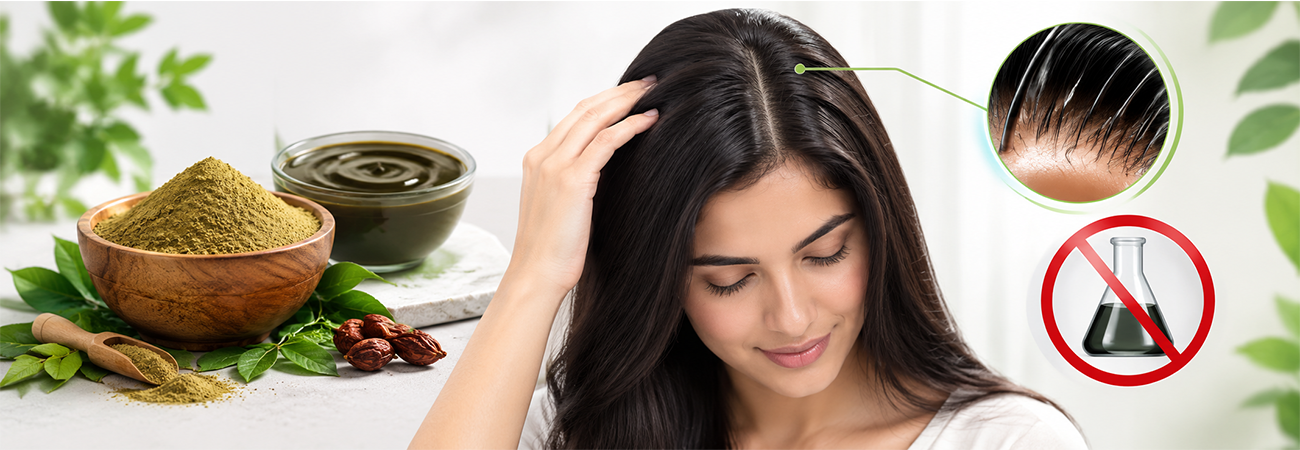
Henna comes from the dried, ground leaves of Lawsonia inermis, a shrub that grows in hot, dry regions. When the fine powder is mixed with a slightly acidic liquid and left to rest, it releases a natural dye molecule called lawsone.
The difference from chemical dye is in how the colour attaches. Permanent dye opens the hair and builds colour inside. Lawsone does something simpler: it bonds with the keratin in the outer part of the strand and stains it. There’s no ammonia and no peroxide involved in pure henna.
For gray hair, this brings a few noticeable effects:
It’s easy to see why so many people describe henna hair colour as a plant-based alternative. But it isn’t a miracle product, and being honest about its limits is the only fair way to talk about it.
It gives warm tones. Gray hair has no natural pigment underneath to blend with the dye, so henna shows its true colour. Depending on the powder, the hair and how long you leave it on, that’s anywhere from bright copper to deep auburn. If someone wants cool brown or jet black, pure henna alone won’t deliver that.
Darker shades need indigo. The standard method for brown or near-black is a two-step process. Henna goes on first to create a warm base. Indigo, a separate plant powder made from Indigofera tinctoria, is applied afterwards to deepen the shade. Depending on timing and ratios, the result can range from chestnut to very dark brown. Other herbs, like amla and cassia, are sometimes used for conditioning or to soften the tone.
Coverage looks natural, not flat. Henna colours gray strands well, but the finish is a little translucent, so some variation shows through. Many people love this softer look. Others expect the solid, uniform look of permanent dye and feel let down. It’s worth setting that expectation early, especially in a salon.
It’s a real commitment. Henna is long-lasting and doesn’t wash out quickly. It can also make later chemical colouring less predictable. Anyone who changes their look often should think carefully before starting.
| Permanent dye | Pure henna | |
|---|---|---|
| How colour forms | Cuticle opened, colour built inside the strand | Lawsone bonds to keratin on the outer strand |
| Ammonia and peroxide | Usually present | Not present in pure henna |
| Shade range on gray | Very wide | Copper to auburn, darker when combined with indigo |
| Effect on feel | Can dry coarse hair with frequent use | Often leaves hair smoother and thicker |
| Typical time | Around 30 to 45 minutes | Around 1 to 4 hours plus paste resting time |
| Allergy risk | Present, PPD is a known cause | Lower, but not zero, so patch test |
| Later colour changes | Flexible | Can be harder to predict |
Neither method wins in every situation. The right one depends on the shade you want, the state of your hair and how much time you can give it.
Good results depend as much on technique as on the powder itself. This is the process we usually suggest to salons and first-time users.
1. Patch test first. Plant-based does not always mean allergy-free. Apply a small amount of prepared paste behind the ear and wait 48 hours.
2. Start with clean hair. Wash with a clarifying shampoo if you can. Silicone-heavy conditioners and oils can form a barrier that blocks the stain.
3. Mix with a mildly acidic liquid. Diluted lemon juice or a similar acidic base is the classic choice. Stir until you get a texture like thick yoghurt, not runny and not stiff.
4. Let the dye release. Cover the bowl and leave it in a warm room. Depending on the powder, this can take from a few hours to overnight. Skipping this step is one of the most common reasons for weak colour.
5. Apply in sections. Work through the hair in small parts, and go over the hairline and crown twice, since gray there tends to be the most stubborn.
6. Keep it warm. Wrap the hair in cling film and a towel. Warmth helps the dye bind.
7. Give it time. For gray hair, two to four hours normally works much better than forty-five minutes.
8. Rinse gently. Use plenty of water and conditioner. Avoid shampoo for the first day or two so the colour can settle.
If you’re going for a darker shade, apply indigo after the henna is rinsed out, unless you’re using a pre-blended product that has been tested by the manufacturer.
Most stories of “henna damaged my hair” turn out not to be about pure henna. They are usually about something sold under the same name.
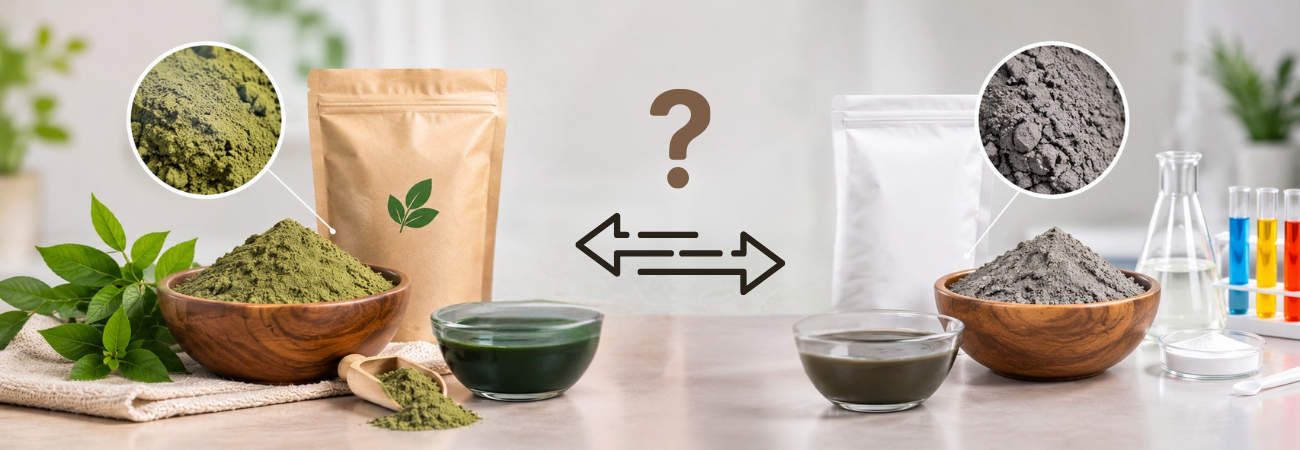
“Black henna.” Real henna does not produce a black stain on its own. Products promising black colour within minutes often contain PPD, which is a known cause of serious allergic reactions.
Compound henna. Some cheap mixes contain metallic salts. These can react badly with later chemical treatments, leading to breakage, odd colour shifts or even heat during processing.
Old or badly stored powder. Henna loses dye strength as it ages, especially if it’s exposed to light and moisture. Weak powder gives patchy results, and the plant takes the blame.
Contaminated raw material. Powder that hasn’t been properly cleaned and tested can contain sand, pesticide residue or heavy metals. That’s a safety risk no salon or brand should accept.
All four of these come back to the same thing: where the powder comes from and how it’s handled.
If you run a salon, a distribution company or a private label hair care brand in the UK, Germany, France, the Netherlands or anywhere else in Europe, your customers will eventually ask what is really in the product. A reliable henna powder manufacturer should be able to answer that clearly and in writing.
Here is a practical checklist we’d use ourselves if we were buying:
At Kirpal Export Overseas, we manufacture and export henna powder and herbal hair colour from Sojat in Rajasthan, one of the best-known henna-growing regions in the world. We supply private label partners and also sell under our own Indalo brand. Whichever supplier you choose, ask hard questions and expect to see the paperwork. The quality of your finished colour depends on it.
Colouring gray hair can cause more visible damage when the method is harsh, the schedule is too frequent, or the hair was already dry to begin with. Gray strands are not weak by nature. They simply have less natural protection, so they show wear sooner.
Plant-based colour offers a different route. Pure henna coats the hair instead of opening it up, and many people find their gray feels smoother and looks healthier over time. The trade-offs are real, though: a narrower range of shades, a longer application and a look that suits warm, natural tones better than flat black.
The best routine is the one that fits your hair, your schedule and your goals. If you’re unsure, speak with a colourist who works comfortably with both conventional and plant-based products, and always do a patch test.
And if you’re a salon owner or brand searching for a dependable henna powder manufacturer, or a henna supplier who understands European quality standards, get in touch with our team to request samples and product specifications.
1. Does colouring gray hair really damage it more than pigmented hair?
Not automatically. Gray hair tends to be drier and more resistant to colour, so harsh formulas and very frequent colouring show their effects sooner. With a gentler product, longer gaps between sessions and proper aftercare, gray hair can stay in good condition.
2. Is henna safe to use on gray hair?
Pure, good-quality henna is widely used on gray hair and contains no ammonia or peroxide. Allergies are still possible with any plant product, so do a patch test 48 hours before full application.
3. What colour will henna turn my gray hair?
On its own, henna gives warm shades from bright copper to deep auburn, because gray hair has no pigment underneath to change the tone. For brown or black, the usual method is henna first, followed by indigo.
4. Will henna cover gray hair completely?
It colours gray strands effectively, but the finish is more natural and slightly translucent than a solid permanent dye. Repeat applications build depth and make coverage look more even.
5. How long does henna hair colour last?
It fades gradually over several weeks rather than washing out quickly. Most people refresh their roots every four to six weeks, depending on hair growth and how much gray they have.
6. Can I use henna on hair that has been chemically dyed?
It’s possible, but the result is harder to predict because henna can look different over existing colour. Always do a strand test before committing to the whole head
The patch test is the most boring step in hair colouring, and the one most…
Every natural hair color manufacturer eventually gets the same message from a buyer: “The black…
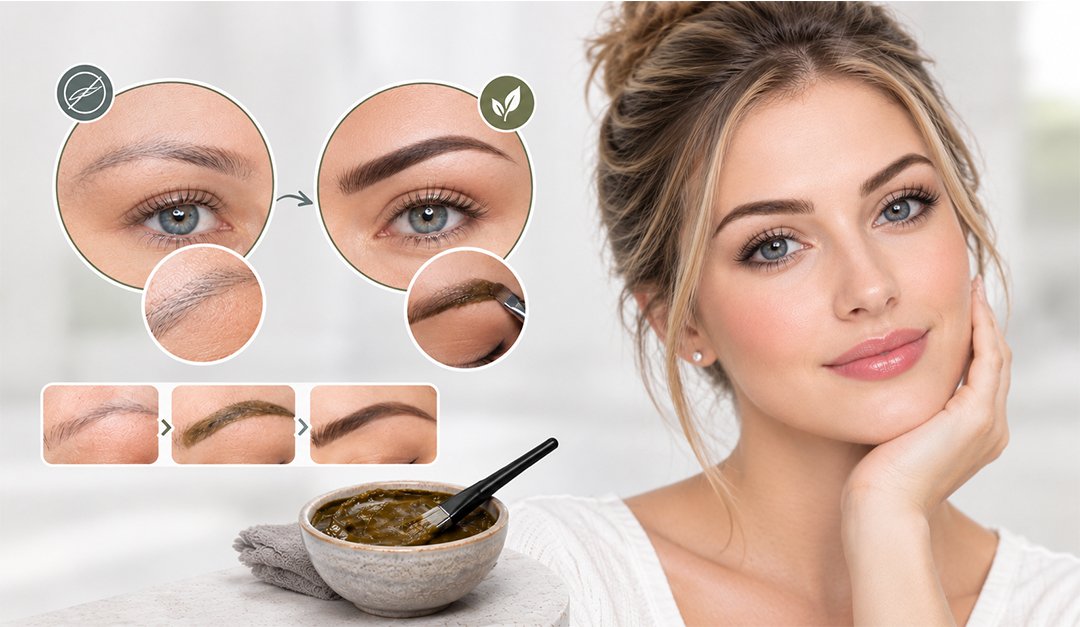
Look closely at a microbladed brow around the eighteen-month mark, and the story is usually…
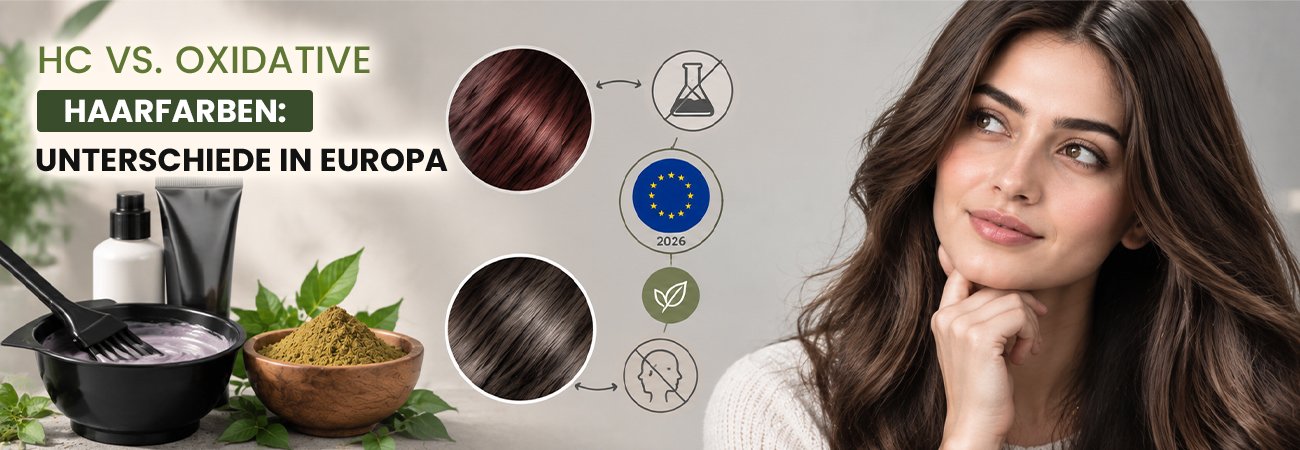
Betreten Sie eine Drogerie in Berlin, Paris oder Mailand, finden Sie im selben Regal zwei…