Call/WhatsApp: +91-9811618013, +91-9810306077
Email: keohenna@gmail.com, kirpaloverseas@gmail.com
Email: keohenna@gmail.com, kirpaloverseas@gmail.com





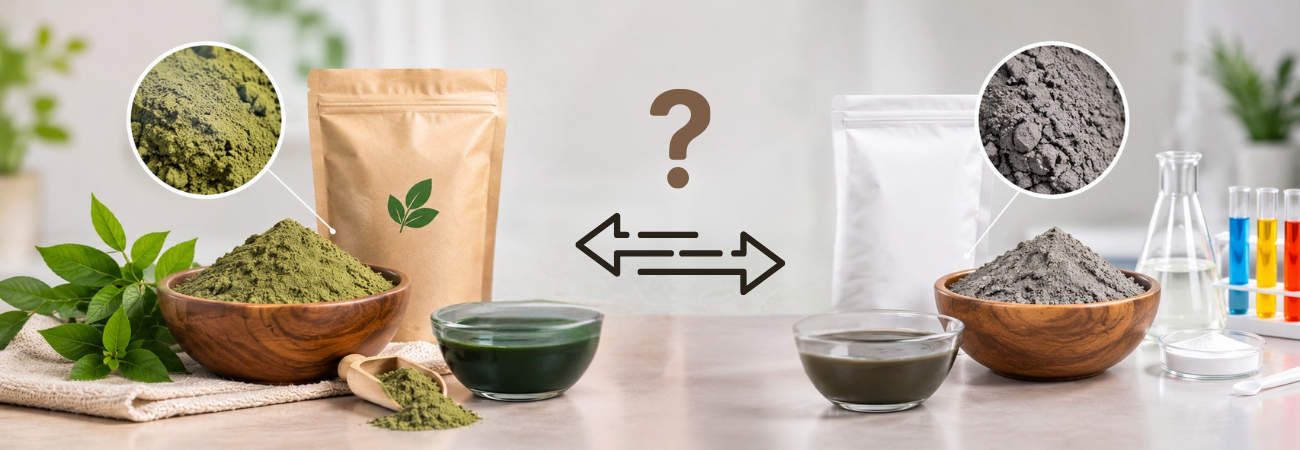
Every natural hair color manufacturer eventually gets the same message from a buyer: “The black came out in ten minutes. Is that normal?” It is not normal, and that single sentence usually tells us what went wrong before we have even seen the product.
The short answer: yes, pure indigo powder is generally considered safe for hair when it is genuine, clean, and used as directed. It is a plant-based colorant that contains no ammonia, no peroxide, and no synthetic coal-tar dyes. The real risk is not indigo itself. The risk is fake indigo, meaning powder that has been bulked up with fillers or boosted with synthetic dyes such as PPD to imitate the fast, dark result that real indigo cannot deliver.
This guide explains what real indigo is, how it behaves on hair, which chemical additives show up in adulterated powder, how to screen for them at home, and what proof a serious buyer should demand from a supplier. We write it from the production side of the industry, the way a natural hair color manufacturer looks at it, because the difference between genuine and fake indigo is easiest to see at the factory.
Indigo powder is made from the leaves of Indigofera tinctoria, a leguminous shrub grown across warm regions of Asia and Africa. The leaves contain a precursor compound called indican. When the leaf is processed and exposed to air, indican converts step by step into indigotin, the deep blue pigment that has dyed textiles for thousands of years. For hair use, the leaves are dried, milled, and sieved into a fine powder, and the blue pigment develops fully when the paste is mixed and meets oxygen.
This is why genuine indigo has an unglamorous look. The dry powder is usually a dull green-grey or dark olive, not a glossy electric blue. The blue appears later, as the pigment oxidizes. If you remember one thing from this section, remember that real indigo reveals its color slowly. Anything that shows up instantly dark has probably been helped along by something other than the plant.
Indigo does not work like a box dye. Conventional permanent color opens the hair cuticle, lifts the natural pigment, and forces synthetic dye molecules inside. Indigo does none of that. Its pigment binds to the outside of the hair shaft and builds up in layers, which is why the result is gentle but also why it needs patience.
Used alone, indigo tends to give a blue, navy, or slightly green cast, especially on light or grey hair. The standard solution, used for generations, is to pair it with natural henna. Henna (Lawsonia inermis) contains lawsone, a molecule that binds to keratin and gives a warm orange-red base. Indigo then deepens that base toward brown or black. A higher henna share gives auburn and chestnut tones, roughly equal parts give a rich medium-to-dark brown, and a henna application followed by indigo gives the deep, near-black shades many people are chasing.
Here is the part that matters for spotting fakes. A genuine herbal hair color routine involves two natural powders, a mixing step, a waiting period, and often two applications. Any product promising jet black from a single ten-minute application with no henna stage is describing a chemical reaction, not a plant dye.
For most people, yes. Because pure indigo is a ground leaf, it carries none of the ammonia, peroxide, or para-phenylenediamine (PPD) found in many conventional permanent dyes. That is a big reason herbal hair color has such a loyal following among people who are tired of scalp burning and harsh fumes.
There are two honest caveats, though. The first is that “natural” never means “allergy-proof.” Any plant material can irritate a sensitive person, and a patch test 48 hours before application is a sensible habit with any product, indigo and natural henna included. The second caveat is more important: the safety record belongs to pure indigo only. The moment a supplier adds something to speed up the color or to hide low-grade leaf, you are no longer using indigo. You are using an unknown blend, and almost every scary story about “indigo reactions” traces back to that unknown part.
Fake indigo exists because of simple economics and unrealistic expectations. Real indigo is slow, and quality leaf powder costs money to grow, dry, mill, and test. Customers, meanwhile, often want deep black in minutes at the lowest price. That gap creates an opening for sellers who are willing to cut corners, and the corners they cut are usually invisible until the product is on someone’s head.
There is also a naming problem. Products sold as “black henna” or “instant black henna” are frequently not henna at all. Natural henna never produces black. When a product does, the darkness commonly comes from synthetic dye added to the powder. Indigo causes the same confusion, because buyers treat the words indigo, black henna, and natural black as interchangeable when they aren’t.
PPD (para-phenylenediamine). This is the additive that worries dermatologists most. PPD is a synthetic dye intermediate that produces dark, long-lasting color quickly, which is exactly why unscrupulous sellers use it. It is also a well-documented contact allergen. Reactions can range from itching and redness to swelling, blistering, and painful scalp inflammation, and once a person becomes sensitized they can react to even tiny future exposures. Many regions restrict PPD in hair dye and require warnings and patch-test instructions, and it has no place inside a product labeled natural or herbal.
Other synthetic dyes and coal-tar colors. A cheaper trick is to dye a low-grade powder with a synthetic blue or black so it looks like premium indigo. The powder may look impressive in the pack, but the color is borrowed, and it can bleed, stain skin and fabric aggressively, or trigger reactions of its own.
Metallic salts. Some “progressive” or “gradual” hair darkeners rely on metal compounds, including lead, silver, or copper salts, that darken hair through repeated use. Metals can also react badly with other treatments and pose a genuine risk of scalp exposure. They should never appear in indigo meant for hair.
Fillers and bulking agents. Fine sand, clay, soil, and the ground leaves of other plants are sometimes mixed in to add weight. These are less dangerous than synthetic dyes, but they dilute the pigment, make color results unpredictable, and leave you paying indigo prices for something that is partly dirt.
Before the checks, a fair warning: these are screening tools, not laboratory proof. They can raise a red flag, but they cannot clear a powder. A skilled adulterator can pass a smell test and still hide a dye.
Start with the dry powder. Genuine indigo is usually a muted, dusty green-grey to deep olive. Be suspicious of powder that looks unnaturally vivid, glossy, or perfectly uniform in a bright blue-black, because plant material rarely looks that polished.
Mix a small paste with lukewarm water and watch it. Real indigo paste often looks greenish at first and slowly turns bluer as it meets air. If the paste is instantly blue-black, or the water bleeds a harsh dark color the moment it touches the powder, a synthetic dye may be involved.
Use your nose. Pure indigo smells earthy, like dried grass or hay. A sharp chemical odor, heavy perfume, or anything reminiscent of salon box dye is a bad sign.
Feel the texture. Quality indigo is fine and smooth between the fingers. Grit, sand, or hard little particles point toward fillers.
Try a glass-of-water test. Sprinkle a small spoon of powder onto still water without stirring. Pure leaf powder generally floats briefly and then settles rather than dissolving. If strong color streaks through the water at once, a soluble dye may be present.
Judge the speed of the result. This is the most reliable red flag of all. Indigo needs time to develop and oxidize. If the color is jet black in fifteen minutes with no henna stage, the result is not coming from indigo alone.
A buyer who relies only on kitchen tests is still guessing. The dependable route is documentation and laboratory testing, and any natural hair color manufacturer worth your money will expect you to ask for it.
A Certificate of Analysis (COA) from an accredited lab, tied to the specific batch you are buying, is the baseline. Ask whether the batch was tested for PPD and for heavy metals such as lead, since those are the two risks that actually harm people. Ask for microbiological results as well, because a plant powder stored badly can carry mold and bacteria. Finally, ask about traceability: where the leaf came from, when it was processed, and how batches are separated. A supplier who answers these questions plainly is telling you something good. One who gets vague or defensive is telling you something too.
Purity is mostly the result of boring, repeatable discipline. It begins with sourcing good-quality leaf rather than whatever is cheapest that week. The leaf is then dried and milled cleanly so that soil, dust, and stray plant matter do not end up in the powder. Sieving through fine mesh gives the smooth, consistent texture that mixes evenly and rinses out cleanly. Most importantly, nothing is added: no synthetic dye, no booster, no preservative disguised as a “natural” ingredient. Each batch is checked before it is packed and shipped, so a problem is caught in the factory and not in a customer’s bathroom.
A good natural hair color manufacturer treats henna and indigo as a pair, because the best natural dark shades depend on both being clean. Regions with a long henna-growing tradition, such as Sojat in Rajasthan, have built whole supply chains around cleaning, milling, and testing these leaf powders. Honestly, this is the strongest argument for the natural henna and indigo route: it delivers real, lasting color from plants, without the sensitization risk that comes with PPD-based dyes.
When you order indigo powder in volume from a natural hair color manufacturer, a few habits protect your business. Treat the ingredient list as a test: a pure product lists a single ingredient, Indigofera tinctoria leaf powder. Be cautious with prices far below market, because real indigo has real costs and an unusually cheap quote usually means fillers or dyes. Make sure the supplier understands the cosmetic rules of the market you sell into, since requirements differ between the UK, EU, USA, UAE, and Australia. For large or repeat orders, a video audit or facility visit is worth the effort. And always keep a retained sample from each batch you receive, so that if a customer complains you have something to test.
Begin with a patch test: mix a small amount of paste and apply it behind the ear or on the inner forearm, then wait 48 hours. If there is no reaction, apply natural henna first and let it develop for a few hours before rinsing. Mix the indigo with warm water to a yogurt-like paste and use it soon after mixing, since the pigment weakens as the paste sits. Apply evenly and leave it on for roughly one to three hours depending on the depth you want, then rinse with plain water and skip shampoo for the first day so the color can settle. The shade also deepens over the following day or two as it oxidizes. If you feel burning, itching, or swelling at any point, rinse thoroughly and stop, and see a doctor if symptoms continue. Results vary with hair type, starting color, and timing, which is normal for plant-based color.
Is pure indigo powder safe for hair? Yes. Pure indigo powder is generally safe for most people when used as directed. It is plant-based and free from ammonia, peroxide, and synthetic dyes. A patch test is still recommended to rule out rare allergies.
Can indigo powder cause allergic reactions? Pure indigo rarely does, but any plant product can affect sensitive skin. Most serious reactions linked to “indigo” come from adulterated powders containing PPD or other chemical dyes.
How can I tell if indigo powder is fake? Look for unnaturally bright color, a chemical smell, gritty texture, instantly dark paste, and promises of black in minutes. The most reliable proof is a batch-specific lab report that includes PPD and heavy metal testing.
What is PPD, and why is it dangerous in hair color? PPD (para-phenylenediamine) is a synthetic dye intermediate that gives fast, dark color. It is a common cause of severe contact allergy, and it should never be present in products sold as natural or herbal.
Can I use indigo without henna? You can, but on most hair it gives a blue or greenish tone. Applying natural henna first produces a warmer, more natural brown or black.
How long does indigo take to color hair? Usually one to three hours of application time, with the color deepening for a day or two afterward as it oxidizes.
What should businesses ask a natural hair color manufacturer before buying indigo? Ask for batch-specific COAs, PPD and heavy metal test reports, ingredient confirmation, and traceability details. Always test a sample before placing a bulk order.
Pure indigo is one of the gentlest, most time-tested ingredients in herbal hair color. The problem was never the plant. The problem is the imitation sold under its name, loaded with PPD, synthetic dyes, or filler. Learn the warning signs, ask for laboratory proof, and buy from a natural hair color manufacturer who is open about how the powder is made. Real herbal color is patient, and when a product promises to skip the patience, that is usually the moment to ask questions.
The patch test is the most boring step in hair colouring, and the one most…
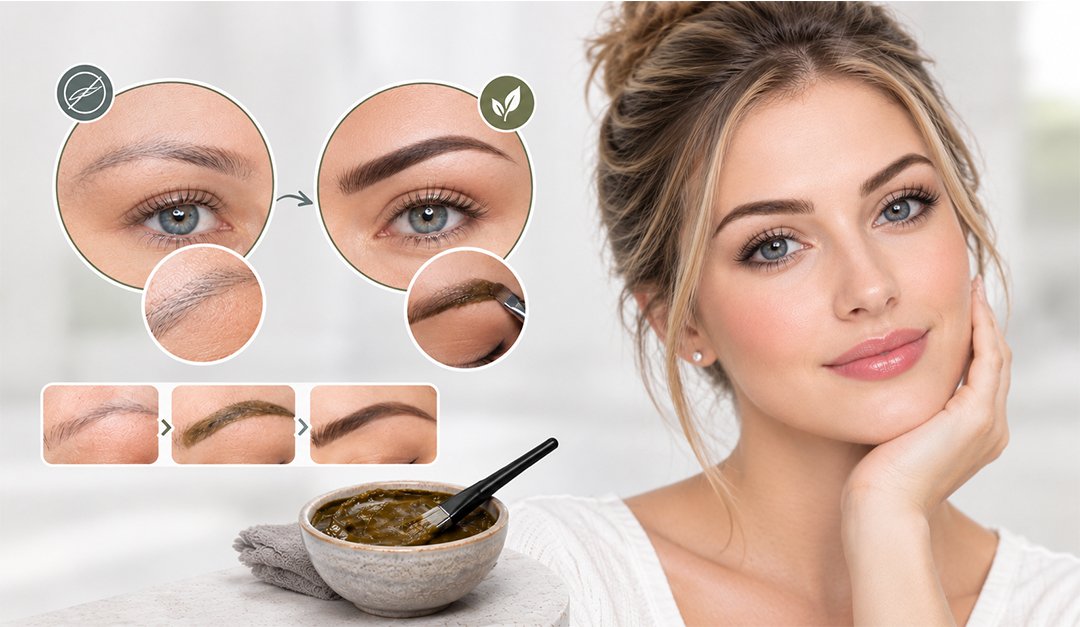
Look closely at a microbladed brow around the eighteen-month mark, and the story is usually…
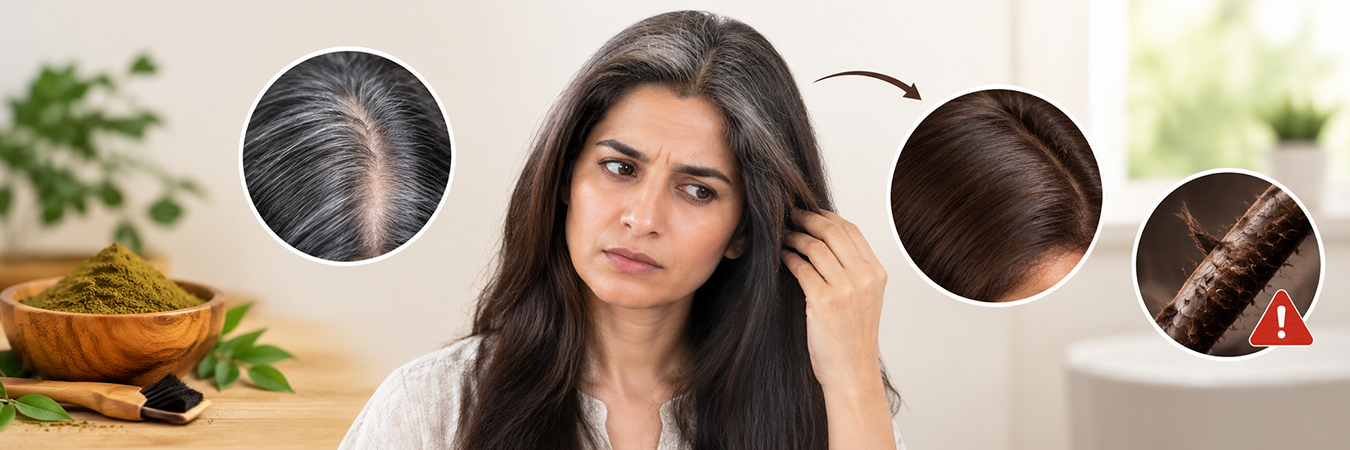
A customer once told us something we still remember. She had been colouring her gray…
Betreten Sie eine Drogerie in Berlin, Paris oder Mailand, finden Sie im selben Regal zwei…
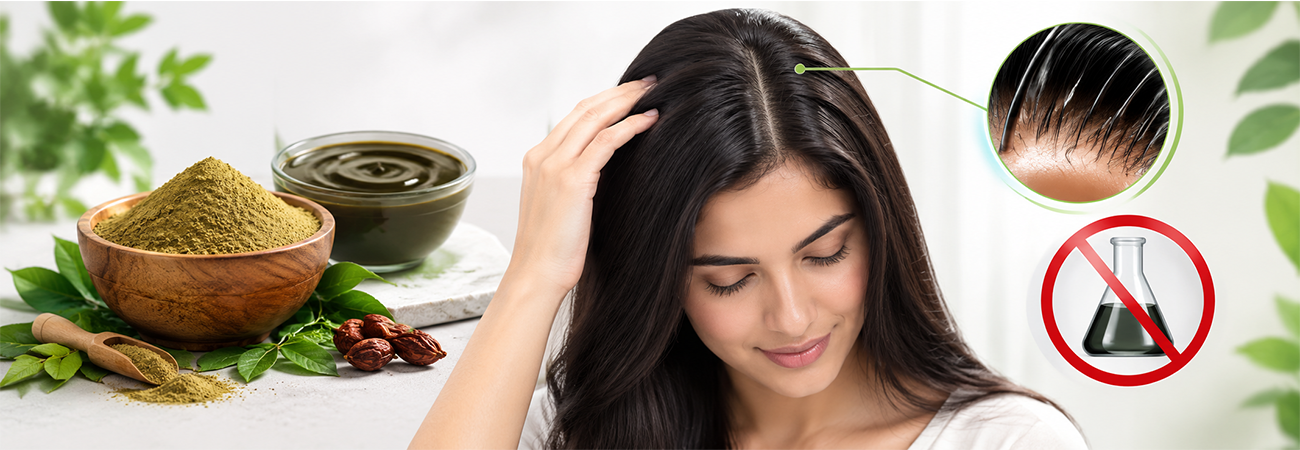
Pure Henna for Sensitive Scalps | Henna Powder Manufacturers
16 minutes ago[…] medical flag worth knowing: Natural henna has been linked to a serious blood-cell breakdown problem in people with G6PD deficiency, […]