Call/WhatsApp: +91-9811618013, +91-9810306077
Email: keohenna@gmail.com, kirpaloverseas@gmail.com
Email: keohenna@gmail.com, kirpaloverseas@gmail.com





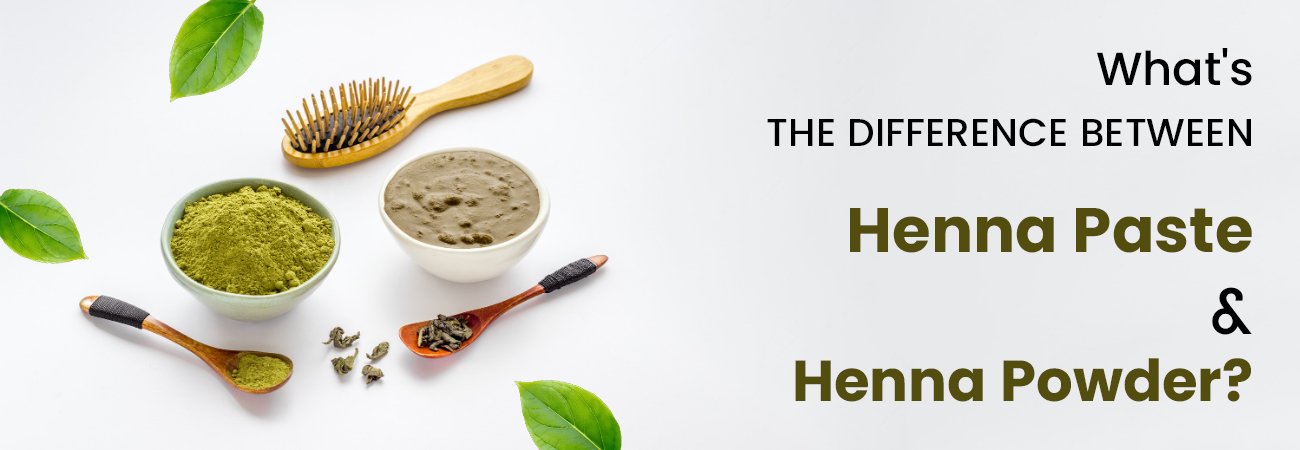
If you’ve spent any time in the herbal hair color or natural beauty space, you’ve likely come across both henna paste and henna powder—sometimes used interchangeably, but actually quite different in form, function, and application. As a professional working with a henna powder manufacturer in Rajasthan, we get this question from buyers, salon chains, and private label clients almost every week.
And it’s a fair question. The global demand for plant-based hair color has surged in recent years, and buyers—whether they’re sourcing for OEM manufacturing, wholesale distribution, or building their own private label brand—want to understand exactly what they’re getting.
This guide breaks down the real differences between henna paste and henna powder, explains the role of each in professional and consumer applications, and shares practical insights from over two decades of manufacturing experience at Kirpal Export Overseas, a trusted name among henna powder manufacturers in India.
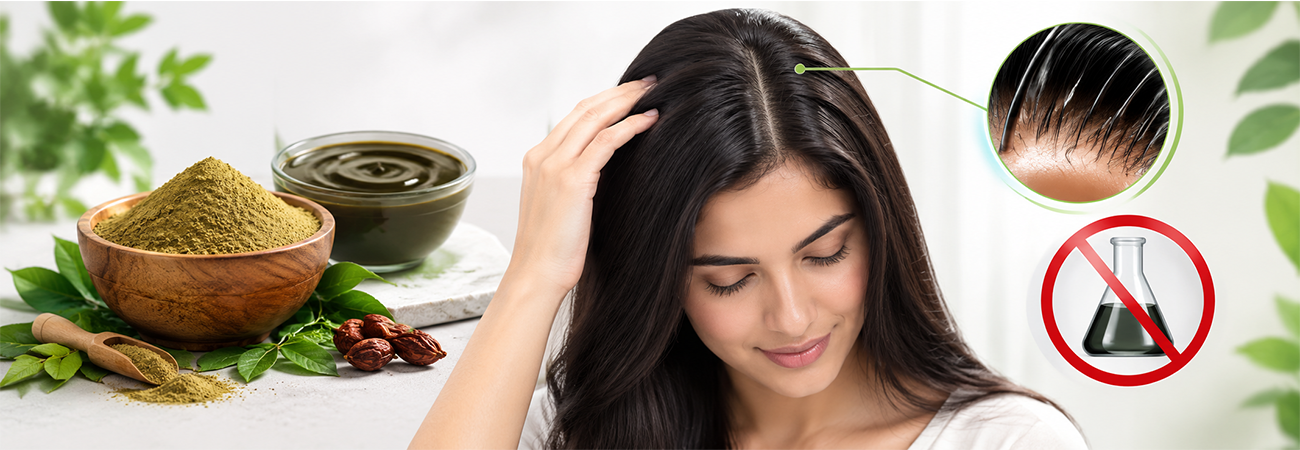
Henna powder is derived from the dried and milled leaves of the Lawsonia inermis plant — a flowering shrub native to hot, arid climates, including parts of Rajasthan, India. The leaves are harvested, shade-dried, and then ground into a fine, green powder.
At Kirpal Export Overseas, we source our raw henna leaves from Sojat, a town in Pali district, Rajasthan, widely recognized as the henna capital of the world. Sojat henna carries a Geographical Indication (GI) tag, which is essentially a quality certification rooted in geographic origin — similar to how Champagne can only come from a specific region in France.
The natural dye compound in henna powder is called lawsone. When the powder is mixed with a mildly acidic liquid — typically water, lemon juice, or a blend of both — lawsone is released and bonds with the keratin proteins in hair and skin. That’s the chemistry behind the natural color.
What henna powder looks like: A fine, earthy green powder with a characteristic grassy smell. Quality henna powder should feel silky between your fingers and dissolve cleanly in water without leaving large gritty particles.
How it’s sold: Henna powder is sold in bulk (for manufacturers and wholesale buyers), in retail packaging (for end consumers), or under private label branding for cosmetic brands.
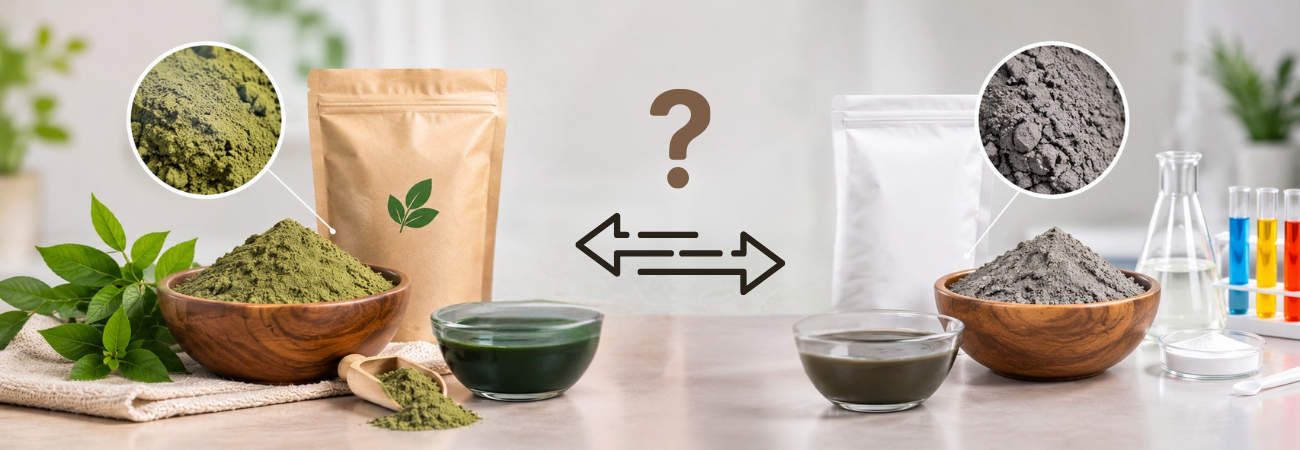
Henna paste is simply henna powder that has already been mixed with a liquid and additional ingredients to form a ready-to-use application. Think of henna powder as the raw ingredient, and henna paste as the finished preparation.
The typical components of henna paste include:
Henna powder forms the base, with lemon juice or apple cider vinegar serving as the acid that releases dye molecules. Various essential oils — eucalyptus, tea tree, or lavender — are added to enhance dye release and fragrance. Water or herbal teas are used to adjust consistency, while sugar or honey helps the paste adhere better to hair and skin.
The paste is usually left to “dye release” for several hours (anywhere from 4 to 12 hours, depending on the recipe and ambient temperature) before application. During this time, the lawsone becomes bioavailable and ready to stain.
Key difference: Henna powder has a long shelf life (12–24 months when stored properly), while henna paste has a much shorter usable window — typically 1 to 3 days when refrigerated, or a few weeks when frozen.
Let’s get specific. Here’s how the two formats differ across the criteria that matter most to B2B buyers, salon professionals, and private label brands:
Shelf Life
Henna powder, when properly stored in airtight, moisture-free packaging, maintains its dye potency for 12 to 24 months. Henna paste, once prepared, must be used within 1 to 72 hours or frozen for later use.
Customization Flexibility
Henna powder is fully customizable. Manufacturers can blend it with other botanicals — amla, brahmi, shikakai, indigo — to create herbal hair color formulations. Henna paste is fixed once mixed, giving you less room to adjust.
Dye Strength
Interestingly, freshly prepared henna paste often produces a stronger initial color because the lawsone has been actively released. However, high-quality henna powder from a reliable henna powder manufacturer in Rajasthan delivers comparable results when the paste preparation is done correctly.
Ease of Use
Henna paste is immediately ready to apply — no mixing required. Henna powder requires preparation time, but that preparation can be tailored to the specific hair type and desired outcome.
Commercial Viability
For OEM manufacturers, private label brands, and wholesale importers, henna powder is almost always the preferred format. It’s easier to ship, store, and scale. Ready-to-use paste products require cold chain logistics or preservatives — both of which add complexity and cost.
This is where the conversation gets genuinely interesting — especially for buyers building natural or organic hair care lines.
Henna isn’t just a coloring agent. It’s a multi-benefit botanical that has been used in Ayurvedic and traditional hair care for centuries. Here’s what the science and traditional knowledge tell us:
Natural Color Without Chemicals
Pure henna powder produces warm red-orange tones on the hair shaft. When blended with indigo (a complementary plant dye), you can achieve shades ranging from auburn and chestnut to dark brown and jet black — all without synthetic dyes, ammonia, or peroxide. This makes it highly sought after by consumers who are sensitive to chemical-based hair colors.
Conditioning and Strengthening
Henna forms a protective coating around the hair shaft. This adds shine, reduces frizz, and can make individual strands feel thicker and more resilient. Many users report significantly less hair breakage after consistent henna use.
Scalp Benefits
Henna has natural antifungal and antimicrobial properties. It creates a slightly acidic environment on the scalp, which discourages dandruff-causing fungi. It also soothes scalp irritation and can help reduce excessive oiliness when used regularly.
Dye Deposit Mechanism
Unlike synthetic dyes that penetrate and alter the hair’s cortex, henna works by binding to the surface proteins (keratin). This is why it’s generally considered safer — it doesn’t break down the hair structure but instead coats and protects it.
Who benefits most: People with premature greying, color-treated hair looking for a chemical break, individuals with scalp sensitivity, and consumers seeking halal-certified or vegan-friendly hair color options.
Not all henna is the same. If you’ve worked with henna sourced from different regions, you may have already noticed differences in color, texture, and dye strength. As one of the established henna powder manufacturers in India operating directly out of Sojat, here’s what we know firsthand:
Sojat henna consistently tests higher in lawsone content compared to henna from other Indian states or imported alternatives. The semi-arid climate and mineral-rich soil of the Pali district create growing conditions that concentrate the natural dye compound.
The GI tag attached to Sojat henna isn’t just a marketing label. It’s backed by testing standards and origin verification — which matters enormously for buyers in regulated markets like the EU, UK, and Australia, where documentation of natural ingredient authenticity is increasingly required.
At Kirpal Export Overseas, every batch of henna powder we process goes through quality control checks covering mesh fineness, moisture content, lawsone content, and microbial safety. This ensures that what you receive as a buyer is consistent, traceable, and meets international cosmetic standards.
For the majority of buyers reading this — whether you’re a private label brand, an OEM manufacturer, or a wholesale importer — henna powder is the right starting point.
Here’s a simple breakdown by buyer type:
Private label cosmetic brands sourcing ingredients to develop their own product lines will find that starting with bulk henna powder gives full control over formula development. You can create your own proprietary blend, set your own color ratios, and differentiate your products.
OEM manufacturers producing hair color formulations at scale will find that powder is far easier to work with at volume. You can blend consistently, adjust formulations per client spec, and avoid the logistics burden of working with a perishable paste.
Wholesale importers and trading companies reselling for retail or salon use will benefit from the shelf stability of powder, which survives long shipping routes without quality degradation — especially critical for buyers in the UK, USA, UAE, and Australia.
Professional salon distributors can source bulk henna powder and either sell it as-is or develop a ready-to-mix product line for their salon clientele.
If you have a specific use case that calls for pre-formulated paste — such as a ready-to-apply consumer product — we can discuss contract manufacturing options at Kirpal Export Overseas that include custom paste formulations with natural preservative systems.
As a dedicated henna powder manufacturer in Rajasthan, Kirpal Export Overseas offers more than just raw material supply. Our capabilities include:
We supply pure henna powder sourced directly from GI-certified Sojat farms, ensuring consistent lawsone content and natural origin traceability. For brands looking to launch under their own name, we provide complete private label services — from custom formulations to branded packaging design. Our OEM manufacturing capabilities extend to herbal hair color blends, eyebrow henna products, and plant-based cosmetic powders. Every shipment is backed by quality documentation, including COA (Certificate of Analysis), MSDS, and batch traceability reports.
We export to buyers across the UK, USA, UAE, Germany, Australia, and other international markets, with experience navigating compliance requirements in each region.
The difference between henna paste and henna powder comes down to form, flexibility, and application purpose. Henna paste is ready to use and ideal for direct consumer or salon application. Henna powder is the foundational ingredient — versatile, stable, and commercially practical for anyone building products in the herbal hair color or natural cosmetics space.
For B2B buyers, the answer is almost always henna powder. And when sourcing henna powder, the origin matters. Working with a verified henna powder manufacturer in Inidia — one that sources directly from Sojat and controls the entire supply chain — gives you quality consistency that shows up in every product you build.
At Kirpal Export Overseas, we’ve built our reputation on exactly that. If you’re looking to source premium Sojat henna powder, explore private label options, or develop a custom herbal hair color formulation, we’d welcome the conversation.
Get in touch with our export team to request samples, pricing, or a technical consultation.
Q1. What is the main difference between henna paste and henna powder?
Henna powder is the raw, dried, and milled form of the henna leaf, while henna paste is henna powder that has been mixed with a liquid (usually water or lemon juice) to create a ready-to-apply product. Henna powder has a longer shelf life and offers greater flexibility for formulation, while paste is convenient for direct use.
Q2. Can henna powder be used directly on hair without making a paste?
No. Henna powder needs to be mixed with a mildly acidic liquid to release its natural dye compound (lawsone). Applying dry powder to hair will not produce color results. The paste needs to be prepared and allowed to dye-release before application.
Q3. Why is Sojat henna considered the best quality in India?
Sojat, located in Pali district, Rajasthan, benefits from a climate and soil composition that produces henna leaves with high lawsone content. The region holds a Geographical Indication (GI) tag for its henna, ensuring origin authenticity and consistent dye quality — making it the preferred choice among henna powder manufacturers in India and international buyers alike.
Q4. Is henna powder safe for all hair types and scalp conditions?
Pure, unadulterated henna powder is generally considered safe for most hair types, including color-treated, thinning, and chemically processed hair. It is free from ammonia, peroxide, and synthetic dyes. However, individuals with a known allergy to lawsone should perform a patch test first. Always ensure you’re using 100% natural henna without added metallic salts or artificial dyes.
Q5. How should henna powder be stored to maintain quality?
Henna powder should be stored in an airtight container, away from direct sunlight, moisture, and heat. Properly stored, high-quality henna powder from a reliable henna powder manufacturer in Rajasthan can retain its dye potency for 12 to 24 months. For bulk quantities, sealed kraft or foil-lined bags with desiccant packets are recommended.
The patch test is the most boring step in hair colouring, and the one most…
Every natural hair color manufacturer eventually gets the same message from a buyer: “The black…
Look closely at a microbladed brow around the eighteen-month mark, and the story is usually…
A customer once told us something we still remember. She had been colouring her gray…