Call/WhatsApp: +91-9811618013, +91-9810306077
Email: keohenna@gmail.com, kirpaloverseas@gmail.com
Email: keohenna@gmail.com, kirpaloverseas@gmail.com





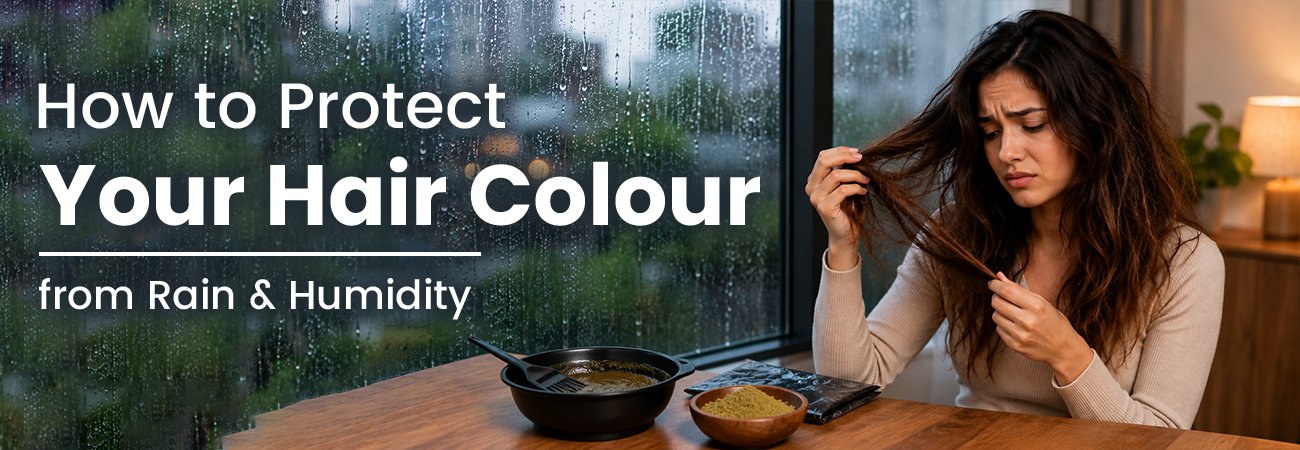
Monsoon season brings relief from the heat, but if you’ve invested time and money into colouring your hair, it also brings a fair bit of stress. Rain, humidity, and the moisture-heavy air that comes with both can turn vibrant, freshly coloured hair into something dull, frizzy, and patchy within weeks. Anyone who has stepped out during a humid afternoon only to watch their hair colour fade unevenly by the time they get home knows exactly how frustrating this is.
The good news is that colour fade during rain and humidity isn’t inevitable. It’s mostly a result of how hair absorbs and loses moisture, how the colour molecules were deposited in the first place, and how well the hair is cared for afterward. Once you understand what’s actually happening at the strand level, protecting your colour becomes a lot more manageable.
Hair is porous by nature, and colouring — whether with chemical dyes or natural alternatives — changes that porosity even further. When the hair cuticle is raised or roughened (which happens with most colouring processes), it becomes easier for moisture from the air to slip in and for colour pigment to slip out.
Here’s what typically goes wrong during the rainy season:
Excess moisture swells the hair shaft. When humidity is high, hair strands absorb water from the surrounding air. This causes the cuticle layer to lift, which allows colour molecules trapped underneath to escape more easily. The result is colour that looks washed out or uneven, particularly at the ends.
Rainwater itself isn’t neutral. Depending on where you live, rainwater can carry pollutants, dust, and minerals picked up on its way down. When this water sits on coloured hair, it can react with the colour pigments and accelerate fading, sometimes giving hair a slightly brassy or off-tone appearance.
Frizz makes colour look patchier than it is. Humidity disrupts the hair’s natural moisture balance, causing strands to swell unevenly and frizz up. Frizzy hair scatters light differently than smooth hair, so even colour that hasn’t actually faded much can appear dull or inconsistent simply because of texture changes.
Frequent washing during monsoon compounds the problem. Humid weather often means oilier scalps and more frequent hair washing, and every wash strips out a little more colour, especially with semi-permanent or chemical dyes that sit on top of the hair shaft rather than penetrating it.
Temperature swings play a role too. Monsoon weather isn’t just wet, it’s also inconsistent. Hair goes from damp and humid outdoors to air-conditioned indoors and back again multiple times a day, and these repeated shifts in temperature and moisture levels stress the hair shaft, making it more prone to the kind of cuticle disruption that leads to colour loss.
It helps to think of hair colour retention as a balance between how tightly pigment is held inside or on the hair shaft and how much external moisture is trying to get in and disrupt that hold. Monsoon weather tips that balance in the wrong direction almost constantly, which is why colour that looked perfectly fresh in April can look noticeably faded by July without any real change in your usual hair care routine.
Not all hair colours behave the same way in wet, humid conditions, and it’s worth understanding why.
Chemical, ammonia-based dyes work by opening the hair cuticle, depositing synthetic pigment inside the cortex, and then (ideally) sealing the cuticle back down. In humid weather, that seal is exactly what gets compromised. Once the cuticle lifts again due to moisture in the air, colour molecules have an easy exit route, which is why chemically coloured hair often fades faster and more unevenly during monsoon months compared to drier seasons.
Henna-based colour behaves differently because of how it bonds with hair. Henna’s dye molecule, lawsone, coats the hair shaft and binds to the keratin protein through a process that’s more of a stain than a cuticle-penetrating deposit. Because this bond happens at the surface and is chemically stable once oxidised, henna colour tends to be less reactive to humidity swings than synthetic dye. It won’t turn patchy or brassy from rainwater exposure the way some chemical colours can, and because henna doesn’t rely on ammonia to lift the cuticle in the first place, the hair shaft stays comparatively smoother and less porous to begin with.
This is one of the reasons many people, and increasingly professional colourists and private-label brands, look toward natural and herbal colouring options for their retail lines and salon services during the humid months — not just for the health of the hair, but because the finished colour actually holds up better against weather-related fading.
That doesn’t mean chemical dye is unusable in monsoon, only that it typically needs more deliberate aftercare to hold its ground. Ammonia-based colour can still look excellent through the rainy season if it’s paired with the right shampoo, regular deep conditioning, and a genuine effort to limit direct rain exposure. The difference is really one of margin for error: henna forgives a missed step in your routine more easily, while chemical colour tends to punish it faster with visible fading.
It’s also worth noting that humidity doesn’t treat all hair the same way. Fine, low-porosity hair tends to resist moisture absorption a little longer, so colour fade may be slower but frizz can still be a problem once moisture does get in. Coarse or high-porosity hair, especially hair that’s been previously coloured, bleached, or chemically treated, absorbs atmospheric moisture much faster and is generally more vulnerable to both frizz and colour fade during monsoon. If you know your hair tends to soak up humidity quickly, it’s worth being more proactive with barrier products and more consistent with the routine outlined below, rather than waiting until fading is already visible.
1. Avoid letting rainwater sit on your hair. If you get caught in the rain, don’t just let your hair air-dry naturally with rainwater still in it. Rinse it out with clean water as soon as you can, then gently towel-dry. Letting rainwater dry into the hair gives any minerals or pollutants it’s carrying time to interact with your colour.
2. Use a leave-in conditioner or hair serum before stepping out. A light leave-in product creates a barrier on the hair shaft that makes it harder for excess moisture to penetrate and for colour to leak out. Look for lightweight, non-greasy formulas so you’re not adding to the frizz problem.
3. Switch to sulphate-free, colour-safe shampoo. Sulphates are aggressive cleansers that strip colour rapidly. During monsoon, when you’re likely washing more often due to humidity and scalp oiliness, a sulphate-free shampoo slows down colour loss significantly.
4. Space out your hair washes where you can. Every wash is an opportunity for colour to fade. If your scalp allows it, try dry shampoo between washes to stretch the gap without sacrificing freshness.
5. Deep condition weekly. Humidity-damaged, porous hair benefits enormously from a weekly deep conditioning treatment. This helps smooth the cuticle back down, which in turn helps trap colour molecules inside rather than letting them wash or humidity-fade out.
6. Carry a compact umbrella or a light scarf during monsoon commutes. It sounds basic, but simply reducing direct rain exposure is one of the most effective things you can do. A quick scarf over the head during a downpour prevents both frizz and colour-fading rainwater contact.
7. Choose colour-safe, humidity-resistant styling products. Some anti-frizz serums and creams also offer a degree of humidity resistance, sealing the cuticle temporarily so moisture in the air has a harder time getting in.
8. Consider your colour choice with the season in mind. If monsoon-proof colour longevity matters to you, it’s worth discussing henna-based or herbal colouring options with your colourist, particularly if you tend to colour your hair right before or during the rainy months.
9. Protect your hair before swimming or heavy exercise in humid weather. Monsoon season often overlaps with more indoor swimming and gym sessions as outdoor activity drops. Chlorinated water and sweat both interact with hair colour in similar ways to rain, stripping pigment and disrupting the cuticle, so the same barrier products and rinse-immediately habit apply here too.
10. Sleep on a silk or satin pillowcase. Cotton pillowcases absorb moisture and create friction that roughens the hair cuticle overnight. A silk or satin pillowcase reduces both, which helps preserve colour and reduce the frizz that tends to build up through humid nights.
Even people who are otherwise diligent about hair care sometimes unknowingly speed up colour fade during the rainy season. A few habits worth reconsidering:
Colour longevity, especially in unpredictable weather, isn’t only about aftercare — it starts with the quality and formulation of the product itself. Impure or adulterated henna, or poorly formulated chemical dyes cut with cheap fillers, tend to fade faster and react more unpredictably to humidity and rainwater than well-processed, quality-controlled colour.
This is why sourcing matters, whether you’re a consumer buying a retail product or a salon, private-label brand, or distributor sourcing in bulk. Working with an established hair color manufacturer that follows consistent quality standards, whether that’s BIS-compliant henna processing or properly tested chemical dye formulations, makes a measurable difference in how a colour performs once it’s actually exposed to real-world weather conditions rather than lab conditions.
For businesses building or expanding a natural hair colour line, this is also where the choice of supplier becomes a strategic one. India, and Rajasthan in particular, has long been recognised as a hub for henna cultivation and processing, and buyers sourcing from established henna manufacturers in India benefit from access to GI-tagged, region-specific henna known for its natural dye content and consistent quality. Reliable manufacturers typically test for lawsone content, moisture levels, and purity before the product ever reaches a private-label or wholesale buyer, which directly affects how well the finished colour will hold up against everyday stressors like humidity, sweat, and rain.
The same logic applies on the chemical dye side. A dependable hair color manufacturer will maintain consistent pigment concentration, proper pH balancing, and quality raw materials batch after batch, all of which affect how well a formulation resists fading once it leaves controlled salon or factory conditions and meets real-world rain and humidity. For retailers, distributors, and salon chains sourcing colour products in bulk, asking suppliers about their quality-testing process isn’t just a formality, it’s often the clearest indicator of how a product will actually perform once customers start using it through the monsoon months.
To bring all of this together, here’s a straightforward routine to follow during the rainy season:
None of these steps require a drastic change in routine. They’re small, consistent habits that add up to noticeably better colour retention through the wettest months of the year.
Rain and humidity will always test hair colour to some extent — that’s simply how hair chemistry works. But with the right aftercare habits and, just as importantly, the right quality of colour product to begin with, it’s entirely possible to keep hair looking vibrant and healthy right through monsoon season. Whether you’re colouring at home or sourcing product for a salon or retail line, paying attention to formulation quality is just as important as anything you do after the colour is applied.
Every henna powder supplier claims to sell the “purest” product on the market. Walk through…
Walk into any natural hair care store, or scroll through a beauty forum for five…
Launching a private label hair color line sounds simple on paper — pick a formula,…
If you’re a UK-based salon chain, hair color brand, or distributor trying to source henna…