Call/WhatsApp: +91-9811618013, +91-9810306077
Email: keohenna@gmail.com, kirpaloverseas@gmail.com
Email: keohenna@gmail.com, kirpaloverseas@gmail.com





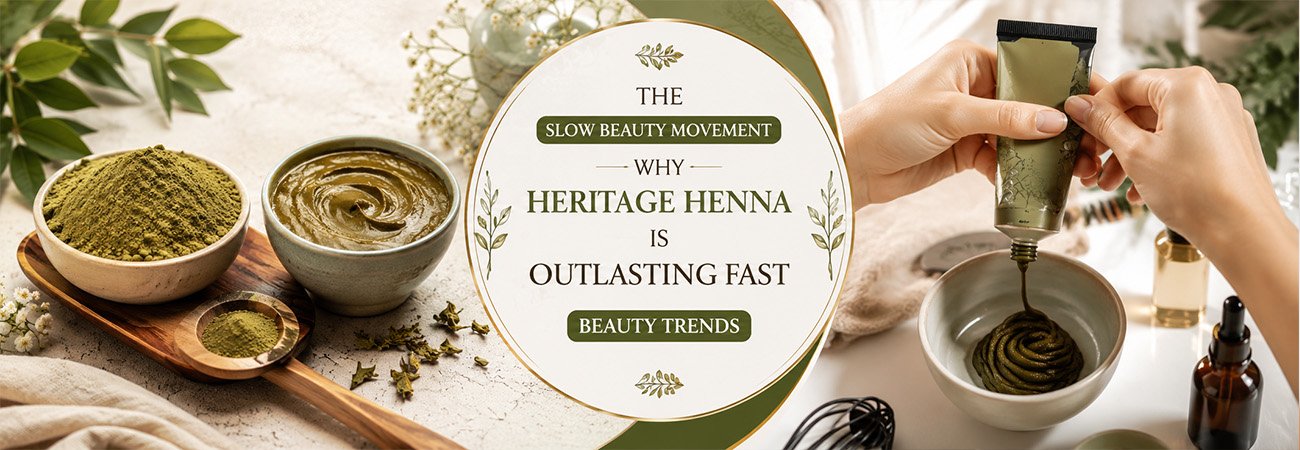
Beauty trends move fast, and most of them disappear just as quickly. A new “miracle” ingredient dominates social feeds for a season, retailers scramble to stock it, and within a year or two it’s quietly replaced by the next thing. Henna hasn’t followed that pattern. It’s been used as a hair and skin colorant for thousands of years, and instead of fading out, demand for it is climbing again — this time as part of a broader shift called the slow beauty movement.
For brands, distributors, and salons trying to figure out where to place their bets, the case for henna isn’t just that it’s holding on while trends fade — it’s that heritage henna consistently outperforms synthetic alternatives on the factors that actually matter long-term: safety, hair health, and honest ingredient sourcing. Understanding why henna is winning that comparison — and what to look for in bulk henna manufacturers when sourcing it — matters more than chasing whatever ingredient is trending this quarter.
Slow beauty borrows its logic from the slow food movement: prioritize ingredients that are grown thoughtfully, processed with minimal intervention, and used in ways that respect both the product’s origin and the person using it. It’s a reaction against the beauty industry’s usual cycle of rapid product turnover, synthetic shortcuts, and marketing-driven ingredient hype that rarely survives scrutiny.
Consumers driving this shift tend to ask different questions than they used to. Instead of “does this work fast,” they’re asking “what’s actually in this, where did it come from, and what does it do to my hair or skin over years, not weeks.” That question is exactly where heritage henna has an advantage most synthetic alternatives can’t match.
Most hair color — even “natural” branded hair color — is a formulated mix of multiple synthetic compounds. Henna, in its pure form, is a single botanical ingredient: the dried, powdered leaf of the Lawsonia inermis plant. There’s no complex ingredient list to decode, no ambiguous chemical names hiding behind a marketing term. For a consumer base that’s grown skeptical of greenwashing, that simplicity carries real weight.
Henna isn’t a rediscovered ingredient dressed up as ancient wisdom for a product launch. It’s been used continuously across South Asia, the Middle East, and North Africa for body art, hair coloring, and even therapeutic purposes for millennia. That continuity is difficult to manufacture artificially, and it’s part of why henna resonates with buyers looking for authenticity rather than a manufactured “heritage” story.
Fast beauty ingredients often carry a reputational half-life. What’s marketed as revolutionary today sometimes turns out, a few years later, to have side effects, environmental costs, or supply chain issues that weren’t disclosed upfront. Henna has already been used, studied, and trusted for far longer than any modern synthetic dye has existed, and unlike synthetic formulations, it has never needed a safety-driven reformulation. There’s no waiting period to find out if it holds up — it already has, for centuries.
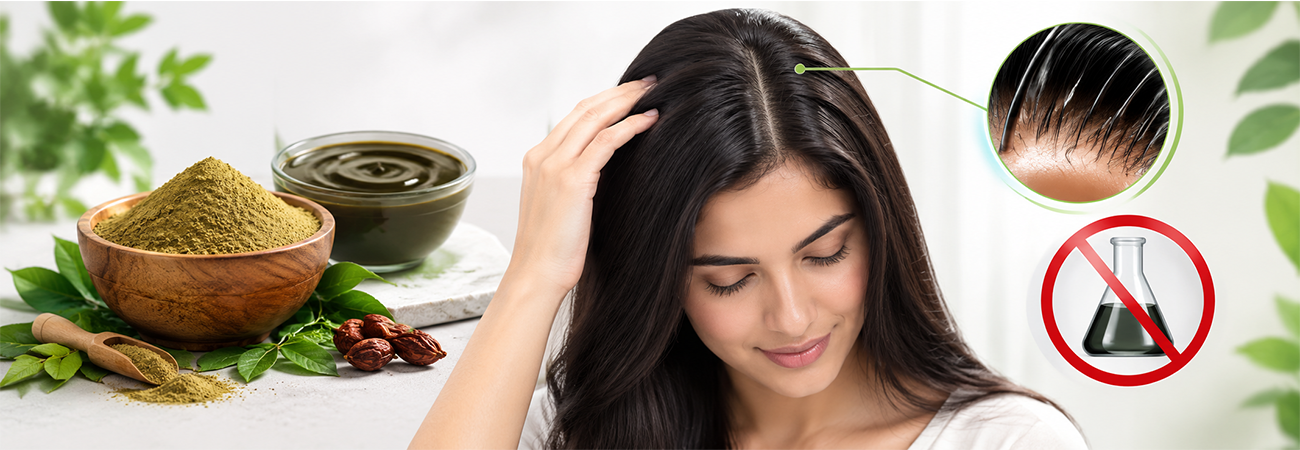
A large share of the shift toward henna is driven by consumers actively avoiding PPD (para-phenylenediamine), ammonia, and other synthetic dye components linked to scalp irritation and allergic reactions. Pure henna sidesteps that concern entirely, which makes it one of the few hair colorants that can genuinely claim to be free of the ingredients driving the most consumer anxiety.
As demand for henna-based hair color grows across private label brands, organic beauty retailers, and salon supply chains, sourcing decisions have become more consequential. This is where the difference between a good and a mediocre henna supplier really shows up — because not all henna is equal, and bulk buyers are the ones most exposed to that variation.
A few factors determine whether bulk henna actually delivers on the slow beauty promise buyers are marketing it around:
Buyers evaluating bulk henna manufacturers should treat these as non-negotiable questions, not fine print. A manufacturer that can’t speak specifically to dye content, purity testing, and batch consistency isn’t equipped for the private label or wholesale demands this category now carries.
If slow beauty is about traceability and origin, there’s no better example in this category than Sojat, a town in Rajasthan, India, that holds a Geographical Indication (GI) tag for its henna. The region’s specific soil composition and climate conditions produce henna leaf with notably higher dye content than what’s grown elsewhere, which is a large part of why Sojat has become the reference point for serious henna sourcing globally.
For bulk buyers, sourcing from manufacturers based in this region isn’t just a marketing detail — it’s a practical quality advantage that shows up directly in the finished product’s performance.
Kirpal Export Overseas (KEO), based in Sojat, is one of the manufacturers whose operations reflect what the slow beauty movement is actually asking for — an origin-rooted, manufacturing-first approach to henna rather than a trend-driven one. KEO has spent close to two decades manufacturing and exporting henna-based hair color and herbal hair color products, working directly with Sojat-region henna rather than sourcing through intermediaries.
A few aspects of how KEO operates align closely with what slow beauty buyers are specifically looking for:
This isn’t a suggestion that every buyer’s sourcing decision should default to one manufacturer — due diligence still matters regardless of reputation. But for buyers evaluating bulk henna manufacturers specifically through a slow beauty and heritage-authenticity lens, KEO’s origin, manufacturing model, and export track record make it a relevant reference point in the category.
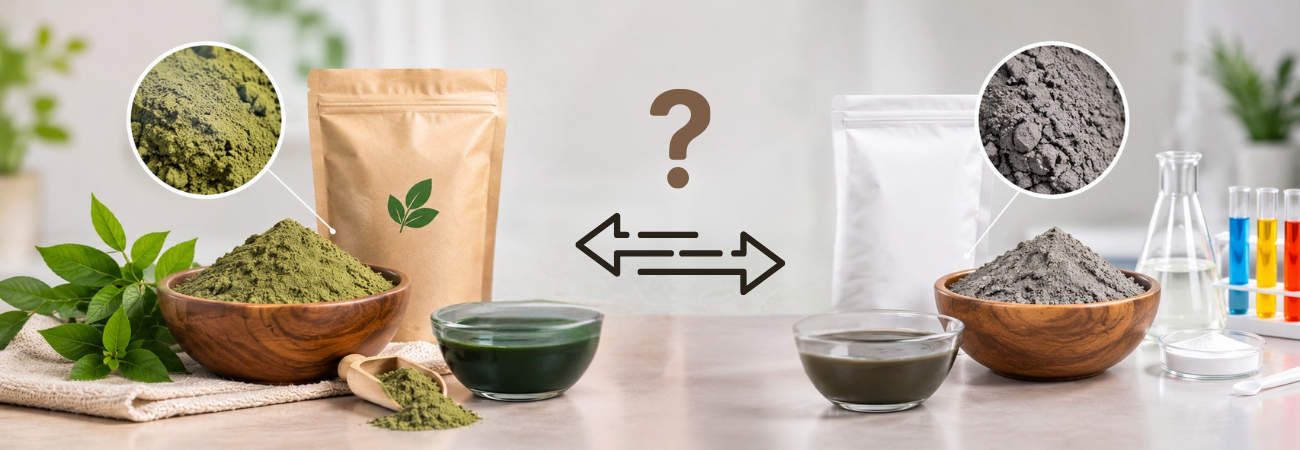
It’s worth being direct about this: the comparison between henna and synthetic hair dye isn’t really a close call once you look past marketing claims. Synthetic dye wins on speed and shade range — that’s the entire case for it. Everything else favors henna.
The only reason synthetic dye still dominates market share is inertia and speed, not superiority. As slow beauty consumers weigh long-term hair health and ingredient honesty over instant results, henna isn’t just keeping pace with synthetic dye — it’s the stronger product on nearly every metric that matters for long-term use.
Brands that have successfully tapped into the slow beauty shift tend to do a few things differently from how they’d market a conventional beauty product. Rather than leading with performance claims — faster color, longer lasting, bigger shade range — they lead with process and origin: where the henna was grown, how it was processed, and why that matters for the person applying it.
This works because slow beauty consumers are generally willing to pay a premium, but only when that premium is backed by something verifiable. A brand that can say exactly which region its henna comes from, show testing data on purity and dye content, and explain its supply chain in plain language builds a level of trust that vague “natural” or “organic” claims simply can’t match anymore. Consumers have grown accustomed to those words being used loosely, and they’ve become correspondingly skeptical of them.
For B2B buyers — private label brands, salon chains, organic beauty distributors — this shift changes what “good sourcing” actually means. It’s no longer enough to buy henna at a competitive price and slap a natural label on the finished product. Buyers need a manufacturer who can supply the documentation and traceability that backs up the story, because increasingly, that’s what their own customers are asking for.
There’s a temptation, especially for buyers new to this category, to treat henna sourcing the same way they’d source any other bulk raw material — compare prices, pick the lowest quote, move on. That approach tends to backfire specifically in henna, for a few reasons.
First, quality variation in henna is wider than most buyers expect. Two suppliers offering what looks like the same product on paper can differ substantially in actual dye content, meaning the cheaper option may require more product per application to achieve the same result — quietly erasing the price advantage.
Second, adulteration remains a real issue in parts of the global henna supply chain. Some lower-cost henna has historically been supplemented with additives to boost apparent color intensity or weight, which can affect both performance and, in some cases, safety. Buyers sourcing purely on price are more exposed to this risk, since manufacturers cutting corners on ingredient integrity are usually also the ones offering the sharpest discounts.
Third, slow beauty positioning only works if it’s true. A brand that markets itself around heritage and purity but is quietly sourcing inconsistent or adulterated henna is one bad batch away from a credibility problem that’s difficult to recover from in a category where trust is the entire value proposition.
The slow beauty movement isn’t asking the industry to abandon innovation — it’s asking for ingredients and suppliers that can survive scrutiny over years, not just a single marketing cycle. Henna doesn’t just survive that scrutiny; it comes out ahead of nearly every synthetic alternative on safety, hair health, and transparency. What determines whether a brand can actually deliver on that promise is the manufacturer behind the product: whether they can prove dye content, purity, and consistency, and whether their sourcing story is real rather than retrofitted for a trend.
For buyers building or expanding a henna-based hair color line, the practical takeaway is straightforward: prioritize manufacturers with verifiable regional sourcing, direct manufacturing capability, and export experience — not just the ones with the best-looking claims. Heritage henna has already earned its place as the stronger, more trustworthy choice in this category. The manufacturer you choose should be able to match that standard.
1. What makes henna different from other “trending” beauty ingredients? Henna has been used continuously for thousands of years across South Asia, the Middle East, and North Africa, unlike many trending ingredients that lack long-term use or scrutiny. Its single-ingredient composition also makes it easier for consumers to trust compared to complex synthetic formulations.
2. What should buyers look for in bulk henna manufacturers? Key factors include dye content (lawsone concentration), purity and adulteration testing, particle fineness for hair color applications, and consistent quality across batches — since henna is an agricultural product subject to natural variation.
3. Why is Sojat, Rajasthan significant for henna sourcing? Sojat holds a Geographical Indication (GI) tag for its henna, produced from soil and climate conditions that yield notably higher dye content than henna grown in other regions, making it a key origin point for quality-focused buyers.
4. Is henna a good fit for the slow beauty movement? Yes. Henna aligns closely with slow beauty principles — traceable origin, minimal processing, and long-term consumer trust — as opposed to ingredients that rely on short-term marketing hype.
5. How does Kirpal Export Overseas fit into bulk henna sourcing? Kirpal Export Overseas is a Sojat-based manufacturer with nearly two decades of experience directly manufacturing and exporting henna-based hair color products, offering regional sourcing advantage, private label flexibility, and export experience across multiple international markets.
The patch test is the most boring step in hair colouring, and the one most…
Every natural hair color manufacturer eventually gets the same message from a buyer: “The black…
Look closely at a microbladed brow around the eighteen-month mark, and the story is usually…
A customer once told us something we still remember. She had been colouring her gray…