Call/WhatsApp: +91-9811618013, +91-9810306077
Email: keohenna@gmail.com, kirpaloverseas@gmail.com
Email: keohenna@gmail.com, kirpaloverseas@gmail.com





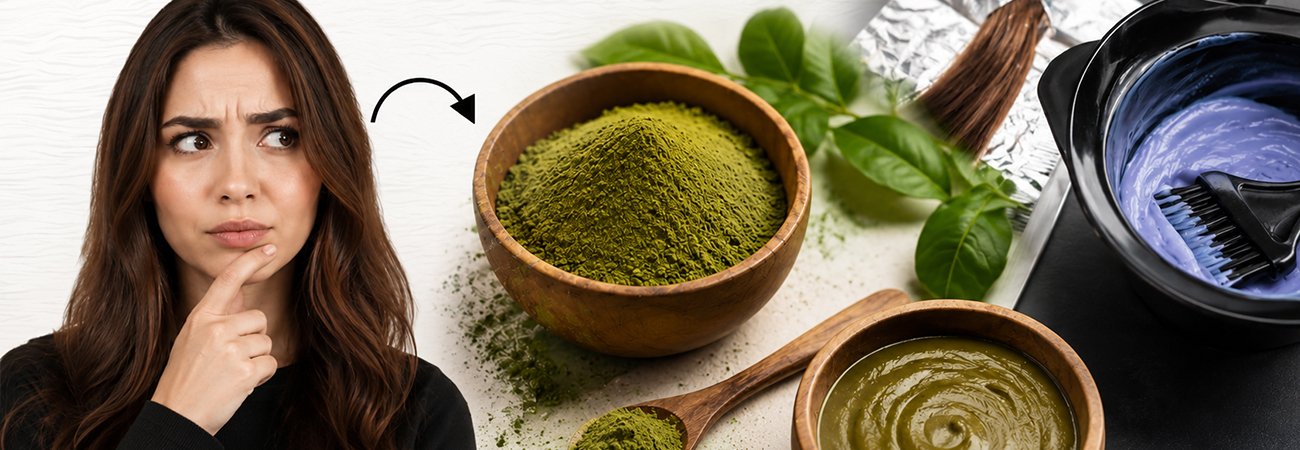
If you have been coloring your hair with chemical dyes for years, the idea of switching to something natural can feel exciting but also quietly terrifying at the same time. You stand in the store holding a pack of henna powder and you think, what if this goes wrong? What if my hair turns orange? What if it does not cover my grays? What if I regret this?
You are not alone in this moment. Thousands of people every single year find themselves asking the exact same questions when they decide to make the switch to henna’s hair color. The fear is completely real, and it absolutely deserves an honest and human answer. So let us sit down and talk about it properly.
The Real Reason Switching Feels So Scary
Here is something nobody tells you. The fear of switching to henna is not really about henna. It is about the unknown. When you have spent years trusting a product that gives you predictable results, changing that routine feels like stepping off solid ground. You know what your chemical dye does. You know the smell, the timing, the result. Henna asks you to start that learning process all over again, and that takes courage.
But here is what is also true. Most of the fears people carry about henna are either completely solvable or simply not as scary as they seem once you have the right information. Let us go through each one honestly.
Fear Number One: Will Henna Actually Cover My Gray Hair?
This is without question the biggest fear for most people, especially those who have been fighting grays for years. Chemical dyes were designed in a laboratory specifically to penetrate deep into the hair shaft and lock artificial color in aggressively. They are very good at covering gray, and that gives people a sense of security.
Henna works in a completely different way. Instead of breaking into the hair shaft, it wraps around the outer layer of each strand and binds to the natural keratin protein in your hair. Pure henna on its own gives a warm reddish-orange tone. But when you combine it with other natural herbs like indigo, cassia, or amla, you can achieve shades ranging from soft auburn to deep dark brown and even close to black.
A good quality henna’s hair color sourced from a trusted henna manufacturer in India absolutely can cover gray hair. It may require a two-step process to achieve darker shades and it may take a little patience, but the results are real and lasting. The key is not to expect henna to behave exactly like a chemical dye, because it is not trying to be one. It is something better.
Fear Number Two: Am I Going to End Up With Carrot-Colored Hair?
This fear is so common it is almost funny, but it is also completely understandable. People have seen photos of henna gone wrong and that orange image sticks in their mind. So let us clear this up once and for all.
The color result you get from henna depends on three things. The quality of the henna product you use, your natural base hair color, and how long you leave the paste on. Cheap or adulterated henna products that have been sitting on a shelf for too long or mixed with unknown additives can absolutely give patchy, brassy, or unpredictable results.
But a pure, triple-filtered, lab-tested henna from a reputable henna manufacturer in India is a completely different experience. If you have naturally dark hair, henna will add a gorgeous rich reddish sheen that catches the light beautifully. If your hair is lighter or you have more grays, the color will appear more vivid and warm. It will not be the same as a chemical color, but many people find it far more beautiful and dimensional once they see it in person.
The solution to the orange fear is simple. Choose your product wisely and do a strand test first.
Fear Number Three: Is Henna Too Messy and Complicated to Apply?
Nobody is going to pretend that applying henna is as quick and clean as squeezing dye from a bottle. Henna paste is thick, earthy, and honestly a little like working with wet clay. It requires mixing, resting time for the dye to release, and careful application to get even coverage.
But here is what people who have been using henna for years will tell you. After the first or second time, it becomes a ritual rather than a chore. The earthy, herbal smell of fresh henna paste is something many people genuinely look forward to. Some people mix in coconut milk, essential oils, or lemon juice to enhance the paste and make the experience feel even more luxurious. What started as a messy task becomes a slow, intentional act of self-care.
And when you think about what you are putting on your head, a natural plant powder versus a chemical formula with ammonia and developer, the extra twenty minutes of effort suddenly feels very worth it.
Fear Number Four: Will Henna Damage My Already Chemically Treated Hair?
This fear actually has the most reassuring answer of all. Chemical dyes, particularly those containing ammonia and hydrogen peroxide, work by breaking down the outer protective layer of your hair called the cuticle. Over time and with repeated use, this causes dryness, breakage, thinning, and dullness. It is a real kind of damage that many people live with silently.
Henna does the exact opposite. It coats and reinforces the hair strand, adding strength and thickness to each individual hair. People who switch to henna’s hair color often notice within a few months that their hair feels fuller, breaks less, and has a natural shine that chemical products never gave them.
There is one important caution though. If your hair has been treated with metallic salt-based dyes or certain compound henna products in the past, there can sometimes be an adverse reaction when pure henna is applied on top. This is not a reaction to natural henna itself but to leftover chemical residue already sitting in your hair. This is exactly why doing a strand test before your full application is not optional. It is essential. A small test saves you from a big surprise.
Fear Number Five: What If I Get Stuck With a Color I Cannot Change?
This is one of the more legitimate concerns about making the switch, and it deserves a real answer. Unlike chemical dye which fades within a few weeks and can be changed or lightened relatively easily, henna creates a semi-permanent bond with your hair. It does not simply wash out. It fades slowly and gradually over many weeks, and it cannot be removed with bleach without potentially damaging your hair significantly.
So if you are someone who loves changing your hair color with the seasons or experimenting with different shades regularly, henna may genuinely not be the right choice for that season of your hair journey.
But if what you are looking for is a long-term commitment to healthier, naturally colored hair that improves with time rather than deteriorating, then henna’s semi-permanence is not a trap. It is a feature. It is the product telling you that it is serious about your hair health.
Fear Number Six: What About Allergic Reactions?
After years of using chemical dyes that come with a patch test warning on the box, it is natural to worry that henna might carry the same risks. The good news is that pure natural henna derived from the Lawsonia inermis plant has been used safely for thousands of years across cultures in Asia, the Middle East, and Africa. It is one of the oldest known cosmetic plants in human history.
The real allergy risk comes from products labeled as black henna or compound henna that contain added chemicals, most notably a substance called PPD or paraphenylenediamine. This ingredient is responsible for many of the severe skin reactions people associate with henna. It has nothing to do with pure plant henna and everything to do with adulterated products trying to mimic chemical dye results.
This is why sourcing your henna from a verified and transparent henna manufacturer in India who can provide ingredient lists, lab reports, and purity certifications is not just a preference. It is a safety decision.
Fear Number Seven: Will Salons Refuse to Work on Henna-Treated Hair?
This is a fear that does not get talked about enough. Some people worry that once they commit to henna, they will be turned away at salons or told their hair cannot be professionally colored again. There is a small truth buried in this concern.
Many traditional colorists are hesitant to apply bleach or chemical permanent color over henna-treated hair because the results can be unpredictable. Henna creates a coating on the hair strand that can interact with certain chemical processes in unexpected ways.
However, as the natural beauty movement continues to grow, more and more salon professionals are educating themselves on working with naturally colored hair. And if you are making a full lifestyle commitment to henna’s hair color, this concern will fade in relevance over time along with your need for chemical salon services.
Why India Is the Heart of Natural Henna Production
When you look into where the world’s finest natural henna comes from, the answer leads consistently back to India. The Rajasthan region in particular has been cultivating henna for centuries, and the warm dry climate of that region produces a quality of Lawsonia inermis leaf that is unmatched anywhere else in the world.
Today there are sophisticated and ethical henna manufacturers in India who blend centuries of traditional agricultural knowledge with modern quality control, laboratory testing, and sustainable farming practices. When you choose henna from one of these manufacturers, you are not just buying a hair product. You are connecting to a living tradition of natural beauty care that has been trusted across generations and cultures for thousands of years.
That history matters. It means the product has already proven itself in ways that no laboratory trial can fully replicate.
The Bigger Picture Nobody Talks About
In all the conversation about fears and concerns, what often gets lost is the most important point of all. Chemical hair dyes contain ingredients including resorcinol, ammonia, parabens, and hydrogen peroxide that have been studied for their potential impact on long-term health and environmental wellbeing. People who make the switch to henna frequently report not just better hair but also relief from chronic scalp irritation, reduced chemical sensitivity, and an overall more positive experience with the coloring process itself.
Making the switch is not just a beauty decision. For many people it becomes a health decision, an environmental decision, and a deeply personal act of choosing to care for themselves more gently.
How to Make the Switch Without Fear
Start slowly. Do a strand test on a small section of your hair before committing to a full application. Research the source of your henna product and look for a henna manufacturer in India who can verify purity and provide transparent ingredient information. Understand your hair type, your natural base color, and what results are realistically possible for you specifically.
The fear you are feeling right now is simply the fear of the unfamiliar. It is the same feeling every person who has ever tried something new has experienced before taking that first step. And like most fears, it dissolves quickly once you actually begin.
If you approach this switch with realistic expectations, a quality product, and a little patience with yourself and the process, you may find that henna’s hair color becomes not just a replacement for chemical dye but one of the best decisions you have ever made for your hair, your health, and your daily relationship with yourself.
Every henna powder supplier claims to sell the “purest” product on the market. Walk through…
Walk into any natural hair care store, or scroll through a beauty forum for five…
Launching a private label hair color line sounds simple on paper — pick a formula,…
If you’re a UK-based salon chain, hair color brand, or distributor trying to source henna…