Call/WhatsApp: +91-9811618013, +91-9810306077
Email: keohenna@gmail.com, kirpaloverseas@gmail.com
Email: keohenna@gmail.com, kirpaloverseas@gmail.com





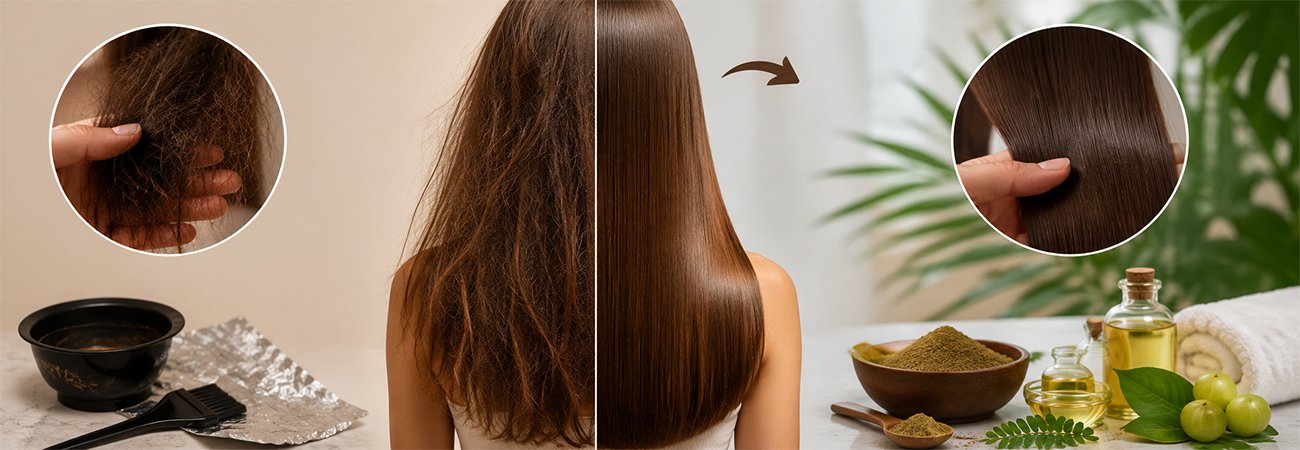
Anyone who has colored their hair more than once knows the pattern. The color looks great for the first week or two, and then something shifts — strands feel rougher, ends start splitting, and the hair that used to hold a curl or fall smooth now just feels tired. This isn’t bad luck. It’s chemistry, and understanding what’s actually happening to the hair shaft during coloring is the first step to reversing the damage and stopping it from happening again.
This is also a conversation that matters well beyond individual consumers. Salons, private label brands, and hair care distributors deal with this exact complaint from their own customers every day — and a large part of the solution comes down to which raw material is behind the color in the first place. That’s where the difference between synthetic dye and genuinely pure henna becomes more than a beauty preference; it becomes a sourcing decision.
To color hair permanently, most commercial dyes need to get past the hair’s outer layer — the cuticle — and reach the cortex underneath, where the natural pigment lives. The standard way to do this is with a combination of ammonia (or an ammonia substitute) and hydrogen peroxide.
Ammonia raises the pH of the hair, which causes the cuticle scales to lift. Hydrogen peroxide then strips the natural melanin out of the cortex so the new color can take. This process works, but it’s inherently disruptive:
None of this means coloring should be avoided — it means the choice of coloring agent matters more than most people realize, especially for anyone coloring regularly.
Before jumping to repair routines, it helps to know what damage actually looks like versus what’s just normal hair texture:
If more than two or three of these sound familiar, the hair is likely dealing with cumulative damage from repeated chemical processing — and it’s worth reconsidering what’s going into the color itself, not just what’s being applied afterward to fix it.
Repair isn’t instant, but a consistent routine makes a real difference within four to six weeks.
Cut back on heat styling. Damaged hair has already lost structural strength — adding heat tools on top accelerates breakage. If heat styling is unavoidable, a heat protectant isn’t optional.
Deep condition weekly, not just after washing. A standard rinse-out conditioner coats the hair; a proper deep treatment penetrates the shaft and helps rebuild some of what was lost during processing.
Trim regularly, even if growing hair out. Split ends travel up the hair shaft if left untreated, turning a small problem into a bigger one.
Reduce wash frequency where possible. Over-washing strips natural oils that damaged hair needs more, not less, of.
Use protein and moisture treatments in rotation. Damaged hair typically needs both — protein to rebuild structural strength, moisture to restore flexibility — but too much protein without enough moisture can leave hair feeling brittle, so balance matters.
Switch future coloring to a gentler formula. This is the step that actually breaks the damage cycle rather than just managing symptoms after the fact.
This is where henna changes the equation. Unlike ammonia-based dyes, pure henna doesn’t force the cuticle open through a chemical reaction. The dye molecule, lawsone, binds to the keratin protein on the outside of the hair shaft and stains it — a coating and bonding process rather than a penetrating chemical one.
The practical effect of this difference is significant:
This is a meaningful distinction for salons and brands managing repeat customers, since the same coloring routine that would gradually damage hair with synthetic dye can instead improve its condition over time with quality henna.
This is the part that gets overlooked, and it’s the reason sourcing matters as much as the ingredient category itself. Natural henna powder is only as good as its lawsone content, purity, and processing — and quality varies significantly between suppliers.
Low-grade or poorly processed henna powder can be cut with fillers, have inconsistent particle size that affects how evenly it stains, or carry excess moisture that shortens shelf life and weakens color payoff. For a salon or private label brand building a reputation around “natural” coloring, using an inconsistent raw material undermines the entire value proposition — customers will notice patchy color or a formula that doesn’t perform the way pure henna should.
This is exactly why sourcing from established, verified henna manufacturers in India matters for anyone formulating or reselling henna-based hair color at scale. India — particularly the Sojat region of Rajasthan, historically recognized as one of the world’s primary henna cultivation belts — produces the bulk of the world’s high-lawsone-content henna. But within that region, quality still varies by farm, processing method, and testing standards.
What separates a reliable henna manufacturer from an inconsistent one:
For businesses — whether a salon chain formulating in-house treatments, a beauty brand launching a private-label henna hair color line, or a distributor supplying retailers — the repair and prevention story only holds up if the raw material behind it is genuinely high-quality, pure natural henna powder without synthetic additives.
Working directly with an established henna manufacturer based in India’s core cultivation region generally offers more consistency than sourcing through multiple intermediaries, since quality control can be verified closer to the source. It’s worth requesting Lawson content reports, checking for any additive disclosures, and — where possible — reviewing export documentation and certifications before committing to a bulk order.
Hair damage from coloring isn’t inevitable — it’s largely a function of the chemistry being used. AAmmonia-and peroxide-based dyes will always come with a structural cost to the hair shaft, no matter how good the aftercare routine is. Pure, high-quality henna sidesteps that cost almost entirely, and when sourced correctly, actively contributes to stronger, glossier hair over repeated use rather than gradually wearing it down.
For anyone repairing damage right now, the aftercare routine above will help. But for anyone thinking further ahead — building a product line, supplying a salon network, or simply switching their own coloring routine for good — the more durable fix is upstream: choosing a color built on genuinely pure natural henna powder from a manufacturer that can prove its quality, not just claim it.
Why does my hair feel dry and damaged after coloring? Most permanent hair dyes use ammonia and hydrogen peroxide to lift the hair cuticle and deposit color. This process disrupts the cuticle’s ability to close properly and strips some of the hair’s natural moisture and structural proteins, leading to dryness and breakage over time.
Can henna repair hair that’s already damaged from coloring? Pure henna doesn’t reverse existing structural damage the way a protein treatment might, but its coating and conditioning effects on the hair shaft can significantly improve texture, shine, and manageability, and it won’t cause further chemical damage the way reapplication of synthetic dye would.
How is natural henna powder different from regular hair dye? Regular hair dye chemically penetrates the hair shaft using ammonia and peroxide to deposit color, disrupting the cuticle in the process. Natural henna powder colors hair by binding its dye molecule, lawsone, to the outer keratin layer, which stains rather than damages the hair.
What should I look for when sourcing henna manufacturers in India? Look for manufacturers who test and disclose lawsone content, follow controlled drying and grinding processes, offer traceable sourcing from established cultivation regions, and hold export-grade quality certifications, especially for private-label or bulk international orders.
Does henna hair color get better with repeated use? Generally, yes. Since henna coats and conditions the hair shaft rather than chemically stripping it, most users find their hair becomes progressively smoother and stronger with repeated use, unlike synthetic dye, where damage tends to accumulate.
Every henna powder supplier claims to sell the “purest” product on the market. Walk through…
Walk into any natural hair care store, or scroll through a beauty forum for five…
Launching a private label hair color line sounds simple on paper — pick a formula,…
If you’re a UK-based salon chain, hair color brand, or distributor trying to source henna…