Call/WhatsApp: +91-9811618013, +91-9810306077
Email: keohenna@gmail.com, kirpaloverseas@gmail.com
Email: keohenna@gmail.com, kirpaloverseas@gmail.com





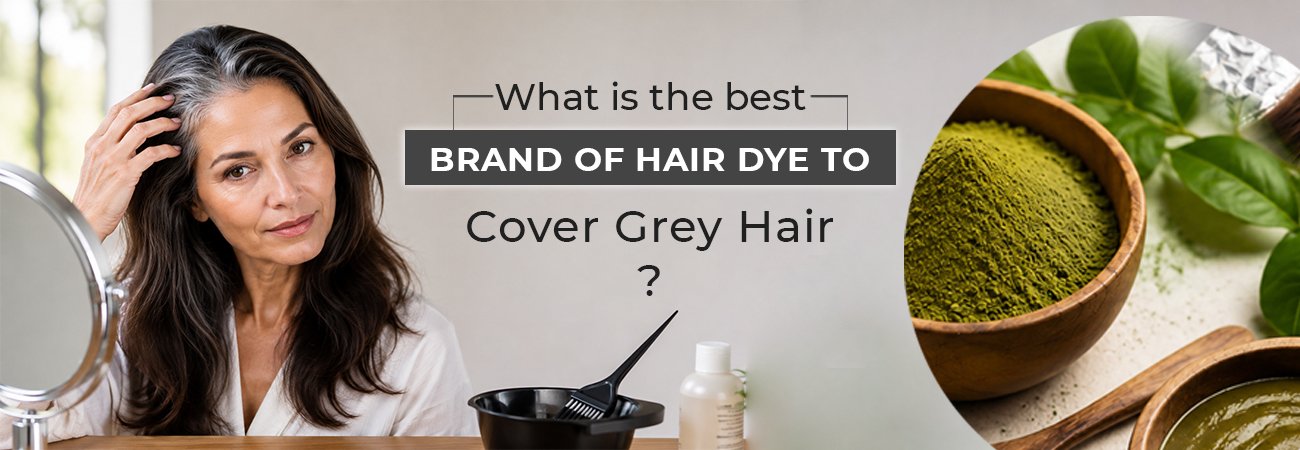
Let me be honest with you. I’ve seen countless people walk into salons completely frustrated—not because they can’t find a hair dye that works, but because they’ve been using the wrong kind for years. Their hair is thinner, drier, and more fragile, and somehow the gray keeps showing up faster than ever. Sound familiar? You’re not alone.
Covering grey hair sounds simple on the surface. You pick a shade, apply the dye, and you’re done. But anyone who’s actually dealt with persistent grey—especially the stubborn kind at the temples or along the parting—knows it’s never quite that straightforward. Grey hair is a different animal altogether, and not every dye sitting on a pharmacy shelf is actually built to handle it properly.
So let’s talk about what actually works. Not just for one wash. But for real, lasting results that don’t cost your hair its health. And while we’re at it, let’s talk about the manufacturers behind the products—because that part of the conversation gets skipped far too often, and it’s actually where everything begins.
Most people don’t realize this, but grey hair has a completely different internal structure compared to naturally pigmented hair. When melanin production slows or stops, the hair shaft becomes coarser, more porous in some areas, and weirdly resistant in others, and the cuticle layer tightens up. This is why so many regular dyes fail to give you even, full coverage on grey—they’re simply not formulated with grey hair’s unique behavior in mind.
What happens then? You apply color; it looks decent for a week, and then it fades unevenly. The grey peeks through first, almost like it’s rejecting the dye. You end up touching up more often, which means more chemical exposure, and the cycle just keeps going.
This is something that traditional herbal and henna-based hair colors have understood for a very long time—long before the modern beauty industry started packaging synthetic dyes in attractive bottles with big promises.
Henna has been used for hair since ancient times. Across South Asia, the Middle East, and North Africa, women—and men—have been coloring and conditioning their hair with henna-based preparations for countless generations. This wasn’t just a beauty ritual—it was also a practical choice. Henna naturally strengthens hair, reduces scalp irritation, and leaves hair feeling noticeably thicker and healthier over time.
Somewhere along the way, the beauty industry convinced people that “modern” meant better. Chemical dyes took over the market, and herbal alternatives got pushed to the side as old-fashioned or less effective. But here’s what’s interesting—the people who never stopped using henna? Their hair tells a very different story. Less breakage. Better texture. And yes, solid grey coverage.
The shift back toward herbal hair color isn’t a nostalgic trend. It’s people waking up to what the ingredients list on their chemical dye actually contains—and deciding they’ve had enough. Dermatologists are seeing more scalp sensitivity cases. More people are reporting hair thinning after years of chemical coloring. The dots aren’t hard to connect.
Here’s where it gets genuinely interesting. Henna contains a compound called lawsone, which is the molecule responsible for its dyeing ability. What makes lawsone remarkable is how it works—instead of forcing open your hair cuticle with harsh chemicals to deposit synthetic pigment, lawsone molecules bond naturally with the keratin proteins already present in your hair.
Grey hair, as it turns out, is almost entirely keratin with very little else competing for space. This means lawsone actually has more to bond with in grey hair than in pigmented hair. A good quality herbal henna formula, when applied correctly, can produce rich and deep coverage on grey strands—coverage that lasts genuinely longer than most people expect from a natural product.
Pair henna with supporting botanicals like indigo for deeper, cooler tones, amla for natural shine, and bhringraj for scalp nourishment—and you have a complete hair color system that works with your hair rather than against it. No ammonia strips the cuticle open. No peroxide bleaching out existing color. Just plant compounds doing what they’ve always done, quietly and effectively.
Not all henna is created equal. This is something most people learn the hard way—they try a henna product, get disappointing results, and conclude that henna simply doesn’t work. Nine times out of ten, the problem wasn’t henna. It was the quality and purity of what was inside that packet.
The lawsone content in henna leaves varies significantly depending on where and how the plant was grown, when it was harvested, and how it was processed afterward. Henna grown in Rajasthan, India—particularly in the Sojat region—is globally recognized as producing the highest-quality leaves with the most concentrated natural dye content. The soil, the dry climate, and the traditional cultivation methods all contribute to something that manufacturers elsewhere genuinely cannot replicate.
This is why sourcing matters. A poorly sourced batch of henna might give you a faint orange tinge and call it a day. A properly sourced, high-lawnstone henna will give you deep, warm, consistent coverage that looks natural because it actually is.
If you’ve been looking for a name you can trust in herbal hair color—both as a consumer and as someone in the hair care trade—Kirpal Export deserves your attention.
Based in India with deep roots in Rajasthan’s henna-growing heartland, Kirpal Export has built a reputation that speaks through the quality of their product rather than just marketing language. They are one of India’s most respected herbal hair color manufacturers, and they’ve earned that position through years of consistent, careful work—from how they source raw botanical ingredients to how they process and formulate the final products.
What makes Kirpal Export genuinely different is that they understand both sides of the equation. They know henna—where it comes from, what makes it good, and how to preserve its potency through processing. And they know hair—what grey hair actually needs, what works long-term, and how to create formulations that deliver on their promises without hidden synthetic additives sneaking into the blend.
As a leading henna manufacturers in India, Kirpal Export supplies not just to individual customers but to international brands and professional salon chains who cannot afford inconsistency. When a business stakes its own reputation on a supplier, that tells you everything. Kirpal Export has earned that level of trust and continues to hold it.
Whether you’re a salon owner, a distributor building a natural beauty line, or simply someone who wants a healthier way to cover grey, Kirpal Export’s expertise and quality standards make them a name worth knowing and a brand worth choosing.
Even genuinely good herbal hair color can underperform if you’re making certain common mistakes. These come up again and again, and they’re worth knowing upfront.
Leaving it on for too short a time is the biggest one. Grey hair is resistant. Herbal color is gentle, which means it works more slowly than a chemical dye that forces its way in. Give it at least 90 minutes. Some people with very coarse or resistant grey need two hours for full coverage. Rushing this is how you end up with patchy results and the mistaken belief that herbal color doesn’t work.
Using impure or adulterated henna is the second major problem. Some products sold as “natural” or “herbal” hair color contain PPD, metallic salts, or synthetic dye compounds mixed in to speed up results. These can cause serious allergic reactions and scalp damage. Always buy from a verified herbal hair color manufacturer like Kirpal Export, where ingredient purity is part of the core commitment.
Not prepping hair properly also makes a real difference. Hair should be clean but not freshly washed with heavy conditioner. Natural scalp oils are fine — they actually protect the skin during application and help the color distribute more evenly. What you don’t want is product buildup or silicone residue blocking the hair from absorbing color uniformly across the shaft.
Being fair here matters. Chemical dyes do have genuine advantages. They work quickly, they cover grey in as little as 30 minutes, and they can achieve a much wider range of dramatic color changes—a full shade lift, vivid fashion colors, or precise tonal work—something herbal color simply isn’t designed to do. If you want to go from dark brown to bright red or platinum, chemicals are the only realistic route.
But for the specific job of covering grey hair regularly and keeping hair healthy while doing it, herbal wins on almost every count. Chemical dyes strip and stress the hair shaft repeatedly with every application. Ammonia, peroxide, and PPD — these are not gentle compounds. Over months and years of regular use, the cumulative damage shows up as dull, thinning, fragile hair that needs more and more product just to look decent.
Herbal color does the opposite. Used regularly, it builds up a gentle coating on the hair shaft that actually adds strength and body over time. Hair typically looks and feels genuinely better with every application, not worse. For anyone who colors their gray every few weeks—and most people do—that long-term difference is genuinely significant.
The herbal beauty market has grown enormously, which means there are a lot of products out there making natural claims that don’t hold up. Here’s how to cut through the noise.
Check the ingredient list thoroughly. Real herbal hair color will list actual botanical ingredients—henna, indigo, amla, shikakai, and brahmi—not vague “herbal extracts” with no specifics. If ammonia, PPD, or resorcinol appear anywhere, put it down regardless of what the front label claims.
Look for a gray-specific formulation. Some herbal colors are made for pigmented hair and simply don’t have the lawsone concentration needed to fully cover gray. Choose products that explicitly address grey coverage and show before-and-after results on genuinely grey or white hair.
And always trace the source. A trustworthy herbal hair color manufacturer will be transparent about where their ingredients come from. Rajasthan-sourced henna from an established manufacturer like Kirpal Export carries a quality assurance that simply cannot be matched by generic sourcing.
Here’s the truth that this whole conversation circles back to: grey hair isn’t the problem. It never was. The problem is using the wrong product to address it—something that delivers short-term color at the cost of long-term hair health.
The best hair dye to cover grey isn’t necessarily the one that works fastest, costs the most, or comes in the fanciest packaging. It’s the one that works consistently, keeps your hair in genuinely good condition, and uses ingredients you can actually feel good about putting on your scalp month after month.
Herbal and henna-based hair colors, when they come from a manufacturer who truly knows what they’re doing, deliver exactly that. Kirpal Export has spent years consistently proving this through the quality of their products and the deep trust they’ve built with customers and businesses globally.
Your grey hair showed up without asking permission. How you handle it is entirely your call—but now you know what actually works. And knowing is half the battle. The other half is simply choosing a product and a manufacturer you can genuinely trust to deliver.
Kirpal Export is a trusted herbal hair color manufacturer and henna manufacturer in India, known for premium-quality botanical hair color formulations and pure henna carefully sourced from the fertile fields of Rajasthan. For product inquiries or bulk supply, explore their full range of herbal hair care solutions today.
Every henna powder supplier claims to sell the “purest” product on the market. Walk through…
Walk into any natural hair care store, or scroll through a beauty forum for five…
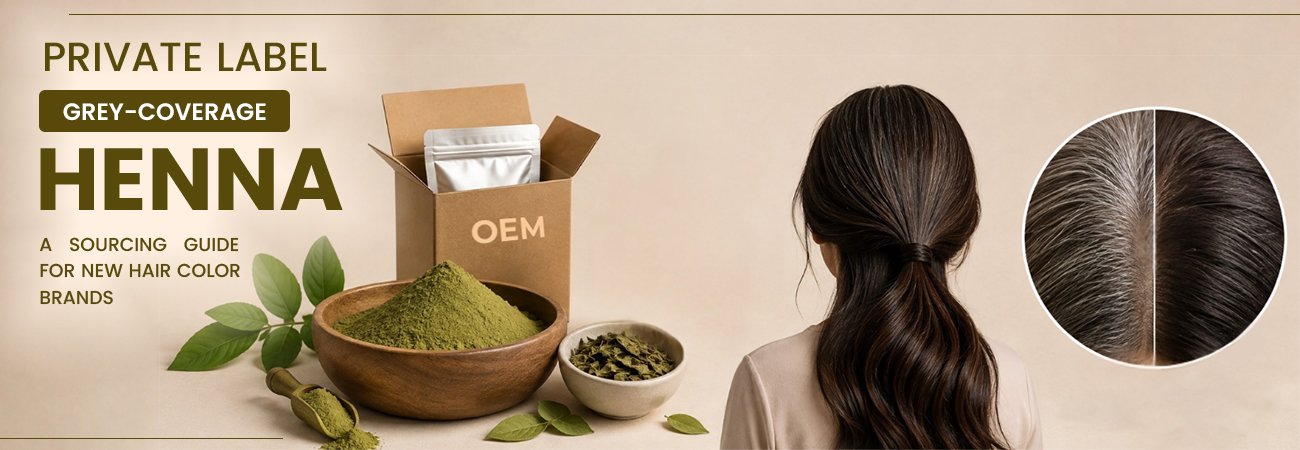
Launching a private label hair color line sounds simple on paper — pick a formula,…
If you’re a UK-based salon chain, hair color brand, or distributor trying to source henna…